Ships
- USS New York (BB-34) Captain from 3 July 1945 · Relieved on 9 January 1946
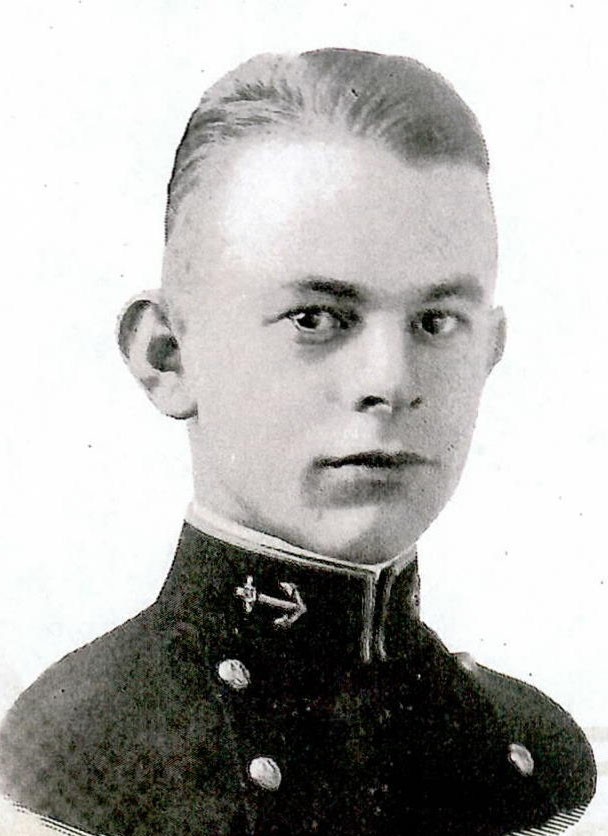
Grayson Birch Carter was born in San Diego, California, on 16 November 1897, the son of Cassius Carter and Ruth Birch Carter. His father was San Diego County district attorney from 1902 to 1906 and a co-founder of the Cuyamaca Club. Carter attended the city's public schools and graduated from San Diego High School. Senator Works of California appointed him to the Naval Academy on 7 June 1915. The Class of 1919 was graduated early because of the war, and Carter was commissioned ensign on 7 June 1918.
His first ship was the battleship Michigan, then serving with American naval forces in European waters in the closing months of the First World War. He next reported to the Union Iron Works in San Francisco for duty in the destroyer Anthony before she was commissioned, and he stayed with her from her commissioning on 19 June 1919 until 8 May 1920. Through June 1922 he served in succession in the destroyers Schley and Philip, the transport Zeilin, and the battleships New York and California. His time in New York, in 1921, was as a lieutenant (junior grade).
Between the wars he specialized in gunnery, commanding a turret in New York and serving as gunnery officer in destroyers and in the battleship Tennessee. He also recruited in Louisiana and Mississippi, and for a period he was a naval aide to President Franklin D. Roosevelt. He was stationed at Pearl Harbor until 1942, when he became executive officer of the heavy cruiser Salt Lake City. That cruiser's year included screening the carrier Hornet for the Doolittle raid and the fighting around Guadalcanal. Carter received the Legion of Merit for the Battle of Cape Esperance. On 14 December 1942 he left the cruiser to command LST Flotilla 5.
He had been promoted to captain on 18 June 1942. With the flotilla he took tank landing ships and their destroyer screen into the Solomon Islands landings. At Vella Lavella in August 1943 he directed the force so that the ships suffered only slight damage and few casualties, and he improvised extra measures for getting men and equipment ashore under fire. That operation brought him the Navy Cross. From June 1943 to May 1944 the same flotilla landed forces at Rendova, Treasury, Bougainville, Green Island, and Emirau, service marked by a gold star in lieu of a second Legion of Merit.
In June and July 1944 he commanded a tractor group in the South and Central Pacific during the assault on Guam. The landing craft put a Marine division on the beach on schedule, and the landing force took the beaches with comparatively few casualties. A further Legion of Merit, this one with the combat V, followed. He returned to the United States that autumn. From December 1944 until June 1945 he commanded the Ship Training Group of the Amphibious Forces, Pacific Fleet, at Coronado, California.
On 3 July 1945 he relieved Kemp Catlett Christian as captain of the battleship New York, the ship he had known as a junior officer a quarter-century earlier. His command covered the last weeks of the war and the first months of peace. Under him New York carried troops home from Hawaii to the West Coast and, at San Diego, took part in the first Navy Day exercises after the fighting ended. He was relieved on 9 January 1946, and that cruise ended his sea service.
In February 1947 he went to New York as Director of Naval Reserve for the Third Naval District. He remained there until his retirement on 30 June 1949, when he was advanced to rear admiral on the basis of his combat awards. He was the first native-born San Diegan to reach flag rank. Carter died on 14 June 1984 at Balboa Naval Hospital in San Diego, at the age of 86. With the Navy Cross and the Legion of Merit with two gold stars and the combat V, he also held the World War I Victory Medal with Atlantic Fleet clasp, the American Defense Service Medal with base clasp, the American Campaign Medal, the Asiatic-Pacific Campaign Medal with campaign stars, and the World War II Victory Medal.