Ships
- USS Edsall (DD-219) Captain, 3 June 1922 – 17 May 1923
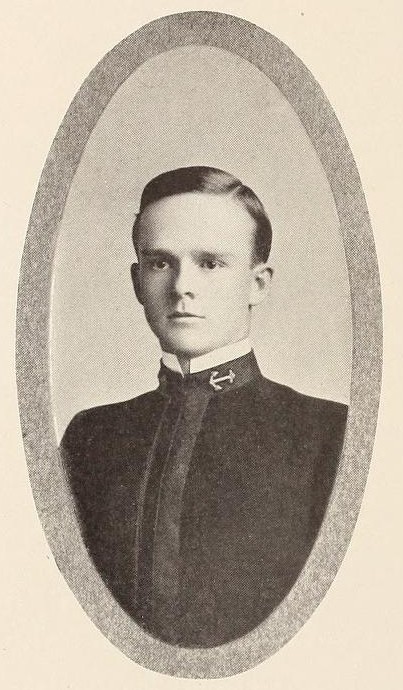
Halsey Powell was born in McAfee, Kentucky, on 3 August 1883, and graduated from the United States Naval Academy in 1904, the same year as his cousin William F. Halsey, Jr. Sea duty occupied almost the whole of his early career. In the first fifteen years after leaving Annapolis he spent only about eleven months ashore. He served in the battleships Kearsarge, Illinois, and Tennessee, later studied at the Naval War College, and came into the First World War as a destroyer officer already used to long stretches at sea.
In June 1917 he commanded the destroyer Parker when she sailed for European waters and joined the escort force based at Queenstown. From there Parker guarded troopships and supply convoys through the submarine zone. On 3 August 1917 she fought a German U-boat that was believed at the time to have been badly damaged; the meeting was not recorded as a confirmed sinking. Powell also took part in the rescue of survivors from the British hospital ship Glenart Castle after she was torpedoed, and Britain awarded him the Distinguished Service Order for that work. The United States gave him the Navy Distinguished Service Medal for his performance as a destroyer division commander on convoy duty. His wartime record further included the Victory Medal with destroyer clasp, and he already held the Mexican Service Medal.
As a commander, Powell became captain of Edsall (DD-219) on 3 June 1922 and held that command until 17 May 1923. The Clemson-class destroyer had been built by William Cramp and Sons at Philadelphia, launched in July 1920, and commissioned on 26 November 1920 under A. H. Rice. She had shaken down to San Diego, drilled with the fleet on the West Coast, and been ordered out to the Mediterranean. She reached Constantinople on 28 June 1922 and joined the U.S. Naval Detachment in Turkish Waters. That small force watched American lives and property while Russia was still in civil war and Greece and Turkey were fighting over Anatolia. Edsall carried mail, moved American officials, stood by for emergencies, and helped move food into a region exhausted by war and famine.
The hardest test of his tour came at Smyrna, today's Izmir, in September 1922. Early in August Edsall had gone up through the Bosporus to Odessa, then around the Crimea into the Sea of Azov and Novorossiysk, before the crisis on the Aegean coast pulled American destroyers back to the burning city. As Turkish troops entered Smyrna and fire ran through the Greek and Armenian quarters, Powell, still Edsall's commanding officer, became the senior U.S. naval officer present, taking over from Captain Arthur J. Hepburn of the staff of Rear Admiral Mark L. Bristol, the American high commissioner in Turkey. On 14 September Edsall embarked 607 refugees who had been gathered on the destroyer Litchfield, carried them to Salonika, and was back at Smyrna on 16 September to serve as flagship for the naval forces in the port. American destroyers were only one part of a much wider rescue. Accounts of the time put Powell in charge of an evacuation in which about 263,000 refugees were taken across to Greek territory, a movement far larger than any single ship's boatload.
Powell left Edsall on 17 May 1923. Robert Todd Young assumed command of the destroyer that May, and the ship stayed in the Near East into the following year before heading home. Powell's career then rose with the rank of captain, which he reached in 1926. He spent a period in charge of Navy public relations and, in 1926, became aide to Secretary of the Navy Curtis D. Wilbur. From 1927 to 1929 he was naval attaché at Peking. After that diplomatic tour he commanded the cruiser Pittsburgh, then serving as flagship of the Asiatic Fleet, and returned to the kind of seagoing responsibility he had known since his first years in the service.
In the early 1930s he was chief of staff of the Ninth Naval District at Chicago. He afterward served as chief of staff to the commander of the Battle Force and commanded Destroyer Squadron 3 of the Scouting Force. In June 1936 he was ordered to Washington as director of the Ships Movement Division. President Roosevelt had approved his selection for rear admiral when Powell died at his home in Washington on 24 December 1936, at the age of 53, of a coronary thrombosis, while still a captain in that billet. He was buried at Arlington National Cemetery. In 1943 the Fletcher-class destroyer Halsey Powell (DD-686), sponsored by his widow, was named for him and went to the Pacific war.