Ships
- USS Jenkins (DD-447) Captain, 31 July 1942 – 9 July 1943
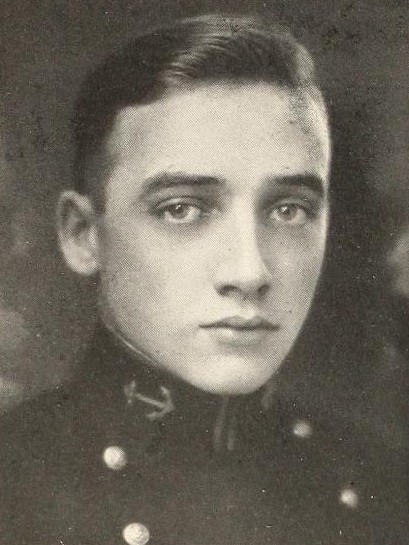
Harry Fanker Miller was born in Swissvale, Pennsylvania, on 5 January 1903. He graduated from the United States Naval Academy with the class of 1925 and made his career in destroyers. He later rose to rear admiral. He died in San Diego, California, on 1 April 1952.
As a lieutenant commander he commanded the flush-deck destroyer Bancroft (DD-256) from 6 July 1940 to 24 September 1940, the day that ship was turned over to the Royal Navy. On 30 September 1940 he took command of the older destroyer Borie (DD-215) and remained in her until 16 May 1942.
His next ship was new. Jenkins (DD-447), a Fletcher-class destroyer, had been laid down at the Federal Shipbuilding and Dry Dock Company in Kearny, New Jersey, on 27 November 1941 and launched on 21 June 1942, with Marion Parker Embry as sponsor. Miller placed her in commission on 31 July 1942. On 1 August he was advanced to the temporary rank of commander.
The summer and early autumn of 1942 went to training. Jenkins exercised off the East Coast and in the Caribbean, and in late August she ran antisubmarine drills off Guantanamo Bay with the submarine R-12 and the destroyer Chevalier. On 24 October she left Casco Bay, Maine, as escort for a convoy bound for the invasion of North Africa. Off Casablanca on 8 November she served with Destroyer Squadron 8 and screened the battleship Massachusetts while the heavy ships fired on shore targets. She was back in New York on 19 November and fitted out for the Pacific.
Jenkins arrived at Nouméa, New Caledonia, on 4 January 1943 and began escort and patrol duty among the Solomon Islands and in the Coral Sea. Her first assault landing came at the end of June, in support of the move into the New Georgia islands. Japanese aircraft attacked in force off Rendova. Under Miller the ship shot down at least two of them and helped break up other raids, and she carried out a heavy bombardment of Vangunu. For his conduct in the Solomons from June into July 1943 he received the Silver Star.
The sharpest action of his command followed at once. On 5 July Jenkins left Tulagi with Rear Admiral Walden L. Ainsworth’s Task Group 36.1 and steamed up the Slot against a Japanese force of destroyers and transports carrying reinforcements toward Kolombangara. After midnight the American ships found the enemy on radar. In the Battle of Kula Gulf on 6 July, gunfire from the United States force sank one Japanese destroyer and drove another aground, while torpedoes from the Japanese formation sank the light cruiser Helena. The Navy Cross given to Miller recognized the gun and torpedo fire he directed from Jenkins, which destroyed or badly damaged a large enemy ship, during that night and the New Georgia landings.
Miller left Jenkins on 9 July 1943. Madison Hall relieved him. Philip Daly Gallery and Gene Thomas Shirley commanded the destroyer in turn after that. Miller was promoted to temporary captain on 20 July 1943. The months he had in Jenkins covered her commissioning, the Casablanca bombardment, the opening Solomon patrols, Rendova, Vangunu, and Kula Gulf.