Ships
- USS PT-109 (PT-109) In command, August 1943
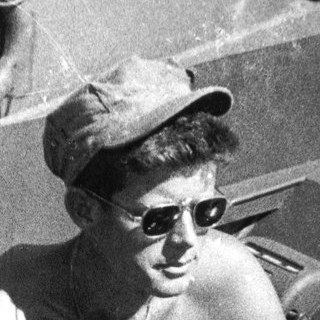
In August 1943, Lieutenant (junior grade) John F. Kennedy commanded PT-109 in the Solomon Islands. She was an Elco motor torpedo boat, eighty feet long, and she lay in a bush berth at Rendova with Motor Torpedo Boat Squadron 2. The berth was a pocket of water under the trees at the edge of the PT base, close to the fighting for New Georgia. By day the boats were exposed to air attack. By night they were the force sent into the straits. PT-109 went out with the squadron after dark, a low hull carrying torpedo tubes and light guns, and she came back in among the palms when the patrol was over. Kennedy was the officer in command of her.
On the night of 1 August the boats left Rendova to stop a supply run into Vila, on Kolombangara. Japanese ships were expected to put men and cargo ashore there and then retire through the same water. The torpedo boats that carried radar closed the targets, fired, and were ordered home. PT-109 was left in Blackett Strait. She idled on one engine so the wake would stay small and the hull would stay quiet. A bright trail in that strait could draw aircraft or a larger ship, and the boat sat low in water that was black enough to hide her.
Around two in the morning the destroyer Amagiri came back down the strait, finished with the delivery at Vila. Kennedy made the ship out late and called for a turn and for full power, the orders meant to swing PT-109 clear. The boat did not get clear. Amagiri cut her in two. The blow threw men into the water, and the hull broke into separate pieces in a sheet of burning gasoline. Whether that captain aimed the bow is still argued. The men in the water had the simpler fact in front of them. Their boat was finished.
Harold Marney and Andrew Kirksey were killed. The other eleven lived through the collision. They gathered on the floating wreckage, and the engineer, Patrick McMahon, came out of the machinery space badly burned by the fuel that went up when the destroyer hit. When the hulk could no longer be counted on, Kennedy took the survivors toward land. They reached a scrap of an island, and afterward another. On the swim he towed McMahon with a strap clenched in his teeth, pulling the burned man along until both of them were ashore with the rest of the crew.
The islands gave the eleven a place to stand and almost nothing to live on. Kennedy swam out alone toward Ferguson Passage, where a friendly patrol might be running, and he tried to flag a boat. The boat did not come, and he swam back to the men. The connection to Rendova was made by two Solomon Islands scouts, Biuku Gasa and Eroni Kumana. Kennedy cut a short message into a coconut, and the scouts carried it on. From their hands the word passed through the coastwatchers and reached the PT base, where a rescue could be arranged.
Before dawn on 8 August, PT-157 took them off and brought the eleven in. They had been in the water and on the coral since the destroyer struck, and they came back alive because the tow, the move to the second island, and the coconut message had held together. Asked later how he had come to be a hero, Kennedy said it was involuntary. They sank his boat. The Navy and Marine Corps Medal followed for the days he spent getting the crew onto land and keeping them there, and the injuries of that night brought him a Purple Heart. PT-109 ended in Blackett Strait. Marney and Kirksey were the two of her crew lost with her.