Ships
- USS Langley (CV-1) Captain from 15 June 1935 · Relieved on 22 July 1936
- USS Lexington (CV-2) Captain from 18 June 1938 · Relieved on 17 June 1939
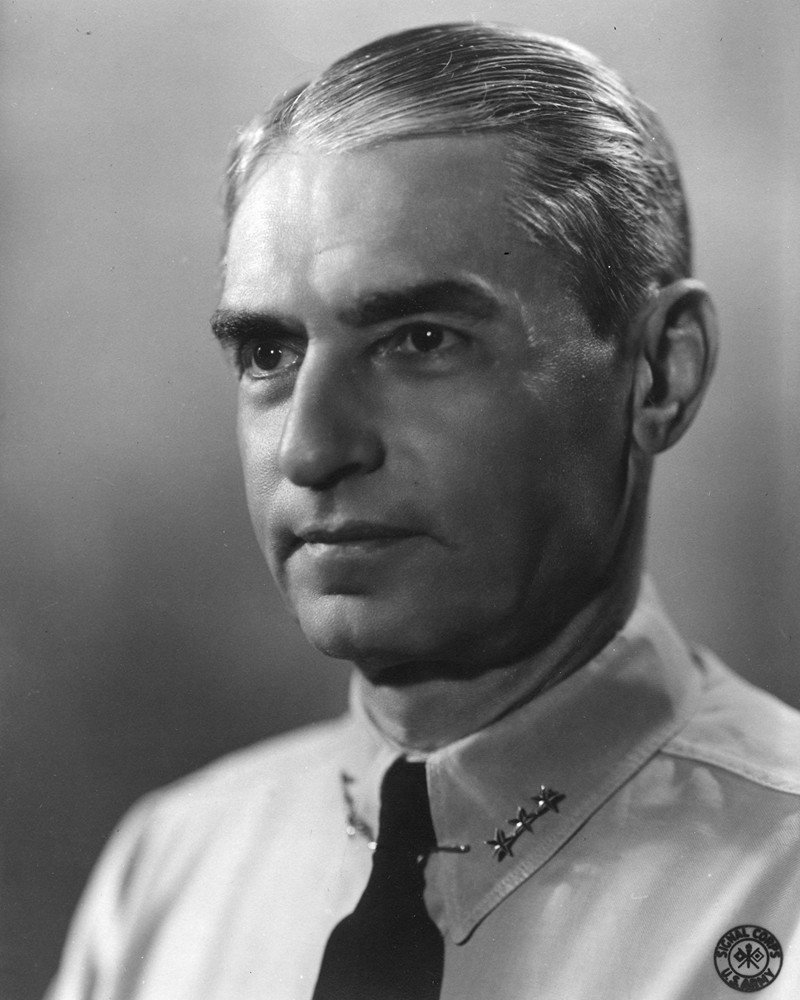
John Howard "Johnny" Hoover was born on 15 May 1887 in Seville, Ohio, and grew up in Adel, Montana. He entered the Naval Academy in 1903 and graduated on 6 June 1907 in a class that produced a remarkable number of admirals, Bellinger, Hewitt, Ingram and Theobald among them. He served in the cruisers Chicago and Chester and the destroyer Paulding. In 1913 the boiler of the destroyer Aylwin exploded during exercises off North Carolina and fire forced her crew to abandon ship; Hoover was aboard. That same year he had early aviation instruction at Guantanamo Bay.
In World War I he commanded the destroyer Cushing on antisubmarine patrol and convoy escort out of Brest, France, rescuing survivors of U-boat attacks, and earned the Navy Cross. Between the wars he commanded submarine divisions, then turned to aviation, and he commanded two pioneering carriers: Langley in 1935–36 and Lexington in 1938–39.
In World War II he became one of Nimitz's trusted if little-known admirals. As Commander, Forward Area, Central Pacific he oversaw the island bases, including the Marianas fields where the B-29 force was built up in 1944–45. He chaired the court of inquiry into Halsey's handling of the December 1944 typhoon and recommended action against Halsey, but King and Roosevelt set the recommendation aside. Briefly Nimitz's deputy in mid-1945, he received his third Distinguished Service Medal.
After the war he commanded Fleet Air West Coast and the Navy's examining and retiring boards, then sat on the Army-Navy Petroleum Board. He retired in July 1948 after 41 years and was advanced to four-star admiral for combat commendations. In 1950 he directed investigations for the Economic Stabilization Agency's anti-inflation program. He died in Washington on 1 December 1970 and lies at Arlington beside his wife, Helen. Their son, William, also retired from the Navy as a captain.