Ships
- USS Nevada (BB-36) Captain from 30 December 1916 · Relieved on 14 February 1918
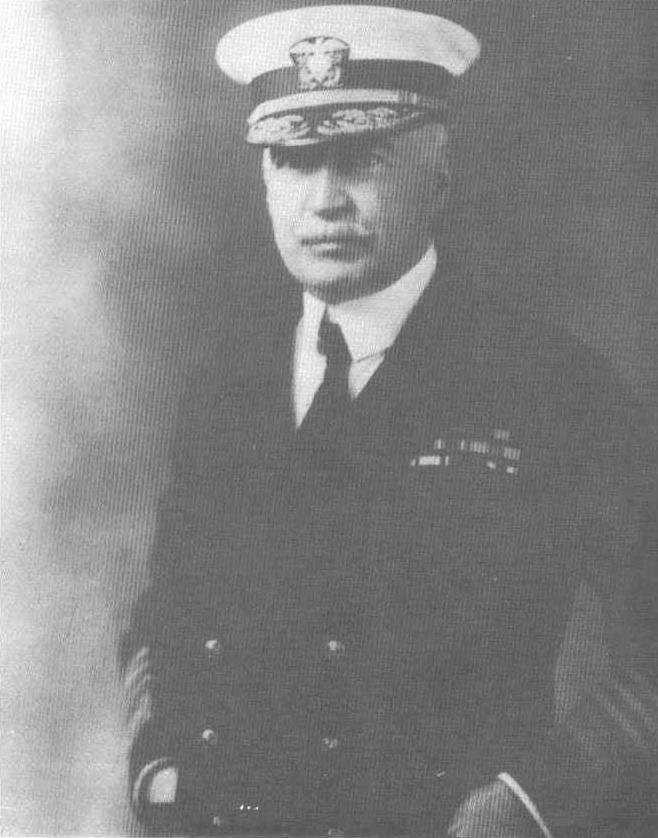
Joseph Strauss was born in Mount Morris, New York, on 16 November 1861. He passed through the United States Naval Academy and was commissioned an ensign on 1 July 1887. Ordnance became his field. In June 1893 he reported to the Bureau of Ordnance in Washington. In the Spanish-American War he served in the screw sloop Lancaster on the blockade of the Cuban coast, then returned to the bureau.
From 1900 to 1902 he established the Naval Proving Ground at Indian Head, Maryland. In 1906 he sat on a special board of naval ordnance, and the next year he served on the joint Army and Navy board that studied smokeless powder. From 1909 to 1911 he commanded the cruiser Montgomery and carried out experimental work with torpedoes. On 3 October 1912 he took command of the battleship Ohio and kept her through the division target practice of the following year.
On 21 October 1913 he became Chief of the Bureau of Ordnance, with the temporary rank of rear admiral that went with the post. He gave up the bureau before the four-year term ran out, his resignation taking effect late in December 1916. On 30 December 1916 he assumed command of the battleship Nevada, relieving William Sowden Sims. He was her second commanding officer. He was still in the ship when the United States declared war on Germany on 6 April 1917. For the rest of his tour Nevada stayed with the Atlantic Fleet in American waters while the new oil-burning dreadnought trained for war. He was relieved on 14 February 1918 by Andrew Theodore Long.
After temporary duty in the Office of the Chief of Naval Operations, he became Commander of the Mine Force, Atlantic Fleet, in March 1918, serving in the rank of rear admiral. The force existed to lay the Northern Barrage, the minefield stretched across the northern approaches of the North Sea to pen in German submarines. Drawing on a career spent with guns, explosives, and mines, Strauss took the American minelayers to a base at Inverness, Scotland, and directed the laying in company with the Royal Navy. He worked under William Sowden Sims, who commanded United States naval forces in European waters. After the Armistice he kept the same command for the dangerous work of sweeping the field so that peacetime ships could use those waters. He received the Distinguished Service Medal for directing both the laying of the barrage and its clearance.
In October 1919 he joined the General Board in the Navy Department. In 1921 he became commander in chief of the Asiatic Fleet and held the rank of admiral in that post. He returned to the General Board in 1922, and the next year he also worked with Congress on naval budgets and appropriations. He transferred to the retired list on 16 November 1925 as a rear admiral. On 21 June 1930 an act of Congress advanced him, on the retired list, to admiral, the highest rank he had held while on active duty. The Navy recalled him from 8 October 1937 to 8 February 1938 to sit on the Advisory Board on Battleship Plans.
His technical work stayed with the fleet after he left the bureau. He was credited with a system of superimposed gun mounts, an early spring-recoil mount, and a disappearing mount for the deck guns of submarines. He was a founder of the Naval Historical Society and for many years a financial adviser to the Navy Relief Society. Strauss died on 30 December 1948 and was buried at Arlington National Cemetery. The guided-missile destroyer Joseph Strauss was later named for him.