Ships
- USS Nevada (BB-36) Captain from 11 March 1916 · Relieved on 30 December 1916
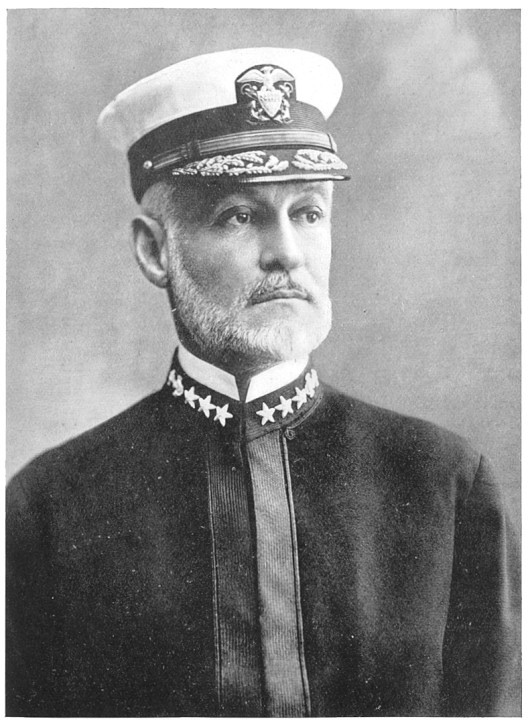
William Sowden Sims was born on 15 October 1858 in Port Hope, Ontario, where his father, the American engineer Alfred William Sims, was working. His mother was Adelaide Sowden Sims. The family moved to Pennsylvania in 1872. Appointed to the United States Naval Academy from that state in 1876, he graduated in 1880 and spent most of the next seventeen years at sea.
In the later 1890s he served as naval attaché in Paris, St. Petersburg, and Madrid. Early in the new century, while with the Asiatic Fleet, he watched Royal Navy gunners under Captain Percy Scott and came home convinced that continuous-aim firing would change American marksmanship. Reports to the Navy Department brought little result, so he wrote directly to President Theodore Roosevelt. Roosevelt called him to Washington as inspector of target practice, and for a time he also served as the president’s naval aide. In those years he pressed the fleet toward faster loading, steadier aiming, and gunnery scores that could be measured.
Promoted to commander in 1907, he took command of the battleship Minnesota on 1 March 1909. In May 1911 he left her for the Naval War College at Newport. He was promoted to captain that year, and in July 1913 he took the Atlantic Fleet’s destroyer flotilla, working on the tactics and upkeep of the small, fast ships that the next war would demand in large numbers.
In November 1915 he reported to the Fore River yard at Quincy, Massachusetts, to fit out the new battleship Nevada. He became her first captain when she was commissioned on 11 March 1916, and he remained in command until he was relieved on 30 December 1916. Nevada was then the newest and most powerful battleship in the United States Navy, oil-fired and protected by the all-or-nothing scheme that put thick armor around magazines and machinery. The assignment marked the standing he had earned as a gunnery reformer and a commander of ships.
His date of rank as rear admiral was 29 August 1916. On 11 February 1917 he became president of the Naval War College and commandant of the Second Naval District. The appointment lasted only weeks. In March, with war against Germany close, the Navy Department sent him to London as its representative and as the officer who would direct American naval forces in European waters. He crossed on the steamer New York under the name S. W. Davidson. After the United States entered the war in April 1917, his authority covered American destroyers, tenders, and auxiliaries based in Britain, and in June his title became commander of United States naval forces operating in European waters. He served in the temporary rank of vice admiral from May 1917 and of admiral from December 1918, and from December 1917 he also held the additional duty of naval attaché in London.
From London he argued that German submarines would be checked only when merchant ships sailed in escorted groups and when American destroyers arrived in numbers. The first of those destroyers reached Queenstown, Ireland, on 4 May 1917. Convoy spread across the Atlantic routes and the loss of merchant ships fell. He sat with the senior naval officers of the other Allied powers on the Allied Naval Council. The mine barrier across the northern approaches to the North Sea was laid during his command, with Joseph Strauss leading the United States mining force that sowed a large share of it.
He gave up the European command in March 1919, returned to the permanent rank of rear admiral, and in April again became president of the Naval War College. He stayed there until he retired on 15 October 1922, his sixty-fourth birthday. With Burton J. Hendrick he wrote The Victory at Sea, an account of the naval war fought alongside the Royal Navy, and the book received the Pulitzer Prize for history in 1921. In June 1930 he was advanced to admiral on the retired list. He died in Boston on 28 September 1936 and was buried at Arlington National Cemetery.