Ships
- USS Edsall (DD-219) Captain, 25 October 1927 – 3 February 1928
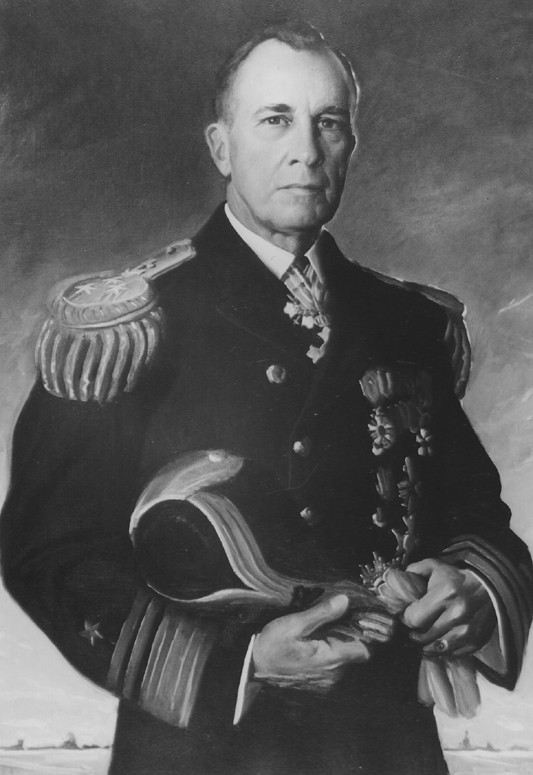
Jules James was born in Danville, Virginia, in February 1885. He attended Danville Military Academy, prepared for the Navy at the Virginia Military Institute, and graduated from the United States Naval Academy with the class of 1908. He was commissioned an ensign in 1910.
Early in his career, from 1912 to 1913, he served as a naval aide to President Woodrow Wilson. In 1914 he was aboard the battleship Florida during the occupation of Veracruz. In the First World War, by then a lieutenant commander, he was executive officer of the armored cruiser Rochester and spent the war escorting troop convoys between the United States and Europe. The Navy gave him a special letter of commendation for that duty, and France later awarded him the Legion of Honour.
From 1923 to 1926 he was assistant naval attaché at the American embassies in France, Spain, and Portugal. He was promoted to commander in November 1925. In the years that followed he served as navigator of Florida, as naval aide to the Governor-General of the Philippines, as a student at the Naval War College, and as commander of Destroyer Division 6 in the Battle Force. His destroyer command in that stretch was Edsall. He took command on 25 October 1927, while the ship was on the Asiatic Station, and he was detached on 3 February 1928. During those months Edsall took part in the Yangtze River patrol. The destroyer had been commissioned in November 1920 under A. H. Rice. In 1928 James married Eleanor Standish Gamble. Years after he left her, Edsall was still with the Asiatic Fleet, and she was sunk in action on 1 March 1942 south of Java.
In the mid-1930s he served at the Naval Academy in the Department of Ordnance and Gunnery. He was promoted to captain in 1936. In 1937 he directed the fitting out of the new light cruiser Philadelphia and then commanded her, as her first commanding officer, until the middle of 1939.
From 1939 into 1941 he was assistant director of the Office of Naval Intelligence and, for a time, its acting director. On 7 April 1941 he became commandant of the Naval Operating Base at Bermuda and commander of the combined American and British local defense forces there. He was promoted to rear admiral on 21 November 1941 and remained in Bermuda until 24 March 1943. He built the base into an efficient station and kept close coordination between the forces on the island and the colonial authorities. For that service he received the Legion of Merit.
From 14 May 1943 to 31 August 1945 he commanded the Sixth Naval District, with headquarters at the Charleston Navy Yard in South Carolina. The district and the yard were occupied with wartime shipbuilding and with the defense of that part of the Atlantic coast. He received a Gold Star in lieu of a second Legion of Merit.
In 1945 he took his last seagoing command, United States Naval Forces in the Mediterranean, the force later known as the Sixth Fleet. He was promoted to vice admiral and retired from active duty in 1946. He afterward worked as a special representative of the National Lead Company. James died in Bethesda, Maryland, on 12 March 1957.