Ships
- USS Shields (DD-596) Captain from 22 October 1945
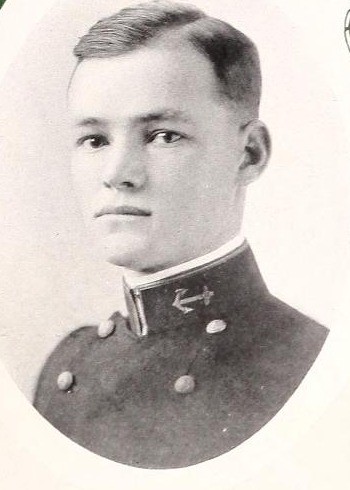
Marcy Mathias Dupre, Jr. (27 February 1899 – 9 May 1971) was a United States Navy officer from Texas who graduated from the Naval Academy with the Class of 1920 (commissioned in June 1919) and retired in 1949 with the rank of rear admiral on the retired list. He spent much of his junior career in battleships and destroyers, including destroyer duty with the Asiatic Fleet in the Philippines and northern China while his young family followed the ship. He commanded the new destroyer Mugford in 1938–1939, taught at the Academy, and was executive officer of the new battleship Indiana from her commissioning in April 1942 until the turn of 1943. In the South Pacific he worked the unglamorous but vital business of naval bases and motor-torpedo-boat logistics, earning the Legion of Merit for planning facilities, construction and procurement under the Commander, Naval Bases, South Pacific. Late in the war he took command of the hard-fought light cruiser Columbia, which had already survived kamikaze hits in Lingayen Gulf, and held her through the last weeks of combat, the surrender, and the first months of occupation duty. He was the son of a West Texas school superintendent of the same name, and the father of Captain Marcy M. Dupre III, who also graduated from the Academy and commanded a destroyer at the end of the Second World War. The three men of the same name must be kept distinct in any account of his life.
He was born in Troup, Texas, on 27 February 1899, the son of Marcy M. Dupre and Sallie Belle Naasson (or Nasson) Dupre. The father’s life is better documented than the son’s early years. The elder Marcy Mathias Dupre (1866–1925), born near Winton in Gallia County, Ohio, graduated from Ohio State University in 1886, married Sallie Bell Naasson in 1887, and moved to Texas in 1888. He taught and administered schools in Shelbyville, Henderson, Troup and Center, became superintendent of schools in Lubbock in 1914, and worked for the establishment of what became Texas Technological College. Sallie died in 1908; the father later remarried. The Handbook of Texas records ten children of the first marriage. The future admiral was one of them, born while the family lived in Troup, and raised in the Panhandle world of Lubbock High School.
That Texas upbringing left a mark that his Academy classmates still joked about years later. The 1920 Lucky Bag called him a “slow-moving, easy-going little fellow from the Panhandle” and “one of those real Southerners that you read about often yet meet very seldom,” and warned that if you wanted to get his goat “you have only to start an argument about the Civil War.” The nicknames they gave him—“Dopey,” “Duper,” “Dupie,” “Duke”—sit oddly beside the quiet toughness they also described. For all his quietness, the yearbook said, there had not been a rough-house in the Twelfth Company since Youngster year that had not found “Duke” present and scrapping hard. He worked the wrestling mat. Studies and class standing “never have worried him much,” but he had a gift for putting over what he started “with a rush.” His honors line listed a Buzzard, the midshipman’s eagle rating badge. A classmate’s entry, on the facing column of the same page, closed with the line “Take charge, Mr. Dupre, I’m going to Smoke Hall,” which at least suggests that someone trusted him with the watch.
He entered the Naval Academy on 22 June 1916. The war shortened the course. In the summers of 1917 and 1918, according to the Navy biography later issued for him, he served as a midshipman in the battleships New York and Kansas with the Atlantic Fleet—the same New York that figures in the yearbook’s teasing story of a “grape-juice party” on Youngster cruise, a subject still tender enough that classmates advised discretion. He graduated and was commissioned an ensign on 7 June 1919, a member of the Class of 1920 advanced by the wartime acceleration. The Navy registers and later compilations sometimes list the class as 1919 and sometimes as 1920; the yearbook and the Navy biography treat him as Class of 1920.
His first ship was the battleship Arizona. In June 1921, according to the Navy biography, he went to the destroyer Ellis in the Destroyer Force, Atlantic Fleet. His eldest son, Marcy Mathias Dupre III, was born at Newport, Rhode Island, on 17 September 1921, while the father was a lieutenant (junior grade) on that station. The Ellis was placed out of commission on 10 June 1922. That same month, the biography says, Dupre transferred to the destroyer Preble and went out to the Destroyer Squadrons of the Asiatic Fleet. The son’s later obituary, written with family knowledge, says that soon after the Newport birth the family moved to the Far East and followed the father’s destroyer to the Philippines and northern China, returning to the United States several years later. The Navy Directory of 1925 still lists a Lieutenant (jg) M. M. Dupre temporarily at the receiving ship, San Francisco—consistent with a return from Asiatic duty around that time—though the Navy biography dates his next shore duty, as an instructor in electrical engineering and physics at the Naval Academy, from 20 July 1925.
In June 1927 he went to the battleship New Mexico. The Navy biography records three special letters of commendation for the years in which that ship won the Battle Efficiency Pennant (1927–28, 1928–29 and 1929–30). The Directory of 1930 confirms him in the New Mexico. In June 1930 he went to the Naval Observatory in Washington; the Directory of 1932 still has him there. In September 1932 he became assistant gunnery officer of the battleship Mississippi, where the Directory of early 1935 still lists him. In June 1935, according to the biography, he returned to the Academy as an instructor in the Economics and Government Departments. The Lucky Bag of 1938 later listed Lieutenant Commander M. M. Dupre, Jr., among the Academy’s executive assistants as Personal Finance Advisor—evidence that his shore tours at Annapolis left him known to midshipmen as a practical counselor as well as a classroom officer.
On 4 June 1938, the Navy biography says, he took command of the new Bagley-class destroyer Mugford. An earlier 1938 Navy Directory still lists him at the Naval Academy; a later 1938 Directory confirms the sea assignment: “Dupre, Marcy M., jr., lt comdr, comdg u s s Mugford.” The change of duty therefore fell in mid-year, matching the biography’s June date. Ship-listing compilations give his Mugford command as lasting into early June 1939. On 10 June 1939, according to the biography, he became assistant operations officer on the staff of the Commander, Battle Force. The Navy Directory of 1940 lists him as a commander, assistant operations officer on staff—the same job in the terse language of the directory. In March 1941 he returned again to the Academy, this time as executive officer of the Department of Mathematics, and remained there until 8 December 1941.
By then he had a second generation in the Navy. His son entered the Academy in June 1938, while the father was either finishing his Academy finance-advisor tour or taking the Mugford, and graduated with the Class of 1942 on 19 December 1941, eleven days after Pearl Harbor. In 1941, during the father’s tour as executive officer of the mathematics department, father and son were both in the Yard: one running the department, the other finishing as a first-classman about to be rushed into the fleet.
In January 1942 he was ordered to the Newport News Shipbuilding and Dry Dock Company in connection with fitting out the new battleship Indiana. He served as her first executive officer from commissioning on 30 April 1942 until 1 January 1943. Captain A. A. Merrill commanded; Dupre was the man responsible for turning a brand-new crew and a brand-new plant into a fighting ship while the Pacific war was already under way. The Indiana completed shakedown and, in late November 1942, joined the carrier screening force in the South Pacific. Dupre’s own detachment came at the New Year. The Navy biography and the Indiana association’s summary both date his relief as executive officer to 1 January 1943.
He went next to the staff of the Commander, Naval Bases, South Pacific. The Legion of Merit citation, as printed in the Bureau of Naval Personnel Information Bulletin No. 327 (June 1944) and reproduced in later award compilations, describes him as Chief of Staff to that commander from 1 January to 15 May 1943, and later as officer in charge of the base-plans division. It credits him with assisting “materially in executing the essential program involving these activities” and with planning “facilities, construction and procurement.” The work was not the kind that fills action reports with gunfire, but in the Solomons in early 1943 the shortage of bases, spare parts and shore organization was itself a form of combat pressure.
The same months tied him to the motor torpedo boats. An official Navy administrative history of Pacific Fleet MTB squadrons records that on 15 January 1943 the Commander, South Pacific Force, directed Captain M. M. Dupre, Jr., to assume temporary additional duty as Commander Motor Torpedo Boat Squadrons, South Pacific (Administrative). The history’s phrasing identifies him in that passage as “the Commander Naval Bases, South Pacific,” which sits awkwardly beside the Legion of Merit’s “Chief of Staff to the Commander Naval Bases”; the sources examined here do not resolve whether the administrative history compressed his title or whether his exact billet shifted. What is clear is the problem he was ordered to fix. The PT squadrons at Tulagi and beyond were short of spare engines, parts and base support; equipment had been off-loaded at rear bases and “liberated” or left to deteriorate; squadron commanders in contact with the enemy had little time for logistics paperwork. Dupre’s job, with Lieutenant Commander Clifton B. Maddox as assistant, was to pull that chaos into some kind of system. The Navy biography also styles him Commander of Motor Torpedo Boat Squadrons, South Pacific, and later Base Plans Officer on the staff of the Commander, South Pacific Area and Force (from 20 July 1943). Commodore E. J. Moran reported on 23 July 1943 as Commander Motor Torpedo Boat Squadrons, South Pacific Force; the administrative history notes that Moran did not, in the strict sense, “relieve” Dupre of the earlier temporary administrative title, which Washington had apparently never fully regularized.
In March 1944, according to the Navy biography, Dupre went to the Office of the Chief of Naval Operations as head of the Pacific Plans Section—shore duty that kept him in the business of planning the war’s remaining campaigns while his son was already at sea in the Atlantic and Mediterranean and later in the Pacific.
In July 1945 he took command of the light cruiser Columbia (CL-56). Ship-listing compilations date the change of command to 31 July 1945, relieving Captain Maurice E. Curts; the Navy biography simply says July 1945. By then the Columbia was a famous and battered ship. She had fought through the Solomons, Empress Augusta Bay, Surigao Strait and the Philippine landings. In Lingayen Gulf in January 1945 she had been crashed by kamikazes, suffered heavy casualties, and still stayed in the fight long enough to earn a Navy Unit Commendation. She had returned to the West Coast for repairs, rejoined the fleet in June, covered the Balikpapan landings, and swept the East China Sea with Task Force 95. Dupre inherited her for the last weeks of the war and the first months of the peace.
The Dictionary of American Naval Fighting Ships narrative of those months does not name him, but it describes the ship’s work in the period of his command: further East China Sea and Yellow Sea sweeps in late July and early August; the news of Japan’s surrender; a brief assignment toward the occupation of Japan that was changed to Marianas transport duty; inspection parties landed at Truk to examine the bypassed Japanese base; and the carrying of Army passengers among Guam, Saipan and Iwo Jima before she sailed for home on 31 October 1945. She reached Philadelphia on 5 December. Ship-listing compilations date Dupre’s relief to 7 January 1946. The Navy biography places him, that January, as a student at the Army and Navy Industrial College in Washington, and then as special assistant for surplus property and disposition to the Deputy Chief of Naval Operations (Logistics). In the autumn of 1946 he was one of a small party of officers who accompanied Assistant Secretary of the Navy W. John Kenney on a month’s official tour of the Pacific to study material logistics, demobilization and postwar plans.
His wartime decorations, so far as the sources examined here establish them, center on the Legion of Merit for the South Pacific base and plans work of 1943. No separate combat decoration for the Columbia command has been found in those sources. Temporary promotion to captain is dated 18 June 1942 in one ship-listing compilation; the Navy registers of 1943 and 1944 list him as a captain.
He retired from the Navy on 30 June 1949. Later references, including the Navy biography’s closing line and the Hall of Valor compilation, style him rear admiral—consistent with advancement on the retired list rather than with a wartime flag command, which the sources examined here do not attribute to him.
His son’s career continued the name into a second generation of Academy graduates and ship captains. Marcy M. Dupre III served in the light cruiser Brooklyn in the Atlantic and Mediterranean, then as gunnery officer, executive officer and finally commanding officer of the destroyer Shields in the Pacific, taking that command in October 1945—while his father still held the Columbia—and retaining it into the ship’s decommissioning in June 1946. The son later became a naval aviator, served on NATO and Joint Staff billets, and retired as a captain in 1964. The father’s own postwar private life is thinly documented in the sources examined here. The Hall of Valor entry gives Levelland, Texas, as home. The date of death, 9 May 1971, comes from the Navy biography as republished by the Indiana association. Place of burial, the name of his wife, and any account of his years after 1949 have not been established from the sources examined here.
What survives of him in the record is therefore mostly the shape of a career: a Panhandle boy who argued the Civil War in Bancroft Hall, a destroyer and battleship officer who took his family to China, a mathematics and finance mentor at the Academy, the first executive officer of a new battleship, a staff captain who tried to feed and base the PT boats when spare parts were scarce in the Solomons, and the last wartime captain of a cruiser that had already paid heavily for Lingayen Gulf. The costly choices are visible chiefly in the jobs themselves—leaving a battleship executive officer’s billet for base and logistics staff work; taking a damaged famous cruiser for the war’s end rather than for a climactic fleet action. No letter or oral history by him has been found to say what those choices felt like from the inside.