Ships
- USS Alabama (BB-60) Captain from 17 March 1943 · Temporary command, as commander, until 20 March 1943
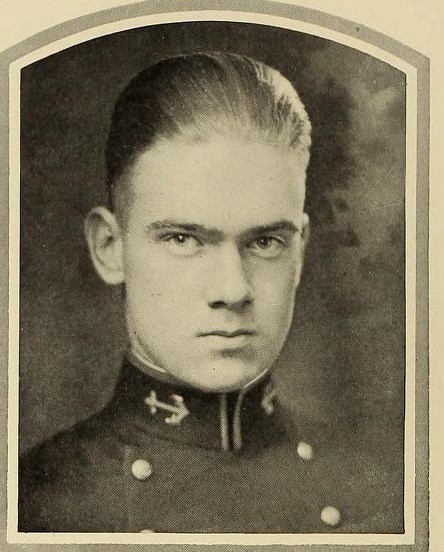
Neil Kittrell Dietrich (1901–1982) was a regular officer of the United States Navy. He came from Kentucky, graduated from the Naval Academy with the class of 1923, and retired as a rear admiral in 1958 after thirty-five years of commissioned service. His war was not spent on a bridge under fire. It was spent, for the longest stretch that can be documented, in the rooms where the invasion of Europe was made to work: first as head of the logistical staff of Commander Naval Forces Europe in London, for which he received the Legion of Merit, and then as flag secretary to Fleet Admiral Ernest J. King, Commander in Chief, United States Fleet, in Washington. He did hold a battleship temporary command—three days in Alabama in March 1943—and he is identified in ship histories as her first executive officer from commissioning. After the war he took the torpedo-scarred light cruiser Houston on a European goodwill cruise, served as naval attaché in London, and finished his active career commanding the Atlantic Fleet’s Mine Force and then the Hawaiian Sea Frontier. He is a different man from the several other Dietrichs who held commissions in the Navy in his lifetime, among them William Francis Dietrich and Henry Thornton Dietrich, and from Neff Theodore Dietrich, Jr., a younger officer of the late 1940s.
The Navy’s registers give his birth date as 29 September 1901. His yearbook, the Lucky Bag of 1923, names Lexington, Kentucky, as his home. A later compiled summary used on uboat.net and echoed in other secondary notices gives Hopkinsville, Kentucky, instead. No contemporary birth certificate or census entry was found for this article, so the place of birth remains unsettled between those two Kentucky towns; what is firm is the date and the state.
Nothing seen of his parents’ names or his father’s work has been confirmed from a contemporary document. The yearbook treats him as a Kentuckian with a German surname—“a true Kentucky Colonel, though he’s got a Deutscher name”—and that is as far as the evidence goes. By the time he reached Annapolis he already had the nickname that stuck: “Doc.”
He was appointed to the Naval Academy and graduated with the class of 1923. The Lucky Bag sketch of him is the usual mix of verse and teasing, and it describes a recognizable young man. “He’s a gifted man in Dago, our savvy little Neil,” it says of his Spanish, “But in the good old Navy line, that’s where he leads the field.” Forgive him any subject, from love to built-up guns, and “Doc will spiel a monologue, quite interspersed with puns.” His classmates credited him with half the humor of the yearbook itself: “In launching this our Lucky Bag, he quickly proved his worth, His fertile brain and facile pen filled half the book with mirth.” He was on the Lucky Bag staff, had starred as a plebe, played class baseball and class track, was an expert rifleman, and was editor of Reef Points, the midshipmen’s handbook. The sketch ends on friendship rather than ambition: “He’s quite unassuming, too, a friend through woe and weal, we need more in this Navy, here’s luck, we’re for you, Neil!”
He was commissioned an ensign on 8 June 1923. The quarterly Navy Directory places him from 1923 into early 1926 in the battleship Colorado. In January 1926 Aviation Week recorded him detaching from Colorado for temporary duty and instruction at the Naval Air Station, Pensacola; the directory of that period lists him there as under instruction. He did not remain in aviation. By mid-1926 the register and the directories place him in the destroyer Wood, first as an ensign and then as a lieutenant (junior grade). In early 1930 he was her gunnery officer.
From mid-1930 through 1932 he returned to Annapolis. The Academy’s annual registers list him in the Department of English and History, teaching midshipmen alongside civilian professors and a small cluster of line officers. In 1933 the directory places him in the aircraft carrier Langley, then under Commander P. N. L. Bellinger. From 1934 into early 1935 he was a lieutenant in the light cruiser Marblehead. A Rockland, Maine, newspaper covering her visit in June 1934 noted that The Marblehead Light, the ship’s paper, was edited by the chaplain with “Lieut. Dietrich as sports editor.” He was already the man who wrote and joked for the mess.
He was married by early 1933. An Army and Navy Journal notice of February 1933 records that “Mrs. Neil K. Dietrich, wife of Lt. Dietrich, USN,” had motored from Coronado to San Francisco for a month’s visit with her mother, Mrs. Charles Jenkins, taking with her “Diane, her young daughter.” No marriage announcement giving his wife’s full maiden name was found. The daughter appears later as Diane Landre Dietrich. In October 1943, while he was at sea as a commander, the Washington Evening Star placed Mrs. Neil K. Dietrich in South Arlington, entertaining guests for several days. The sources found do not say when they married or where Diane was born.
From mid-1935 into early 1937 he was again at the Naval Academy, once more in English and History. In the spring of 1937 he left teaching for flag staff work. The directories of late 1937 and January 1938 list him as aide and flag lieutenant on the staff of the Commander, Battleships, Battle Force, flying his flag in West Virginia—Vice Admiral E. C. Kalbfus. He was not her captain. A command list also gives him the destroyer Lamson from 1 June 1937 to 16 June 1938. The directories for those months place him on the staff, not in that ship, so that command is not kept. By January 1939 Kalbfus was Commander, Battle Force, in California, and Dietrich, now a lieutenant commander, was the admiral’s aide and flag secretary. A Long Beach social notice of New Year’s 1938 already named him “flag lieutenant on Admiral Kalbfus’ staff,” with Mrs. Dietrich assisting at a reception. He was learning the craft of the staff officer: the man who keeps the admiral’s paper moving and the admiral’s temper managed.
In 1940 and 1941 the directories place him in the Bureau of Navigation at the Navy Department in Washington, in the Officer Personnel Division’s Detail Section, under Rear Admiral C. W. Nimitz as Chief of Bureau. One of the captains in that same section was George B. Wilson—the officer who would commission Alabama in August 1942. The work of detailing officers for a fleet that was about to go to war is not the kind of duty that leaves action reports, but it put Dietrich at the center of the Navy’s manpower machine in the months before Pearl Harbor.
Compiled command lists and a later battleship history agree that when Alabama (BB-60) was placed in commission at Norfolk on 16 August 1942, under Captain George B. Wilson, Commander Neil K. Dietrich was her first executive officer. The ship spent the autumn fitting out and shaking down in Chesapeake Bay and Casco Bay. On 17 March 1943 Dietrich took temporary command; a compiled ship history says Wilson was ill. Three days later, on 20 March, Captain Fred D. Kirtland relieved him. The episode is a footnote in the ship’s career—Alabama went on to the British Home Fleet and the Murmansk convoy routes without him—but it fixes him in the ship he had helped bring into being. A published photographic history of Alabama later reproduced an early ship’s directive over his signature as executive officer. No action report or personal letter from those three days was found.
Where he spent the rest of 1943 is only partly visible. By January 1944 he was in London. Alfred Stanford’s Force Mulberry, a 1951 history of the artificial harbors built for the Normandy landings, written by an officer who had worked the problem, records that “one of the ablest U.S. Naval officers to appear in Europe, Captain (then Commander) Dietrich, USN, arrived to take charge of the Logistics Section with its hard-working group of young reserve technicians in Number Ten Grosvenor Square.” The section already held the best coastal maps in the United Kingdom and had made Mulberry its first project. When Rear Admiral Alan G. Kirk arrived with his own staff to become the operational head of the American naval assault force, the old ComNavEu organization was thrown into confusion about who would plan what. “Captain Dietrich’s sure diplomatic touch was equal to the occasion,” Stanford wrote, “and the Logistics Section changed its name to the more unassuming title of Task Force Support Section.” Admiral Harold R. Stark’s Twelfth Fleet would support Kirk; Dietrich’s people kept Mulberry moving as Project No. 1 under that quieter label. Stanford’s footnote identifies him as Capt. N. K. Dietrich, “later Flag Secretary to Commander-in-Chief, U.S. Fleet in Washington.”
The Legion of Merit citation synopsis published in Bureau of Naval Personnel Information Bulletin No. 357 (December 1946) confirms the same ground in official language: Captain Neil K. Dietrich was awarded the Legion of Merit for exceptionally meritorious conduct as Head of the Logistical Plans Division on the staff of Commander Naval Forces Europe, prior to and during the assault on the French coast on 6 June 1944. The full citation text was not located. Decades later he wrote his own account of Stark’s part in the invasion, published as “Admiral Stark’s Role” in the Naval Institute collection Assault on Normandy; that essay was not available for quotation here beyond its title and attribution, but it places him among the officers who chose to leave a public record of what the London staff had done.
After Normandy he went home to the hardest staff in the Navy. By the summer of 1945 he was flag secretary to Fleet Admiral Ernest J. King. A COMINCH letter of 29 June 1945 on irregularities in the handling of surrendered German submarines and prisoners at Portsmouth, New Hampshire, goes out over King’s signature with the authentication “NEIL K. DIETRICH, Flag Secretary.” Stanford’s footnote and that letter together fix the post. In December 1974 Thomas B. Buell interviewed him for Master of Sea Power, Buell’s biography of King; the Naval War College Archives preserve the interview among Buell’s research materials, under the name authority Dietrich, Neil K. (Neil Kittrell), 1901–1982. Jonathan W. Jordan’s later American Warlords cites the same Dietrich interview for remarks on King’s postwar relations with Secretary Forrestal. The tape and transcript were not read for this article; what can be said from the finding aids and footnotes is that Dietrich was close enough to King, and trusted enough by King’s biographers, to be asked how the admiral had been in the last months of the war.
His war, then, was a staff officer’s war: English and History at Annapolis, detailing at BuNav, the executive officer’s desk in a new battleship, three days in her chair, then Grosvenor Square and the Mulberry problem, then the corridor outside King’s office. The decorations and the contemporary praise speak to diplomacy under pressure and logistical judgment, not to a night action. No record was found of his private feelings about missing the Pacific combat that many of his classmates saw.
After the Japanese surrender he was given a cruiser. Compiled command lists date his command of the light cruiser Houston (CL-81) from 21 June 1946 to 30 January 1947. That ship was not the heavy cruiser Houston lost in 1942. Those dates come from NavSource and have not been checked against the ship’s logs; they are treated here with that caution. What is firmer is the contemporary itinerary. In July 1946 Houston, with Dietrich as commanding officer, sailed in company with Little Rock and a destroyer screen on a goodwill cruise of Scandinavian and Low Country ports under Admiral H. Kent Hewitt, Commander, United States Naval Forces Europe—Oslo, Gothenburg, Stockholm, Copenhagen, Antwerp and the rest. Houston had been nearly lost to two aerial torpedoes off Formosa in October 1944; she had finished her permanent repairs only in October 1945. Taking her into European harbors in the summer of 1946 was a demonstration that the ship, and the Navy that had rebuilt her, were whole again. She was decommissioned on 15 December 1947.
By March 1950 he appears in Washington social notices as a captain. In December 1952 the Army Navy Air Force Journal, reporting Marine decorations, noted that Captain Lemuel C. Shepherd III was “married to the former Miss Diana Dietrich, daughter of Rear Adm. and Mrs. Neil K. Dietrich of London, where the Admiral is U.S. Naval Attaché.” The engagement had been announced in May 1951, when Dietrich was still a captain, of Diane Landre Dietrich to Lemuel Cornick Shepherd III, USMC, son of the future Marine Commandant; the wedding was set for 23 June 1951. She had gone to St. Agnes’ School in Alexandria, Sweet Briar College, and George Washington University, class of 1950. The attaché posting in London thus falls in the early 1950s, after Houston and before his later flag commands. No full tour dates were found.
By April 1955 he was in Washington again as Deputy Commander of the Military Sea Transportation Service. He testified before a House Merchant Marine subcommittee on delays in the Navy’s tanker construction and charter program under Public Law 575, identifying himself as Rear Adm. N. K. Dietrich, deputy commander, MSTS. In January 1956 the Army Navy Air Force Journal recorded his orders from that billet to Commander, Mine Force, Atlantic Fleet. All Hands found him there in February 1957, headquartered in a historic rice mill at the Minecraft Base on the Ashley River in Charleston. The magazine’s portrait is one of the few contemporary descriptions of his manner in command: “This veteran of more than 37 years of naval service is not a high-pressure salesman type but is a firm believer who speaks with authority and experience.” He was trying to make the fleet take mine warfare seriously after the contact mines that had delayed Task Force 90 off Wonsan in 1950, and after the newer influence mines that could wait on the bottom for sound, pressure, or magnetism. The same issue shows him inspecting the MinLant honor guard with Vice Admiral James L. Holloway, Jr.
By late December 1957 he had shifted oceans. Wire stories on the search for survivors of an air disaster off Hawaii name Rear Adm. Neil K. Dietrich as commander of the Honolulu sea frontier (or of the search-and-rescue headquarters). In April 1958 the Royal Canadian Navy’s Crowsnest recorded that when HMCS Ontario visited Honolulu, Rear-Admiral Rayner called on “Rear-Admiral N. K. Dietrich, Commander Hawaiian Sea Frontier.” That is the last active duty that can be firmly dated. The Army Navy Air Force Journal of 1 October 1960, announcing his election as a vice president of the Hazeltine Corporation of Great Neck, New York, stated that he had retired in 1958 and had since been Director of Economic Research of the Charleston, S.C., Development Board. The Navy register of 1960 lists him as RADM, RET. The arithmetic matches: ensign in June 1923, retired thirty-five years later.
He kept a hand in naval history. In March 1975, as Executive Vice President of the Naval Historical Foundation, he attended a Library of Congress luncheon marking the Foundation’s manuscript catalog; Admiral R. B. Carney was chairman of the board. On 10 December 1974 he had given Buell the King interview. He died on 3 June 1982, at the age of eighty. The Washington Post published an obituary on 5 June 1982 under a headline that identified him as a retired Navy rear admiral. The text of that notice was not retrieved for this article; the date of death is corroborated by the Naval War College name authority and by the biographical note attached to his Normandy essay. Where he is buried was not established from the sources found. His wife’s death date was not found. Diane’s later life after the Shepherd marriage is likewise untraced here.
What survived of him in print is the midshipman’s pen, the staff officer’s diplomacy, the mine admiral’s quiet insistence, and the old man’s willingness to talk about King and Stark. The sea shaped him less by battle than by the work of making other men’s battles possible.