Ships
- USS North Carolina (BB-55) Captain, 23 October 1941 – 1 June 1942
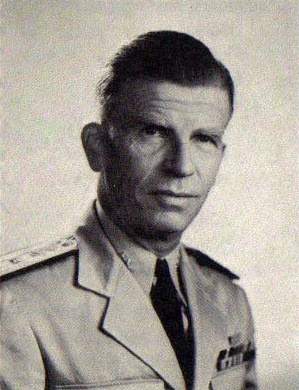
Oscar C. Badger was born in Washington, D.C., on 26 June 1890, the son of Rear Admiral Charles J. Badger and the grandson of Commodore Oscar C. Badger. President Theodore Roosevelt appointed him to the Naval Academy from the District of Columbia. He graduated in 1911 and joined the battleship Utah. Commissioned an ensign the next year, he was still aboard Utah when American sailors and Marines landed at Veracruz in April 1914. On 21 and 22 April he took his company into the fighting ashore. He received the Medal of Honor for the way he led those men.
In the First World War he served with destroyers in European waters. In 1918, while a temporary lieutenant commander, he commanded Worden, and that command brought him the Navy Cross. After the armistice he was assigned to the Bureau of Ordnance in Washington. In 1921 he took the destroyer Pruitt, and his lieutenant commander’s rank was made permanent. Promoted to commander in 1931, he commanded Southard and then served as executive officer of the destroyer tender Melville. Three years on the Naval Academy staff followed. In 1936 he became executive officer of the cruiser Indianapolis. He made captain in June 1938, finished the senior course at the Naval War College, and served as secretary of the Navy’s General Board.
In December 1940 Badger became chief of staff and aide to Admiral Ernest J. King, first with the Patrol Force and, from February 1941, with the Atlantic Fleet. On 23 October 1941 he took command of North Carolina, the first of the new fast battleships. Olaf M. Hustvedt had commissioned her at New York the previous April. Through the winter and spring after Pearl Harbor, Badger worked the ship up and pressed a much heavier battery of machine guns and rapid-fire antiaircraft guns aboard her. Other ships soon adopted the same kind of armament. He remained her captain until 1 June 1942. North Carolina sailed for the Pacific nine days later.
In September 1942 he was promoted to rear admiral and placed in command of the Atlantic Fleet’s destroyers, with additional duty over several destroyer flotillas. The command grew into a large force of destroyers and patrol craft engaged against German submarines. That December, Admiral King called him back to Washington as Assistant Chief of Naval Operations for Logistics Plans. He also headed logistics planning for the Joint Chiefs of Staff and advised the Allied chiefs on supply, including at the Quebec and Cairo conferences. He received the Legion of Merit more than once for his service in the Second World War.
In February 1944 he returned to sea as commander of the service squadrons of the South Pacific Force. From October 1944 he commanded Battleship Division 7 through the last year of the Pacific war. He also held a short tour with Battleship Squadron 2 and Battleship Division 1. When Japan surrendered, he went ashore to help secure Tokyo Bay for the fleet that was coming in.
In December 1945 he was promoted to vice admiral and assigned as Commander, Naval Forces, Western Pacific. In that post he helped organize the homeward movement of American troops known as Magic Carpet and the Bikini atomic tests known as Crossroads. Later he commanded the Eleventh Naval District and the Eastern Sea Frontier. He retired in 1952 with the rank of admiral. Oscar C. Badger died on 30 November 1958 and was buried at Arlington National Cemetery.