Ships
- U-537 Commanding officer from commissioning, 27 January 1943 · Lost with her at 0026 on 10 November 1944. The commander list dates his death 9 November.
Peter Iwan Boto Schrewe was born on 3 December 1913 at Großhof, near Tapiau in East Prussia. He had been in the merchant marine. On 8 April 1934 he entered the Reichsmarine as an officer candidate with Crew 34.
Training followed the usual path. Infantry with the II. Schiffsstammabteilung der Ostsee at Stralsund, then the sail training ship Gorch Fock, then a long foreign cruise in the light cruiser Karlsruhe: South America, Cape Horn, Central and North America, the Panama Canal, and home by way of Spain. The officer course was at the Marineschule in Flensburg-Mürwik.
From September 1939 to September 1940 he was detached to naval aviation. Observer schools at Dievenow, Bug on Rügen, and Parow came first. He then flew as an observer with 1./Bordfliegergruppe 196 from the battleship Scharnhorst. The Aircraft Observer Badge is dated December 1939.
Late in 1940 he moved to the U-boat arm. After watch-officer courses at Flensburg-Mürwik, including torpedo and signals, he was first watch officer of U-48 under Kapitänleutnant Herbert Schultze. On two North Atlantic patrols in the spring of 1941 that boat sank ships the lists put at well over 50,000 gross tons. The figure is the boat's, under Schultze. In 1942 he was first watch officer of U-378 under Alfred Hoschatt in the Arctic. From June to September 1942 he held U-378 in temporary command, and from September to November he held U-591 the same way. The patrol lists give him no sailing in either boat.
He commissioned U-537 on 27 January 1943 and kept her until she was lost. He was her only commander. The rank on that date was Kapitänleutnant, dated 1 January 1943. She made three war patrols. Days at sea are printed as 209 and as 210. She sank no ships and damaged none.
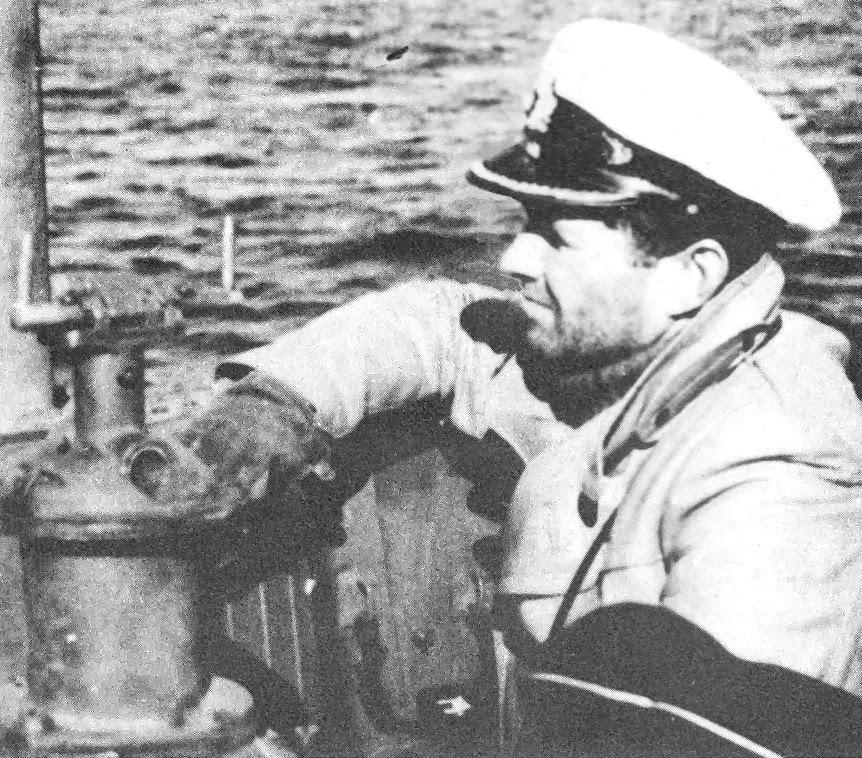
The first patrol left Kiel, staged through Norway, and on 22 October 1943 landed a party in Martin Bay, Labrador, to set up Wetter-Funkgerät Land-26, called Kurt. Accounts call that the only armed German landing on the North American mainland in the war. The photograph shows him on her bridge that day. She then patrolled off Newfoundland, came through attacks by Canadian aircraft, and reached Lorient in December.
In March 1944 he took her around Africa and across the Indian Ocean with the Monsun boats. The passage was about 131 days. She reached Batavia early in August, carrying supplies and equipment for other boats and cargo for Japan, and later moved to Surabaya. On 9 November 1944 she sailed for the west and south-western coast of Australia.
At 0026 on 10 November, in the Java Sea east of Surabaya, torpedoes from Flounder (SS-251) sank her. James Edward Stevens had Flounder. uboat.net prints the place as 7°13' S, 115°17' E. Schrewe was thirty. Fifty-eight men died with him. There were no survivors. The commander list dates his death 9 November, the day she left Surabaya.
Awards named for him are the Dienstauszeichnung IV. Klasse in 1938, the Aircraft Observer Badge in 1939, the Iron Cross 2nd Class in 1940, the U-boat War Badge 1939 in 1941, the Iron Cross 1st Class in 1942, the Fleet War Badge, and the U-boat Front Clasp in Bronze in 1944. The rank steps on the record run from Fähnrich zur See on 1 July 1935 and Oberfähnrich zur See on 1 January 1937 to Leutnant zur See on 1 April 1937, Oberleutnant zur See on 1 April 1939, and Kapitänleutnant on 1 January 1943.