Ships
- USS Nevada (BB-36) Captain from 21 July 1943 · Relieved on 4 October 1944
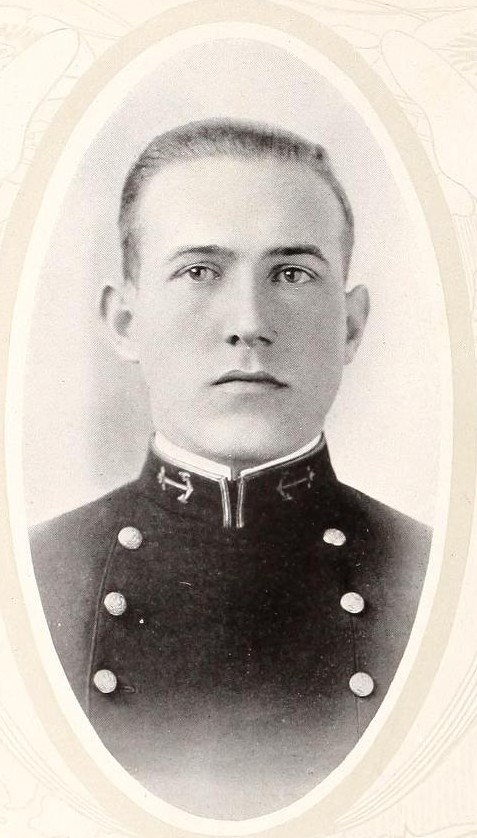
Powell McClellan Rhea was born in Cincinnati, Arkansas, on 15 August 1891. He graduated from the United States Naval Academy with the class of 1915. On 12 October 1923 he took command of the submarine S-1 and was still in that command at the beginning of 1925. He was promoted to commander on 1 September 1935 and to captain on 1 July 1941.
On 21 July 1943 he became commanding officer of the battleship Nevada, relieving Willard A. Kitts III. The ship had been badly damaged at Pearl Harbor, salvaged, and rebuilt, and in May 1943, under Kitts, she had bombarded Japanese positions on Attu. Among the officers who had commanded her in earlier years was William Sowden Sims, who had her during 1916. From the summer of 1943 Rhea kept Nevada on Atlantic convoy duty, ready if a German heavy ship tried to break out onto the ocean routes.
In April 1944 Nevada reached the United Kingdom to prepare for the cross-Channel invasion. Her floatplane pilots went temporarily to Observation Squadron 7 and flew Spitfires from the Royal Naval Air Station at Lee-on-Solent, spotting the fall of shot for the main battery. Rear Admiral Morton Deyo embarked and used the battleship as his flagship for the Normandy bombardment.
Before dawn on 6 June 1944 Nevada anchored off Utah Beach and opened fire on the German coast defenses. After the heavy guns had silenced casemated batteries near La Madeleine and Varreville, Rhea closed the range by about 1,100 yards so the 5-inch battery and the quadruple 40-millimeter mounts could reach pillboxes, mortars, and machine guns along the shore. She stayed in support of the troops from 6 through 17 June. On 25 June she joined the bombardment of the heavy defenses at Cherbourg. Her 14-inch shells were called onto targets as far as about 17 nautical miles inland, and some of the closest shoots fell only about 600 yards from American troops. German counterbattery fire put 27 straddles around her in the course of those bombardments, and she came through unhit. For his conduct as commanding officer on 6 June and at Cherbourg on 25 June, Rhea received the Silver Star.
In August 1944 he took Nevada into the invasion of southern France and again stood close in support of troops going ashore. A Gold Star in lieu of a second Silver Star followed for that assault.
Homer L. Grosskopf relieved him on 4 October 1944, and the battleship’s later Pacific bombardments were fought under that command. Rhea retired as a rear admiral. He died in Fayetteville, Arkansas, on 15 August 1969, his seventy-eighth birthday.