Ships
- USS West Virginia (BB-48) Captain from 2 May 1945 · Relieved on 17 January 1946
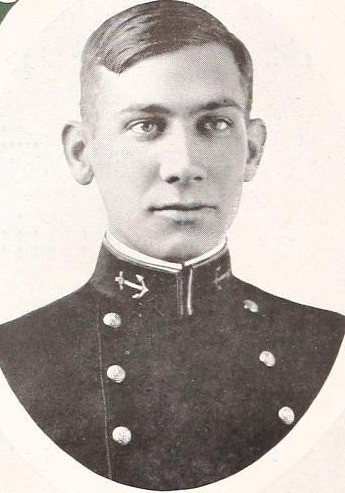
Raymond Wilson Holsinger was born in Rosedale, Kansas, on 25 January 1897, the son of Clarence Holsinger and Olive Wilson. He graduated from the United States Naval Academy with the Class of 1920 and spent his career as a line officer. By 1 July 1939 he held the rank of commander. The Second World War then split his service between the ordnance establishment in Washington and command at sea, and it ended with him on the bridge of a battleship that had been raised from Pearl Harbor.
In the first winter of the war he was chief of the ammunition section in the Bureau of Ordnance, serving from December 1941 to September 1942 while the Navy was arming a fleet for both oceans. He was advanced to the temporary rank of captain on 18 June 1942. He next commanded the old battleship Wyoming, then employed as a gunnery training ship, and left her on 4 December 1943. From that December until April 1945 he was director of the Production Division in the same bureau, responsible for the output of the guns and ammunition the fleet was expending across the Pacific. The Legion of Merit recognized that shore duty, covering his work as chief of the ammunition section and as director of the Production Division.
On 2 May 1945 he relieved Herbert Victor Wiley as commanding officer of West Virginia (BB-48). The Colorado-class ship carried eight 16-inch guns. She had been torn open by torpedoes and bombs on 7 December 1941, had settled on the bottom of Pearl Harbor, and had been salvaged and rebuilt on the West Coast. Under Wiley she had returned to the fighting fleet in 1944, had fired in the night battle of Surigao Strait, and had bombarded beaches from Mindoro and Lingayen through Iwo Jima to Okinawa. Holsinger took her while the Okinawa campaign was still being fought, and through the late spring of 1945 he kept the battleship on that gunfire duty as the fighting ashore continued.
After Okinawa, West Virginia moved north with the forces closing on Japan. In the late summer of 1945 she entered Tokyo Bay and was present for the formal surrender on 2 September 1945. The cruise Holsinger now commanded was the last stretch of a much longer war. Leyte, Surigao Strait, Mindoro, Lingayen, and Iwo Jima belonged to the months before he came aboard. Okinawa straddled the change of command. Tokyo belonged to his own watch.
On 11 October 1945, with West Virginia on the passage toward San Diego, he wrote the crew that the war cruise was on its last lap. He told them that arrival on the West Coast would begin the breakup of the company that had fought the ship, and that within about ninety days she was expected to lie in caretaker status with six officers and sixty-six men. He asked them to remember Leyte, Surigao, Mindoro, Lingayen, Iwo, Okinawa, and Tokyo, and he traced the ship’s record to long training and to men who had stayed vigilant and proud of her, at sea and on liberty. He remained in command through the early months of that inactivation and was relieved on 17 January 1946.
Holsinger retired from the Navy as a rear admiral and made his home in Arlington, Virginia. He died there on 2 September 1985 and was buried at Arlington National Cemetery. His war combined the two tasks the fleet depended on at once: producing the ammunition and weapons in the Bureau of Ordnance, and, in the final year, commanding West Virginia from the last fighting off Okinawa to the surrender in Tokyo Bay and the quiet passage home.