Ships
- USS Louisville (CA-28) Captain from 15 December 1944 · Relieved on 19 October 1945
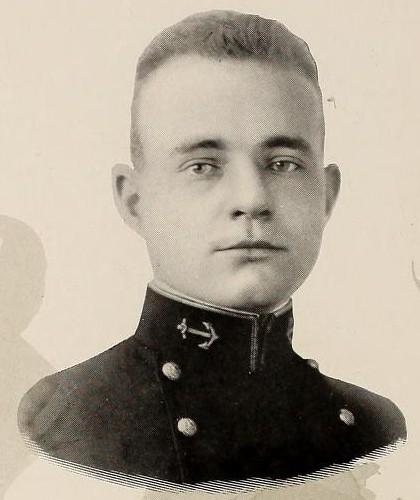
Rex LeGrande Hicks was born on 4 April 1897 at Stronghurst, in Henderson County, Illinois, the son of James and Nora Hicks. He graduated from Stronghurst High School in 1915 and entered the United States Naval Academy at Annapolis, finishing with the class of 1919. He remained a career officer after graduation, was promoted to commander on 23 June 1938, and was promoted to captain on 17 June 1942, in the first summer of the Pacific war. He stayed in the Navy long enough to retire as a rear admiral.
On 15 December 1944 he took command of the heavy cruiser USS Louisville (CA-28). Louisville was a Northampton-class ship, commissioned in January 1931 with Edward J. Marquart as her first commanding officer, and by the end of 1944 she was a practiced gunfire ship. In the months before Hicks came aboard she had served as flagship for Jesse Barrett Oldendorf during the Marshalls landings and the Leyte campaign. On the night of 24–25 October 1944 she had stood in Oldendorf's battle line when that force crossed the T of a Japanese squadron in Surigao Strait. Hicks therefore inherited a cruiser already known for shore bombardment and for that last great gun action of the battle line, just as the fleet turned from Leyte toward Luzon.
Louisville closed 1944 with the fast carriers of Task Force 38, covering the strikes that prepared the Luzon invasion, and early in January 1945 she headed for Lingayen Gulf with the bombardment force. On 5 January a Japanese kamikaze hit her number-two 8-inch turret and put that mount out of action. One sailor was killed, and seventeen men were burned or otherwise hurt. Hicks was severely burned in the explosion. He stayed at his station on the bridge and directed the firefighting and the care of the wounded until his injuries forced him to leave the bridge. For that conduct the Commander of the Seventh Fleet awarded him the Silver Star on 3 June 1945, for action on 5 January.
A second kamikaze struck the starboard side of the signal bridge on 6 January. Rear Admiral Theodore E. Chandler, commander of Cruiser Division 4, was embarked in Louisville. He was mortally hurt while helping sailors work the fire hoses, and he died the next day. Through the emergency, Commander William P. McCarty directed the fight against the fires and the work of restoring the ship. Damaged as she was, Louisville remained on the gun line, shelled the Lingayen beaches, and engaged aircraft overhead. On 9 January she was withdrawn for repair and arrived off the Mare Island Navy Yard on 6 February 1945.
The yard finished the work on 10 April 1945. Louisville then carried about fifty officers and a hundred members of Admiral William F. Halsey's staff to the battleship Missouri at Guam. She joined Task Force 54 and returned to gunfire support in the closing weeks of the Okinawa campaign. On 5 June 1945 another kamikaze hit her. She was able to resume duty within a few days, and on 15 June she was ordered to Pearl Harbor, which ended her part in the fighting. Hicks remained her captain through that return from the combat zone.
After Japan's surrender, Louisville supported occupation duty along the China coast. Hicks was relieved on 19 October 1945, closing a command that had begun on 15 December 1944. The cruiser afterward came home and was decommissioned at the Philadelphia Navy Yard in June 1946. She remained in reserve until September 1959, when she was sold for scrapping.
Hicks died on 26 December 1972, at the age of seventy-five, and was buried at Arlington National Cemetery. The Silver Star is the public record of his Lingayen Gulf command: burned by the first kamikaze on 5 January 1945, he had stayed on the bridge of Louisville and kept charge of the crew until his wounds forced him from the station. His path had run from a small Illinois town through the Naval Academy class of 1919 to command of a heavy cruiser in the last year of the Pacific war, and he left the service as a rear admiral.