Ships
- USS Minneapolis (CA-36) Captain from 19 July 1943 · Relieved on 20 May 1944
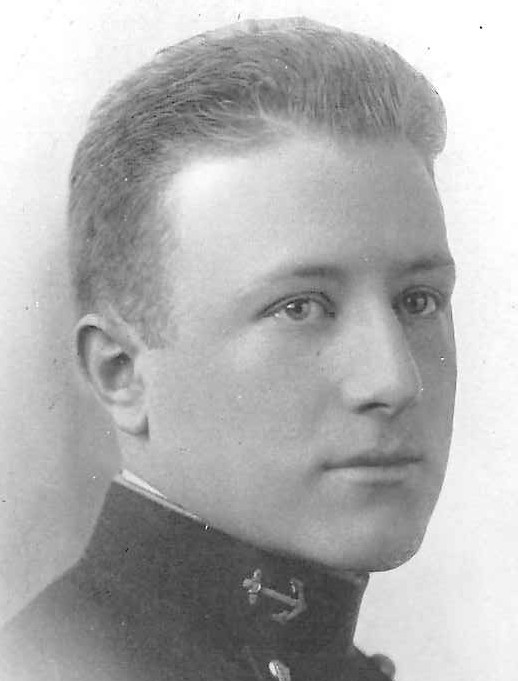
Richard Waller Bates was born in San Francisco, California, on 16 January 1892, the son of Henry Lester Bates and Helen Rixon Bates. Appointed to the United States Naval Academy from California, he entered in 1911, graduated with the Class of 1915, and was commissioned an ensign on 5 June 1915.
In the years between the world wars his assignments ran through engineering duty and command of small ships. From 1922 to 1925 he was electrical officer of the battleship Maryland. He then served as an assistant in engineering at the Postgraduate School and, from 1927 to 1930, as engineering officer of the light cruiser Richmond. Shore duty in Hawaii followed, with the Hydrographic Office in Honolulu and as commander of the Naval Station there. At sea again he commanded the destroyer Buchanan, the oiler Ramapo, and the destroyer Long. Promoted to commander in June 1936, he commanded Clark, flagship of Destroyer Squadron Three in the Battle Force, from June 1938 until June 1940.
He was next sent to the senior course at the Naval War College in Newport, Rhode Island, and finished it in May 1941. He stayed on the college staff and became head of the Department of Strategy. Promoted to captain on 1 July 1941, he remained at Newport until July 1943, through the opening year and a half of the Pacific war.
On 19 July 1943 Bates assumed command of the heavy cruiser Minneapolis. The ship, commissioned in 1934 under Gordon W. Haines, had already been through the early carrier raids and the fighting off Guadalcanal. At the Battle of Tassafaronga on 30 November 1942 a torpedo had carried away her bow and a second hit had flooded firerooms and crippled her power. Emergency repairs in the Solomons were followed by a long yard period at Pearl Harbor and Mare Island. Bates took her while that work was being finished. She was back in the Pacific by late summer, and under his command she bombarded Wake Island on 5 October 1943 and, beginning on 20 November, supported the assault on Makin in the Gilbert Islands.
Through the winter and early spring she stayed in the Central Pacific with the carrier raids and the amphibious assaults. She screened carriers for the December strikes on Kwajalein and Majuro, joined the capture of the Kwajalein group, and bombarded Taroa at the end of January 1944. In the raid on Truk on 16 and 17 February she took part in the daylight gun action in which the Japanese light cruiser Katori was sunk. On 22 February she was with the strikes against Saipan and Tinian, and from 30 March to 1 April she joined the attacks on Yap, Woleai, and the Palau Islands. For his command from 19 July 1943 to 7 April 1944 he received the Legion of Merit with the combat distinguishing device.
He was relieved of command of Minneapolis on 20 May 1944 and reported to the Commander in Chief, Pacific Fleet, serving on that staff into the summer. In September he became chief of staff to the commander of Cruiser Division Four, with the bombardment and fire-support groups of the Seventh Fleet for the Philippines campaign. In the early hours of 25 October 1944, at the Battle of Surigao Strait, he handled the plans, kept the officer in tactical command informed as the action developed, and steadied the staff under fire. The Navy Cross followed for that night.
In December 1944 he became chief of staff and aide to the commander of Battleship Division Two and served through the Lingayen Gulf landings on Luzon and into the Okinawa operation. A further Legion of Merit covered his duty from 16 October 1944 to 22 January 1945. In May 1945, with the temporary rank of commodore from 30 April, he took command of the Motor Torpedo Boat Squadrons, Pacific Fleet. That December he became chief of staff to the Commander, Philippine Sea Frontier.
After the war he returned to the staff of the Naval War College. He reverted to captain in 1947 and retired on 1 May 1949 as a rear admiral. He died in Newport, Rhode Island, in December 1973. His decorations included the Navy Cross, the Legion of Merit with two gold stars and the combat distinguishing device, the Mexican Service Medal, the World War I Victory Medal with Patrol Clasp, the Yangtze Service Medal, the Navy Unit Commendation for service in the battleship Tennessee, the American Defense Service Medal, the American Campaign Medal, the Asiatic-Pacific Campaign Medal, the Philippine Liberation Ribbon, and the World War II Victory Medal.