Ships
- USS Brown (DD-546) Captain from 13 January 1945
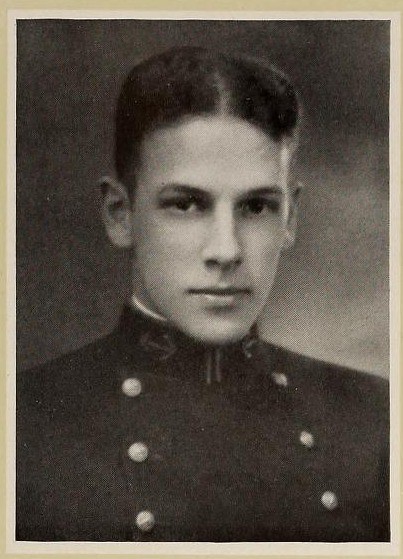
Robert Rutherford Craighill (1907–1999) was a United States Navy officer of the Naval Academy class of 1930. He survived the loss of the heavy cruiser Vincennes in the night battle off Savo Island, and he was awarded the Navy Cross for commanding the destroyer Brown on the radar-picket line off Okinawa. He should not be confused with his younger brother, Richard Starr Craighill, Naval Academy 1932, later a rear admiral and a captain of Little Rock; with Lloyd R. Craighill, the missionary bishop; or with William Price Craighill, the nineteenth-century Chief of Engineers. A 1970s diocesan journal names a Robert St. Clair Craighill; that is a different name, and he is not treated here as the same man. Nor is he Thomas Henry Copeman, who commanded Brown before him.
At Annapolis the Lucky Bag of 1930 called him “Bob.” His Navy file number was 63265 (printed 063265 in the 1958 index). He was commissioned ensign on 5 June 1930, and the registers follow him from the Lexington to a captain still on the active list on 1 January 1958. What can be said about the inside of him is one night he wrote down, and a citation written for two stretches of picket duty off Okinawa. The rest is billets, a brother, and a long silence where a wife, a postwar ship, and a flag rank would be if the books had been opened all the way through.
The Navy Register gives his birthday as 23 November 1907. It does not give a town. The Lucky Bag prints “Washington, D. C.” under the name, which is the Academy’s home address, not a birth certificate, and then says that twenty-odd years before, the smoke of Pittsburgh cleared long enough for another future Navy man to look at the sun, and that what Pittsburgh lost, Washington gained. Twenty-odd years before a 1930 yearbook is the right distance from November 1907. It is yearbook language for a Pittsburgh beginning and a Washington boyhood. It is not a certificate.
His brother’s biography, printed by the association of the cruiser Little Rock, says Richard Starr Craighill was born in Oakmont, Pennsylvania, on 27 August 1909, and names the parents as James Rutherford Craighill and Ellen Wattles (Lee) Craighill. The same page says Richard was the younger brother of Robert Rutherford Craighill. A commander list says Robert himself was born in Oakmont. Oakmont sits in the Pittsburgh smoke the yearbook is talking about, and a younger brother born there two years later makes one household. No civil birth record, no census, and no obituary of the father were read for this essay. Oakmont is the place those two accounts agree to suggest. The register does not confirm it. The parents are named only on the brother’s page. Their work, their deaths, and the house in Washington are not in anything read here.
The classmates who wrote him up called him Bob. They said nothing kept him from athletics, that wrestling took him first and that in the spring he was on the cinder path, and that he was not a star. The track-squad photograph for the book puts him in the fourth row. The choir list puts him among the first basses and among the bass soloists. The sketch says his solos were a feature of chapel, and then spends its remaining sentences on his looks, his voice, and the trust of the class. That is how a class wanted a singer and a wrestler remembered at twenty-two. The activities are in the book’s own lists. The adjectives are not evidence of what he did later. No stripes are printed under his sketch in the copy that was read. Richard, two years behind, is in the 1932 Lucky Bag as a different man, from the same Washington the older brother had already claimed as home, and that sketch is not this life.
Nothing else of the years before Annapolis has turned up. No school, no father’s trade, no mother’s life apart from the name on the brother’s page.
He was in the first class, the class of 1930, when the Naval Academy’s annual register for 1929–30 printed its merit roll. His name is on that roll. The column that should say which state appointed him, and the column for the day he was admitted, are scrambled in the copy that was read, so neither is taken from it. The Lucky Bag’s Washington is the home the Academy was willing to print. The brother’s page says Richard was appointed from Virginia after two years at George Washington University. That is the younger brother’s appointment, not this one.
He was commissioned ensign on 5 June 1930. That day is the class footnote in the register of 1 July 1943, “Commissioned ensign June 5, 1930,” and it is the commission field beside his name in the register of 1 January 1950. On 1 January 1931 the register and the Navy Directory both have him an ensign in Lexington. On 1 April 1931 the directory has moved him to Louisville. No directory for 1932 was read. On 1 January 1933 the register has him an ensign in Houston, and the directory of 1 April 1933 still has him there. The billet is not given. He was twenty-five, on cruisers, and the books do not say whether he had asked for them.
By 1 April 1934 he was a lieutenant (junior grade) in Black Hawk. The directory’s ship page lists him in her company under Captain R. W. Mathewson, with no specialty after his name. Black Hawk (AD-9) was the destroyer tender of the Asiatic Fleet. The photograph record of the ship establishes the hull. It does not put him on any particular quarterdeck in China or the Philippines. On 1 January 1935 the same book has him in Stewart, and the ship page is more precise: lieutenant (junior grade), communications, in a destroyer the directory heads as flagship of Destroyer Division 14, Asiatic destroyers. The division commander is Commander A. M. R. Allen. The captain is Lieutenant Commander P. S. Goen. Craighill’s name sits between the junior lieutenant W. W. Graham Jr. and the gunnery officer, R. P. Hunter. Communications in an Asiatic destroyer is the billet. What the radio watch sounded like, and whether he wanted gunnery instead, is not in the directory.
The register of 1 July 1936 still has him a lieutenant (junior grade), and the duty that can be read beside the name is J. Fred Talbot. The directory of 1 January 1937 spells her J. Fred Talbott and gives the billet: gunnery. She was an old destroyer. The directory does not say where she was lying on New Year’s Day. On 1 January 1938 he is a lieutenant (junior grade) at the Naval Academy, Annapolis. His brother, the same month, is engineer of Badger. On 1 January 1939 Robert is a lieutenant at the Academy. The directory does not add “instruction,” the word it uses for Richard that year, so the billet — company officer, instructor, or something else ashore in Annapolis — is not known. The date of rank as lieutenant, printed in the register of 1 July 1940 and still attached to him in later books, is 3 February 1938. That fits a man who was still a junior-grade lieutenant on New Year’s Day 1938 and a lieutenant a year later.
The register of 1 July 1940 has him a lieutenant in Vincennes. The directory of 1 June 1940 lists him on her officer page with no specialty, under Captain J. R. Beardall, while the gunnery officer is Lieutenant Commander C. E. Voegeli. The directory of 1 November 1940 and the directory of 1 April 1941 still have him in Vincennes. On the April 1941 ship page Lieutenant Commander R. L. Adams is gun officer and Lieutenant C. D. Miller is communications. On that page Craighill is a lieutenant and nothing else. He had been her officer for at least ten months before the country was in the war, and the books do not yet call him a gunnery officer.
No wife is named in the registers, the Lucky Bag, the citation, or the brother’s page. No child is named anywhere that was read. If he married, the marriage is missing from the whole of what was opened.
The register of 1 July 1942 calls him a lieutenant commander. The day of that temporary rank was not read in the book. A commander list’s 15 June 1942 is the sort of date the registers often hide inside a year group, and it was not checked against an order. The same list’s 15 October 1942 for temporary commander is too early. The register of 1 July 1943 still has him among the lieutenant commanders, signal 3437, birth 23 November 1907. He is a commander in the register of 1 July 1944, file number visible in the index as 63265, and a commander again on 1 July 1945. The day he put on a commander’s leaves falls between those two July registers and was not read.
What the war itself preserves is one cruiser night and, three years later, a destroyer on the picket line.
Vincennes was lost on 9 August 1942, in the night battle off Savo Island, with Quincy and Astoria. The Office of Naval Intelligence combat narrative of that battle, built from the ships’ reports, names Lieutenant Commander Robert R. Craighill as assistant gunnery officer. The April 1941 directory had not given him that title. By the night of the battle the reports do.
A little after 0145 a sky lookout called his attention to a shape the lookout thought he saw broad on the port bow. Craighill searched with binoculars. There was a rain squall over Savo, and he could make out nothing. About two minutes later Patterson’s voice warning went out on the TBS, that strange ships were entering the harbor. The narrative says the warning was received in Vincennes and that it is not certain it reached the captain, Frederick L. Riefkohl, asleep in the emergency cabin, or even that the executive officer on the bridge heard it. Craighill sighted the star shells astern. What the bridge saw were the flares over Canberra and Chicago. Commander William E. A. Mullan, the executive officer, ordered general quarters. The warning was short of what the battery needed. Searchlights came on at about 7,000 yards on the port quarter, and salvos followed.
The narrative is careful about who saw the first hits. Lieutenant Commander R. L. Adams, the gunnery officer, reported the ship hit just after her first salvo. Riefkohl’s report and Craighill’s put the hit on the bridge just before the turrets fired. The two events were, the narrative says, very close together. She got off a second main-battery salvo to port. There was an explosion on the target and the enemy searchlight went out. Craighill saw that target make a radical turn to the left, as if it had gone out of control, and then lost it. The narrative will not give him the hit. The 5-inch battery, the destroyer Wilson, and perhaps Quincy may have been firing at the same ship.
She was torpedoed while turning, lost power for the main battery, and was raked from starboard. By about 0210 she was dead in the water and listing to port. Riefkohl had colors hoisted and illuminated; the narrative says they were lit by enemy searchlights. Adams reported that he had no guns left. The captain gave the order to prepare to abandon ship, then, at 0230, to abandon. He left the bridge ten minutes later. Craighill left just before him. The narrative quotes his report of the end. The ship was listed to about 45 degrees and going over faster. The top decks amidships were lit by the fires. He could see no one on them except one man on the well deck, who got to the starboard bulwark just forward of the catapult tower and climbed over. When they were about 200 yards off, she reached her beam ends, seemed to hesitate before the stacks went under, and, with burning planes and cranes falling to port into the water, turned slowly over and went down bow first.
That is his own account, as the combat narrative printed it. He was in the water, or in a boat, at 200 yards, and he watched her go. Who took him out of the water is not in the passage. He lived, because he wrote the paragraph, and because he is in the registers afterward. The brother’s page says the assistant gunnery officer was aboard when she was lost. The narrative is the stronger source, and it is also the only place his own words were found. Nothing he said about the men who were not on the well deck, or about the shape in the squall, was printed beyond those sentences.
From that morning until the spring of 1945 the registers that were read do not give him a ship. Wartime registers dropped the duty column. No directory after April 1941 was opened. No bureau order, no staff roster, and no newspaper notice of a new command was found. He was a commander by 1 July 1944. Where he stood the watches is blank.
Brown (DD-546) is the next ship, and the dates have to be kept apart.
She reached the Puget Sound Navy Yard on 12 January 1945 for overhaul, under Thomas Henry Copeman, who had had her since commissioning. A compiled list of her commanding officers relieves Copeman on 13 January 1945 and gives her to Robert Rutherford Craighill through 8 April 1946. That list is a lead. It was not read from a log. The ship history says she was ready for sea again on 1 March and left Seattle the next day, went by Pearl Harbor and Eniwetok to Saipan, and on 1 April screened a transport group in a feigned approach to the southeastern beaches of Okinawa. None of that movement names her captain. It is not written here as his passage.
What does name him is the Navy Cross, as printed by a medals compiler from Commander Destroyers, Pacific Fleet, serial 04005 of 30 November 1945. The citation calls him captain, then commander, commanding Brown, on radar-picket duty and then as a radar-picket support ship, off Okinawa, from 10 April to 18 May 1945 and from 16 June to 20 June 1945. It says the ship was a frequent target, that he kept up early air warning and fighter direction, and that with the ship’s own gunfire he directed the batteries in destroying seven hostile planes and assisting in eight more. The original serial was not opened. The compiler’s text is the citation that was read. “Captain” is the rank he held when later books styled him. On 1 July 1945, and in the serial’s own month if the July register was still current, he was a commander. The action rank in the citation is commander. That matches the registers.
The ship history does not name him in these weeks. The citation does, for those two spans, so the ship’s record inside them is the record of a ship he commanded. It is not a diary of his orders.
She took a radar-picket station off Point Bolo on 10 April. The next afternoon her guns shot the tail off a suicide plane. The history says the plane exploded into the sea about 150 yards short of hitting her amidships. She fought air attacks, day and night, through 15 April. On the night of 18 April a torpedo plane was driven off, circled, came in low astern, and dropped one torpedo. The wake ran parallel to her side, ten feet off, for the length of the hull. On the 19th she relieved Wickes on a picket station northwest of the island. Before dawn on the 21st she drove off one suicide plane. That afternoon she and Putnam fired on four planes from the north, and one crashed and burned at a distance. Before dawn on 28 April another suicide plane was shot down. Through the night she helped fight off four suicide raids. The history says two planes, already burning, narrowly missed another destroyer and a landing craft. The next day a periscope was seen about fifty yards off the starboard bow. She depth-charged a sound contact. Nothing came up.
On 4 May she helped shoot down another suicide plane. On the morning of 5 May a kamikaze came down the length of the ship. Pieces of it scattered on the forecastle. It exploded into the sea fifteen feet off the starboard bow. On 7 May her fighter-director team left her for Hugh W. Hadley. On the night of 11 May the northern picket was attacked by more than a hundred planes. Hadley and Evans shot down about thirty before Brown got there. She knocked down a torpedo plane that exploded just off the starboard quarter and sprayed the fantail with fragments, and a few minutes later shot down another as it came at the destroyer that was still fighting. On 18 May she left Okinawa for Apra Harbor, Guam, for replenishment and repairs. The citation’s first span ends that day. The Navy Unit Commendation, as transcribed on a ship-photograph page from a citation signed by James Forrestal, covers 10 April to 16 May, not to 18 May, and says the ship downed seven planes and assisted in five others, not eight. Both texts were kept. They do not agree on the last two days of the first stretch, or on the number of shared kills. The history’s incidents through 11 May sit inside both. The 16th, 17th, and 18th are inside the personal citation and, from the 16th, outside the unit citation as transcribed. The history gives no separate incident for those three days except the sailing for Guam on the 18th.
She was back off Okinawa on 14 June, two days before the second span in both citations. From the 16th to the 20th the history has her as a gunfire-support ship on a radar-picket station northwest of the island. That is the second window in which the citation says he commanded her. On 24 June she received a fighter-director team and stayed on the picket line until the 28th. The team left on the 30th. Those June days after the 20th are outside both citations. So is the rest of her war in the ship history: the screen of four escort carriers from 4 July toward Buckner Bay, oiler escorts, minesweeping cover in the East China Sea from 14 to 25 August, air-sea rescue off Okinawa until 28 September, Wakayama on that day, mail and passengers among Japanese ports until 31 October, San Diego on 17 November for inactivation, decommissioning on 1 August 1946. If the compiled dates are right, he still had her through 8 April 1946, which would put the occupation courier work and the first months of inactivation under his command, and would give her to Jay Wayne Land before the decommissioning. If they are wrong, his proved command is the two picket spans and nothing else. The ship history never says which. The later career of Brown, including Korea, is not his in any version. She was recommissioned in 1950 under Emerson H. Dimpfel.
The unit citation says the men attached during either period were authorized to wear the ribbon. It does not single him out. The Navy Cross is the decoration with his name on it. No other medal was found in a register that was legible. The registers of 1944 and 1945, in the copies read, do not show a decoration letter beside his name. The Navy Cross serial is dated 30 November 1945, after the 1 July 1945 register’s usual cutoff for distinctions. Absence from that book is not absence of the cross.
The register of 1 July 1947, which prints permanent rank beside a temporary-rank date, still shows him in the permanent grade of lieutenant, in the company of his Naval Academy classmates, with a date of rank that reads as 3 February 1938. That is the old lieutenant date, not a demotion. The temporary-rank column on that page is a blur of 15 November 1945 for the whole year group. It was not used as the day he became a commander. He had been a commander in print since the register of 1 July 1944.
On 1 January 1950 the register lists him a commander, date of rank 1 July 1949, birth 23 November 1907, commission 5 June 1930. The classmates beside him carry the same 1 July 1949. That is the cleanest postwar rank date in the books that were read, and it is a commander’s date. The registers of 1 January 1955 and 1 January 1956 call him captain, designator 1100, unrestricted line, and still print 1 July 1949 in the date column, with the same birthday. A captain’s date of rank of 1 July 1949 cannot sit beside a register that on 1 January 1950 still calls him commander, unless the later column is repeating an older precedence date or the promotion was backdated in a way this essay could not verify. He was a captain by the opening of 1955. The day he became one was not separated from that conflicting figure. The register of 1 January 1958 still has him a captain, 1100, file 063265, and does not mark him retired. It does not say where he was serving. Richard, in the same index, is also a captain, file 071460, a different number.
A compiled list of Vesole’s commanding officers gives him that destroyer from November 1948 to 8 October 1949 and styles him commander, with John Corry before him and Robert Edward Sinnott after. The ship’s own history was not read. The list was not checked against a log. It is not narrated here as a cruise. No other postwar command was found.
Secondary accounts call him a rear admiral. The Brown commanding-officer list says “later RADM.” The medals compiler says he retired as a rear admiral. The Little Rock page styles him Rear Admiral Robert Rutherford Craighill in the course of identifying Richard’s brother. A fragment of the 1962 register, cut off in the middle of the C names while it was being copied, includes Richard Starr Craighill with a 1 April 1960 date that matches the brother’s own flag date, and in that stretch does not include Robert. The fragment is not a full book, so it does not prove he was absent from the 1962 register. It also does not prove the flag rank. No selection board, no flag orders, and no retired list were read. If the rear admiral’s rank was a tombstone promotion after retirement as a captain, or an active flag he held after 1958, the registers in hand cannot say which. They can say he was a captain, not retired, on 1 January 1958.
The same Little Rock page says that after he retired he worked as a consultant for the Department of State, was director of development at St. Stephen’s Episcopal School in Alexandria, entered Virginia Theological Seminary, graduated in 1975, and was ordained an Episcopal priest. The sentence that introduces that paragraph says he retired from the Navy in 1999. That year is the year the death notices give him, not a credible retirement date for a man who would then have graduated from seminary twenty-four years earlier. The retirement clause is wrong on its face. The seminary, the school, and the State Department job were not found anywhere else. They are not narrated as the life he lived after the Navy. They are a single page’s claim, attached to a sentence that cannot be true.
The death is in the same thin layer. The medals compiler gives 19 April 1999. The commander list gives that day and McLean, Virginia. A commercial death index gives the same day, the same birthday the registers already have, a Virginia Social Security number, and the McLean zip code 22101. No newspaper obituary was opened. No grave was found. He would have been ninety-one. The brother’s Washington Post obituary, of 10 February 1980, does not mention him in the portion that was read. No word of his own about the squall, the man on the well deck, or the plane fifteen feet off the bow was found beyond the combat narrative.