Ships
- USS Essex (CV-9) Captain from 30 June 1945 · Relieved on 1 November 1945
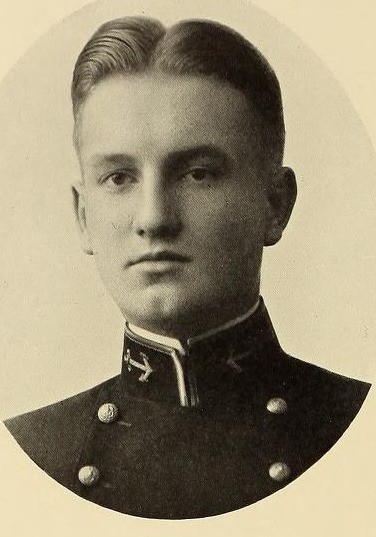
Roscoe Leroy Bowman was born in Carroll, Iowa, on 21 March 1900. He entered the United States Naval Academy on 7 June 1917 as a midshipman in the class of 1921-A and was commissioned an ensign on 5 June 1920. That summer he fenced sabre for the United States at the Olympic Games in Antwerp, in the individual competition and on the team that placed fifth. His brother William had fenced for the United States at the Stockholm Games in 1912.
He remained a career officer. He became a lieutenant junior grade in 1923, a lieutenant in 1926, a lieutenant commander in 1936, and a commander on 1 July 1941. On 20 June 1942 he received the temporary rank of captain.
His first carrier command was the escort carrier Corregidor (CVE-58), which he led from 31 August 1943 to 21 September 1944. From 21 June to 1 August 1944, during operations against Japanese forces in the Pacific, he kept the ship ready for sustained action while her aircraft struck shore positions and enemy air power. For that service he received the Legion of Merit with Combat V.
He next commanded the escort carrier Commencement Bay (CVE-105) from the day she was commissioned, 27 November 1944, until 28 April 1945, through the name ship's first months in service.
On 30 June 1945 Bowman became captain of the fleet carrier Essex (CV-9). Donald Bradley Duncan had commissioned Essex on 31 December 1942. Bowman had the ship for the last campaign of the Pacific war. From 10 July to 15 August her aircraft joined the final raids on the Japanese home islands, and on 15 July planes from Essex bombed Hakodate. A Legion of Merit with Combat V recognized his leadership in the July offensive, citing the calm judgment with which he sent the air group against enemy aircraft, shipping, and installations.
He was still in command when Japan surrendered. Essex continued defensive patrols until 3 September, when she was ordered to Bremerton, Washington, to begin inactivation. Bowman was relieved on 1 November 1945.
He retired on 1 July 1950 as a rear admiral. For his wartime service he also received decorations from the governments of Brazil, Spain, Peru, Chile, and the Philippines. He died in Washington, D.C., on 24 September 1964, and was buried at Arlington National Cemetery.