Ships
- USS Essex (CV-9) Captain from 31 December 1942 · Relieved on 6 November 1943
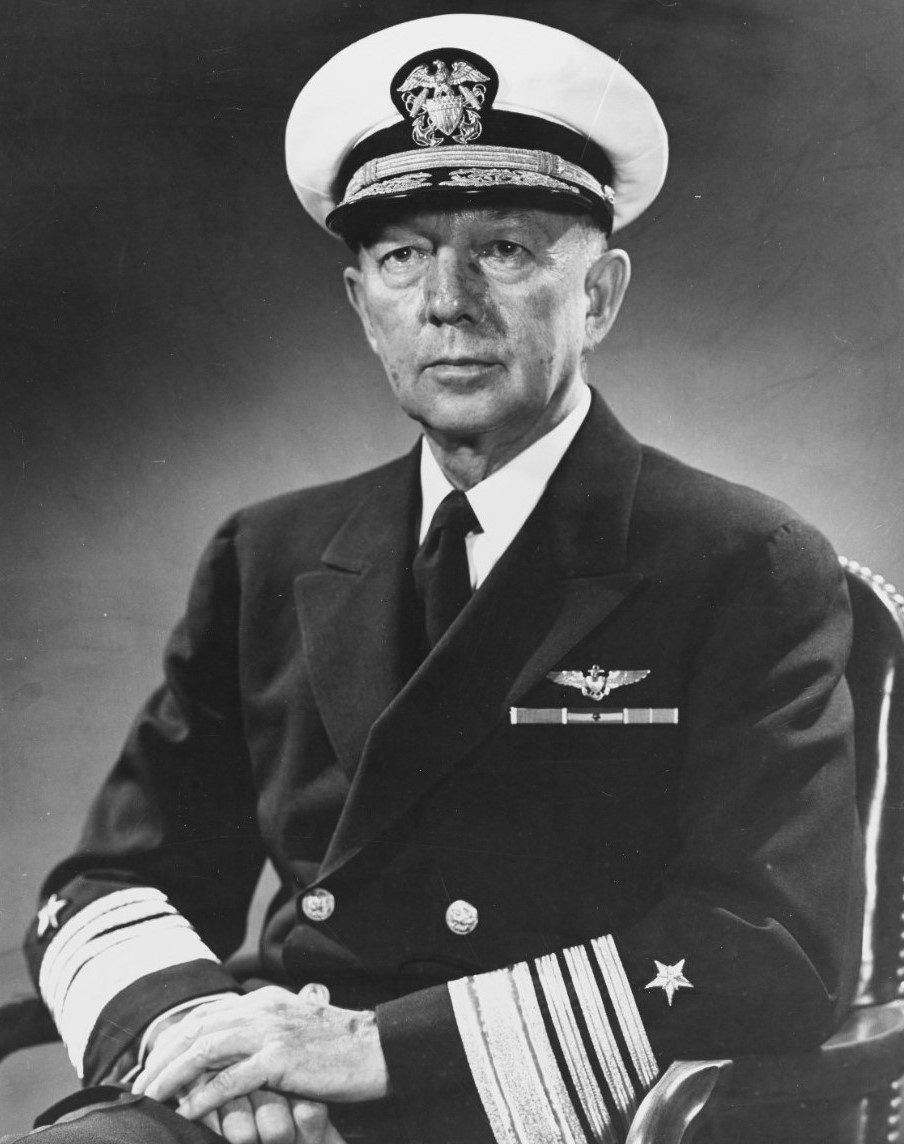
Donald Bradley Duncan was born in Alpena, Michigan, on 1 September 1896. He graduated from the United States Naval Academy in 1917 and was commissioned an ensign. His first sea duty was in the battleship Oklahoma, which served with the British Grand Fleet and helped protect Allied convoys in European waters during the First World War.
In 1920 he began flight training at Pensacola and qualified as a naval aviator the next year. After further study at the Naval Academy he earned a master's degree in radio engineering from Harvard in 1925. Over the next fifteen years he served in observation and scouting squadrons, in carriers at sea, on fleet staffs, and in the Bureau of Aeronautics in Washington. He also served as executive officer of the naval air station at Pensacola.
On 2 June 1941, as a commander, Duncan took command of Long Island on the day she was commissioned. Built as the cargo ship Mormacmail and fitted with a flight deck, she was the Navy's first escort carrier. Through the months before Pearl Harbor she worked from Norfolk on the practical problems of flying airplanes from a converted merchant hull, and what her crew learned shaped the escort carriers that followed. Duncan left her on 26 December 1941.
Early in 1942 he was air operations officer for Admiral Ernest J. King, Commander in Chief of the United States Fleet. When the services looked for a way to bomb Japan, Duncan examined whether Army twin-engine bombers could take off from a carrier. He recommended North American B-25 Mitchells, saw a trial launch prove that the airplanes could leave a flight deck, and arranged for Lieutenant Colonel James H. Doolittle's crews to embark in Hornet at Alameda. The Tokyo raid followed on 18 April 1942.
Promoted to captain that year, he became the first commanding officer of Essex (CV-9) when the lead ship of the new fleet-carrier class was commissioned on 31 December 1942. After a short shakedown he took her to the Pacific in May 1943. From Pearl Harbor, Essex sailed with Task Force 16 and struck Marcus Island on 31 August. In October she was flagship of Task Force 14, and her aircraft attacked Wake Island on 5 and 6 October. Duncan was relieved on 6 November 1943 by Ralph Andrew Ofstie.
He went ashore to the staff of the Commander in Chief, United States Fleet, and served as assistant chief of staff and assistant planning officer from November 1943 to July 1945. The Navy awarded him the Legion of Merit for that work.
After the war he was Deputy Chief of Naval Operations for Air from 6 March 1947 to 20 January 1948. In 1948 he took command of the Second Task Fleet in the Atlantic and held that force until the summer of 1951. On 9 August 1951 he was promoted to admiral and became Vice Chief of Naval Operations. He remained in that post until 1956 and retired from active duty on 1 March 1957.
He then served as governor of the Naval Home in Philadelphia until May 1962 and afterward lived in Pensacola, Florida. Duncan died there on 8 September 1975. The guided-missile frigate Duncan (FFG-10), commissioned in 1980, was named for him.