Ships
- USS Essex (CV-9) Captain from 6 November 1943 · Relieved on 7 August 1944
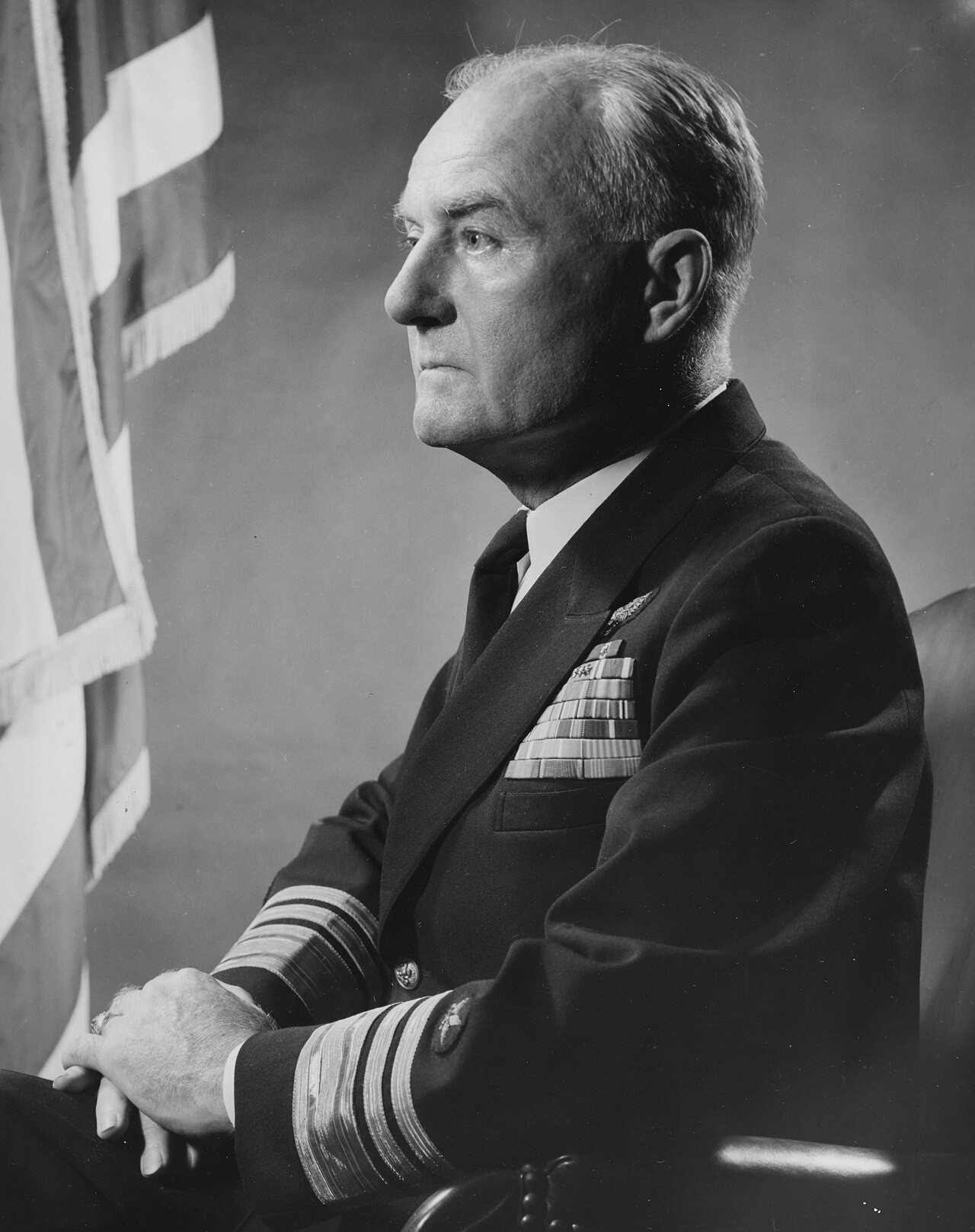
Ralph Andrew Ofstie was born in Eau Claire, Wisconsin, on 16 November 1897. He entered the Naval Academy in 1915, stood tenth in a class of 199, and was commissioned ensign on 6 June 1918 with the wartime class of 1919. A month in the cruiser Chattanooga was followed by duty with the destroyer force at Brest, France, in the closing months of the First World War, including service in Whipple. In 1920 he trained at Pensacola and was designated a naval aviator.
In 1924 he set three world speed records in seaplanes. During the middle of that decade he commanded Scouting Squadron 6, served as a naval aide at the White House, and then became aviation officer of the light cruiser Detroit. From 1929 to 1933 he was assigned to the Flight Test Division at Naval Air Station Anacostia. He next commanded Fighting Squadron 6, the Felix the Cat squadron, aboard the carrier Saratoga.
In the middle 1930s Ofstie was assistant naval attaché in Tokyo. He came home to duty in the carriers Enterprise, Saratoga, and Yorktown, and with war underway in Europe he returned abroad as assistant naval attaché in London. In June 1942 he joined the staff of Admiral Chester W. Nimitz as aviation officer of the Pacific Fleet. A letter of commendation covered that staff service through 31 October 1943.
As a captain he took command of Essex on 6 November 1943. Donald Bradley Duncan had commanded the carrier from her commissioning in December 1942. Five days after Ofstie assumed command, Essex joined the 11 November strike on Rabaul. Later that month she covered the landings at Tarawa, and on 4 December she took part in the raid on Kwajalein. An admiral used the ship as his flagship while the task group came under heavy Japanese air attack four times. Ofstie handled Essex so that she came through undamaged, and her aircraft inflicted heavy losses. He received the Silver Star for the period from 11 November to 4 December 1943.
Essex remained with the fast carriers through the first half of 1944. She supported the occupation of the Marshalls, joined the February raid on Truk, and sent strikes against Saipan, Tinian, and Guam. In May she hit Marcus and Wake. In June she fought in the Battle of the Philippine Sea and covered the landings in the Marianas. Ofstie was relieved on 7 August 1944, and Carlos Wilhelm Wieber next commanded Essex.
Promoted to rear admiral, he assumed command of Carrier Division 26 on 10 August 1944, with his flag in the escort carrier Kitkun Bay. The division covered the assaults on Peleliu and Angaur in September. During the Leyte landings in October he was second in command of an escort-carrier force in the Battle of Leyte Gulf. On 25 October aircraft under his direction attacked a Japanese surface force off Samar. In those same days Japanese suicide aircraft struck ships of the escort groups, damaging Kitkun Bay and sinking St. Lo. He received the Navy Cross for his part in the Leyte campaign. In January 1945 he commanded the escort unit for the landings in Lingayen Gulf, and that spring he became chief of staff to the Atlantic Fleet air force.
After the war Ofstie was the senior naval member of the United States Strategic Bombing Survey and questioned former Japanese naval officers about the air campaign. He afterward served on the Military Liaison Committee to the Atomic Energy Commission. In December 1950 he returned to sea in command of a fast carrier task force off Korea, and carrier-based jet fighters flew bombing strikes under his command. He was named a vice admiral on 23 May 1952, later served as Deputy Chief of Naval Operations for air, and from December 1954 to November 1956 commanded the Sixth Fleet. He died at Bethesda, Maryland, on 18 November 1956, two days after his fifty-ninth birthday, and was buried at Arlington National Cemetery. His decorations included the Navy Cross, the Navy Distinguished Service Medal, the Silver Star, and the Legion of Merit.