Ships
- USS Saratoga (CV-3) Captain from 31 December 1932 · Relieved on 12 June 1934
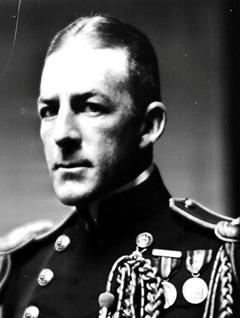
Rufus Fairchild Zogbaum, Jr., was born in New York on 18 June 1879 and died in Bethesda, Maryland, on 30 August 1956. He was the son of Rufus Fairchild Zogbaum (1849–1925), the military and Western illustrator. He was cremated, and his ashes were scattered in the Atlantic. Later records give Tryon, North Carolina, as his home.
He was appointed to the Naval Academy in 1896 and resigned before the end of his first year. He was reappointed in 1897 and graduated with the class of 1901, next to last. The class was called out for the Spanish-American War. In 1898 he served in the cruiser San Francisco (C-5). That is not the heavy cruiser of the Second World War.
After graduation he served in the battleship Alabama (BB-8), the gunboat Castine (PG-6), and the cruiser Charleston (C-22). He was promoted to ensign on 7 June 1903 and to lieutenant on 7 June 1906, while he was in Charleston. Later duty included the destroyer Whipple, a fleet staff, a short tour as naval attaché in London, and command of the destroyer Jouett (DD-41). He took a diploma from the Naval War College, then commissioned the new destroyer Davis (DD-65) on 5 October 1916.
He commanded Davis until late 1917 and was made a temporary commander on 31 August 1917. He then commissioned the destroyer Stevens (DD-86) on 20 May 1918 and kept her until about March 1919. This is not the later destroyer Stevens (DD-479). He received the Navy Cross for that command. The citation calls the duty important, exacting, and hazardous: patrolling waters infested with enemy submarines and mines, escorting convoys of troops and supplies through those waters, and offensive and defensive action against enemy naval activity. He also received the World War I Victory Medal with the Patrol clasp. He was promoted to commander, permanent, on 1 July 1919.
After the war he served at Naval Station Great Lakes and commanded the destroyer Reuben James (DD-245) from May 1921. He then had the destroyer Gilmer (DD-233) from 1922 into 1923, and the station ship Reina Mercedes at the Naval Academy from June 1923 into the summer of 1924. He was promoted to captain on 4 June 1925 and spent three years on the staff of the Naval War College. He then qualified as a naval aviator so he could hold aviation commands. Those commands were the aircraft tender Wright (AV-1), the carrier Langley (CV-1), and Saratoga (CV-3) from 31 December 1932 to 12 June 1934, and two tours in command of Naval Air Station Pensacola. He was not selected for another promotion. He retired on 30 June 1936 as a rear admiral.
He was recalled for a short time in 1941 and 1942 to command a Naval Aviation Training Unit in Chicago, then returned to the retired list. His autobiography, From Sail to Saratoga, was published in Rome in 1961, after his death.
His son was Wilfrid Meynell Zogbaum (1915–1965), a painter and sculptor. Wilfrid served as a photographer in the Army Signal Corps during the Second World War and later taught at several universities, including the University of California, Berkeley.