Ships
- USS Pensacola (CA-24) Captain, 12 April 1935 – 16 June 1936
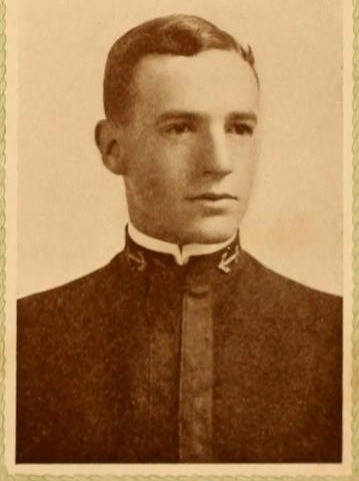
Russel Sydnor Crenshaw (1886–1975) was a United States Navy captain of the Naval Academy class of 1907. In peacetime he commanded the heavy cruiser Pensacola. In the First World War he worked the convoy and routing machinery of the Naval Overseas Transportation Service and received the Army Distinguished Service Medal for it. In the Second he fought the U-boat war from shore, first as acting commandant of the Seventh Naval District and of the Gulf Sea Frontier, then as assistant commandant of the Fifth Naval District at Norfolk, where he directed the Operating Division through the German surrender and earned the Legion of Merit. He is not his son Russel S. Crenshaw, Jr., Naval Academy 1941, who fought in Pacific destroyers and later wrote about shiphandling and the Solomons. He is not John Stewardson Crenshaw, a different officer of the same surname who appears beside him in the Navy Directories of the 1920s and 1930s. He is not William R. Crenshaw, another son, who was an ensign in Yorktown while the father sat in the Navy Department.
The Navy’s own books most often print the given name with two ses and the middle name as Sydnor. The Lucky Bag of 1907 prints the middle name as Snyder. The spelling used here follows the form under which he is identified for this life. Where the sources diverge on letters, the divergence is left standing.
The Register of Commissioned and Warrant Officers gives his birthday as 1 September 1886. The register of 1 July 1943 prints that day beside signal number 199, and it prints 2 July 1903 as the day he entered the service. Hall of Valor and the finding aid for the papers he left behind repeat the birthday. The same finding aid and a biographical note attached to his son Francis’s papers place the birth in Virginia; the Lucky Bag and the obituaries print Richmond. No civil birth certificate was opened for this essay. Richmond is the town the Academy and the death notices were willing to write.
The parents are not in the registers, the yearbook, the citations, or the New York Times notice. A family tree that was consulted names William Alfred Crenshaw and Alice Gertrude Beauchamp; that claim was not checked against a census or a certificate and is not used as fact here. What the public record does hold is the household he made. He married Sally Berkeley Nelson Robins—called Polly—in Richmond in 1912. The Times names her as the widow who survived him. The East Carolina finding aid for his wartime narrative, and the Old Dominion note on the son’s gift of the father’s orders, list five children: William Robins Crenshaw, who became a Navy captain; Sally Berkeley Crenshaw Southerland; Russell Sydnor Crenshaw, Jr., born 5 April 1920, Naval Academy 1941, also a captain; Francis Nelson Crenshaw, born 1922 in Washington, who became a Norfolk lawyer; and Alice Beauchamp Crenshaw Luhring. The Times of 5 July 1975 counts the same three sons and two daughters and adds twelve grandchildren and seven great-grandchildren. The Navy junior who was Rusty later told an interviewer that he had been named before he was born, and that the older brother, who might have been Russell Junior, had instead taken the names of both grandfathers after they died. That is the son’s memory of how the household handled a name. It is not a birth record.
He entered the Naval Academy on 2 July 1903 and graduated with the class of 1907. The Lucky Bag heads his page with Richmond, Va., and with the nicknames “Willy,” “Little Willy Crenshaw,” and “Billy.” The sketch says he began life at the Academy already in charge of a room, did good work on the fencing team, and was one of the stars of the ’07 baseball squad. It credits him with three stripes, the midshipman rank, and with corresponding secretary of the Christian Association. It calls him the hero of a romantic shipwreck in youngster year, a man who made the first class jealous on youngster cruise by frequent leaves to visit aunts and grandmothers, a member of the Y.M.C.A. who lived up to it, and “chiefly famous as the man who kept Reef Points out of politics.” It ends where yearbook prose often ends: he was never known to lose his good nature. That is the class talking. It is not a fitness report.
The early sea years are thinner in the directories that were opened. A biographical note in the Francis N. Crenshaw papers at Old Dominion says he served five years in the battleship Virginia, all of it in the gunnery department; that he was navigator of the fleet supply ship Celtic; and that he was radio officer of the Panama Canal Zone. Those billets were not recovered in the Navy Directory volumes read for this essay. They are the family’s summary of a young officer’s first decade, not a station list. What the same note and the medal do fix is the First World War. During most of that war he was in Washington on convoy and routing duty with the Naval Overseas Transportation Service. War Department General Orders No. 116 of 1919 awarded the Army Distinguished Service Medal to Commander Russell Sydnor Crenshaw for exceptionally meritorious and distinguished services in a duty of great responsibility in connection with that Service and the convoy system for cargo of the Transport Fleet. The Navy’s own register marked him, in the key of the 1920s, with the numbers that meant a special letter of commendation for World War service and the War Department’s Distinguished Service Medal. He was a Navy officer decorated by the Army for moving ships. The citation does not say which routes, which losses, or which nights he sat with the charts.
The directories pick him up cleanly in the 1920s. On 1 January 1923 and again in 1924 and 1925 he is a commander at the Navy Department in Washington. The register of 1 January 1925 has him at the Bureau of Navigation, date of rank as commander 23 July 1923. By 1 January 1926 he is aide and division gun officer for the battleship divisions of the Battle Fleet, in West Virginia. The register of 1 January 1927 puts him on the staff of the commander, battleship divisions, Battle Fleet, date of rank as commander 20 June 1925 in that volume’s printing. The Directory of 1927 styles him assistant chief of staff to the commander in chief, Battle Fleet, in California. From 1928 through early 1930 he is back at the Bureau of Navigation. Then the Directory of 1930, and the Directories of 1931 and 1932, have him executive officer of the cruiser Augusta. The Old Dominion note calls Augusta the billet that followed gunnery in Tennessee; Tennessee was not found in the directories read here. What the directories will stand on is Augusta, as executive, for about two years.
He became a captain with date of rank 1 February 1933. The register of 1 January 1934 already has him in that grade, inspector of ordnance in charge of the Navy Mine Depot at Yorktown, Virginia. The Directories of 1933, 1934, and 1 January 1935 keep him there. Yorktown was mines, nets, and the ordnance that would later matter to the district he ran in the next war. It was not yet a war billet.
Pensacola (CA-24) is the ship that later lists attach to his name, and the directories put him in her. On 1 October 1935 Captain Russell S. Crenshaw is “comdg u s s Pensacola,” and the cruiser’s own roster prints “Capt. R. S. Crenshaw, comdg,” with Commander A. G. Zimermann as executive. A compiled commanding-officer list, the same tradition that names George Hall Bowdey after him, gives him the ship from 12 April 1935 to 16 June 1936. Those exact mornings were not read in a deck log. What can be said from the books in hand is that on New Year’s Day 1935 he was still at Yorktown, that by October he had the cruiser, and that by 1 January 1937 Bowdey was commanding her. The Dictionary of American Naval Fighting Ships says Pensacola left Norfolk on 15 January 1935, joined the Pacific Fleet, and reached San Diego, her new home port, on 30 January; that fleet problems ranged to Hawaii, that one cruise took her to Alaska, and that combined maneuvers returned her briefly to the Caribbean before she sailed for Pearl Harbor in October 1939. That paragraph covers captains before him and after him. It does not say which problem or which northern cruise fell inside his months. The war that later came to Pensacola—the Manila convoy, Midway, Santa Cruz, the torpedo at Tassafaronga—belongs to other men. His command was the peacetime Pacific Fleet heavy cruiser in her first California years.
After the cruiser he went back to staff work. The Directory of late 1936 and the Directory of early 1937 list him chief of staff and aide to the commander of cruisers, Scouting Force, in Chicago. By the Directory of late 1937, and through 1938, he is at the Naval War College, Newport, for instruction. From 1939 through the last Directory of the series, 1 April 1941, he is at the Navy Department in Washington, first under “naval oper,” then simply “navy dept.” The East Carolina finding aid calls the prewar Washington tour a turn as director of the War Plans Division of the War Department. The directories do not use those words. They put a Navy captain in Naval Operations. The War Department title is not repeated here as a fact.
By April 1941 the younger Russel S. Crenshaw was an ensign in Maury, and William R. Crenshaw was a lieutenant (junior grade) in Yorktown. The father was still ashore in Washington. The sea had already taken two of his sons.
The war that took his name was not a Pacific deck. It was the Atlantic coast and the Gulf, and the paper trail is administrative, deadly, and almost without a personal sentence in it.
The official chronology of the U.S. Navy in World War II lists Captain Russell S. Crenshaw as acting commandant of the Seventh Naval District from 1 February 1942 to 3 June 1942. The same chronology lists him as acting commander of the Gulf Sea Frontier from 3 February 1942 to 3 June 1942. The district had been combined with the Sixth until the first of those February days. He was succeeded in both posts by Rear Admiral James L. Kauffman. The New York Times obituary says that as commandant of the Seventh he directed a campaign in the Florida Straits, and that the work was of a piece with what he later did off the Virginia Capes. The chronology’s “(A)” marks the Seventh District billet as acting. He was a captain carrying a rear admiral’s problem while the U-boats were still winning off the American shore.
On 18 June 1942 he became assistant commandant of the Fifth Naval District, based at Norfolk, and took direct charge of the Operating Division. The Legion of Merit citation, as printed from Board Serial 2548 of 16 August 1946, covers him from that day to the surrender of Germany. It calls him Captain (Retired) in the style of the award, and it styles the action as Assistant Commandant, Fifth Naval District (Task Group 02.5). It says he promptly effected thorough coordination among surface and air operating forces and among the defense measures of the Army and the Coast Guard; that under his direction of anti-submarine measures convoys were successfully dispatched and received; that losses from enemy mines were avoided; and that enemy submarines were hunted and harassed, some sunk and some damaged, so that losses to shipping were kept to a minimum. The Times says that in the Fifth District post he directed all ship movements and the anti-submarine battle off the Virginia Capes from 1942 until the end of the war. Those are the sentences the Navy and the newspaper were willing to write. They do not say which night he sat in the Joint Operations Center, or which tanker he could not save.
What he did leave is a book. On 31 August 1945 he approved, as Assistant Commandant, the Secret World War II Historical Narrative of District Operations Office and Inshore Patrol, Fifth Naval District, Norfolk—a carbon typescript of some three hundred pages that his son later gave to East Carolina University. The volume’s own chapters take up the district’s tasks as the war plans had named them: harbor security, keeping channels clear of mines, patrolling defensive areas, protecting shipping. The photographs and tables that rode with the narrative show nets across Hampton Roads and the York, the tanker F. W. Abrams after she hit a mine in the Hatteras field, the ore carrier Chilore and the tanker J. A. Mowinckel damaged by enemy torpedo and then by friendly mines, collisions in the swept channel, the coastal picket in a winter sea, the controllers’ desks in the Joint Operations Center at Norfolk. He signed the history. He does not appear inside it as a man thinking aloud. The voice is the district’s. The signature is his.
The Fifth Naval District’s stretch of coast—Chesapeake Bay, Maryland, Virginia, West Virginia, and the northern Carolina shore—was the throat through which Atlantic convoys entered and left. The secret narrative and the citation agree on what success looked like: channels swept, nets tended, shipping moved, submarines hunted. They do not agree, because they do not try, on what it cost him to keep the losses “to a minimum.” His sons were in the Pacific. William had been in Yorktown. Russel Junior was in Maury from Pearl Harbor through Midway and the Solomons, and later in Stormes at Okinawa. The father’s war was the one that stayed home and tried to keep the home waters from becoming another killing ground. The registers of 1943, 1944, and 1945 still list him a captain. The decoration letters beside the name shift with the register’s own key; the Army Distinguished Service Medal and the Navy letter of commendation from the first war remain the older marks. The Legion of Merit came after the German surrender, dated on a board serial in August 1946, when he was already styled retired in the citation’s rank line.
He retired in 1946 after nearly forty-three years of active duty. The Times gives that figure and that year. The East Carolina finding aid repeats the retirement year and puts the end of active duty with the Fifth District post. No retired-list register was opened to print the exact day.
He lived afterward in Virginia Beach, in Birdneck Point in the language of the Richmond notice. The Times of 5 July 1975 says he died Wednesday at his home there, in his eighties. Wednesday before a Saturday paper dated 5 July 1975 is 2 July. The East Carolina finding aid and the Richmond Times-Dispatch notice printed on WikiTree give 2 July 1975. Hall of Valor prints 1 July 1975. Two July is the day the newspaper and the manuscript repository agree on. He was eighty-eight. The Richmond notice says he died after a long illness. Funeral services were at Galilee Episcopal Church in Virginia Beach; burial was in Hollywood Cemetery, Richmond.
Polly survived him and died in 1976. The sons William and Russel Junior were already retired Navy captains when the Times wrote the father’s notice. Francis was practicing law in Norfolk. The daughters lived in Virginia Beach. Russel Junior later deposited the father’s secret narrative at East Carolina and sat for an oral history of his own Pacific war; he died in 2017. The father’s papers that Francis gave to Old Dominion are chiefly the wartime naval orders. Neither gift is a memoir in the father’s voice. What survives of him in public is the Academy’s good-natured midshipman, the Army’s convoy medal, the cruiser’s peacetime command, the acting command of a sea frontier in the worst months of the U-boat war, the assistant commandant’s signature on a secret history, and a Legion of Merit that praises coordination and minimum loss. The sea shaped him into a staff and district officer who moved other people’s ships. The war that named him was the one he fought without leaving the coast.