Ships
- IJN Hosho Captain from 16 November 1936 · Relieved on 16 October 1937
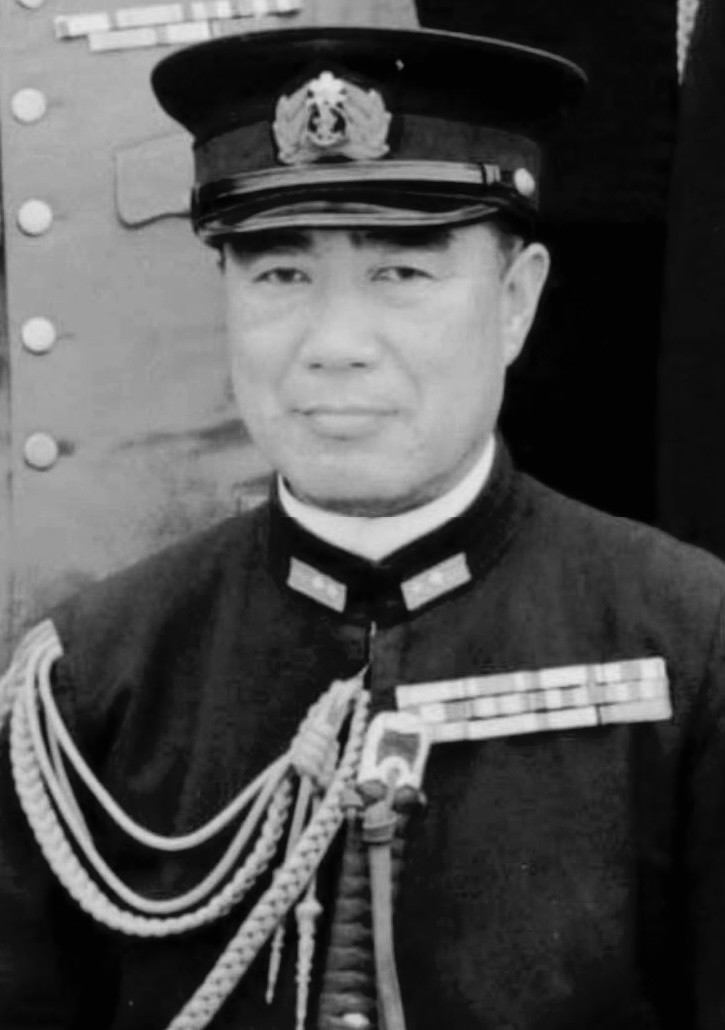
Ryunosuke Kusaka was born in the Shitaya district of Tokyo on 25 September 1892. His family register placed the household in Ishikawa Prefecture, his father was a director of the Sumitomo firm, and he went to school in Osaka. He entered the Imperial Japanese Naval Academy with the 41st class and graduated in December 1913, fourteenth in a class of 118.
As a midshipman he served in the cruisers Azuma and Otowa. After commissioning he went to the battleship Kawachi and the cruiser Yakumo, and later to the battleship Kongo and the destroyer Kuwa. Promoted to lieutenant on 1 December 1919, he served in the battleships Mutsu and Yamashiro, the destroyer Susuki, and the repair ship Kanto, and he completed the naval gunnery course. His staff training pulled him toward aviation. He was promoted to lieutenant commander in 1925 and finished the Naval Staff College in November 1926 with naval aviation as his specialty.
In 1927 he became an instructor at the Kasumigaura naval air station. In 1929 he crossed the Pacific aboard the German airship Graf Zeppelin. Shore duty followed with the staff of the 1st Air Squadron, the Navy Ministry and Naval General Staff, and the Naval Staff College, where he taught. On 1 September 1933 he returned to sea as executive officer of the cruiser Iwate. In November 1934 he was promoted to captain and placed at the head of the first section in the administration department of the Naval Aviation Department.
On 16 November 1936 he received his first command, the aircraft carrier Hosho. She was a small ship, the first carrier Japan designed and completed as a carrier, and in peacetime she spent much of her time training aircrews. The fighting that began in China in July 1937 put her back on operations. That August Hosho left Sasebo with Ryujo and flew aircraft from the waters off Shanghai in support of the army ashore, putting back into Sasebo between sorties in September. Kusaka was relieved on 16 October 1937.
He went directly to the China Area Fleet as deputy chief of staff. In April 1938 he took charge of the operations section of the Naval General Staff. On 15 November 1939 he returned to a flight deck as captain of Akagi. He left that ship in October 1940, and on 15 November 1940 he was promoted to rear admiral. He commanded the 4th Combined Air Group and, from January 1941, the 24th Air Flotilla. In April 1941 he was appointed chief of staff of the 1st Air Fleet under Chuichi Nagumo.
In that post he helped direct the carrier force through the opening year of the Pacific War. The 1st Air Fleet struck Pearl Harbor in December 1941, then raided through the South Pacific and into the Indian Ocean. At Midway in June 1942 the same force lost four carriers. Kusaka stayed with Nagumo through the battle. In July 1942 he became chief of staff of the 3rd Fleet, the rebuilt carrier command, and that November he took command of the Yokosuka Air Group.
In November 1943 he moved to Rabaul as chief of staff of the Southeast Area Fleet and the 11th Air Fleet, under his cousin Jinichi Kusaka. On 6 April 1944 he became chief of staff of the Combined Fleet, and on 1 May 1944 he was promoted to vice admiral. He worked on the A-Go plan, which led to the Battle of the Philippine Sea, and on the Sho plan for the defense of the Philippines. In October 1944, while Combined Fleet commander Soemu Toyoda was ashore on Formosa during the American carrier raids, Kusaka sent the order that set Sho-1 in motion and carried the fleet into the Battle of Leyte Gulf. He kept the Combined Fleet staff into 1945 and from April also served as chief of staff of the Navy General Command. He left that duty in June. On 17 August 1945 he was appointed commander of the 5th Air Fleet, and he passed into the reserve on 15 October 1945. In retirement he published a memoir of the Combined Fleet and a longer account of his half-century as a naval officer. He was the fourth head of the Itto Shoden Muto-ryu, the school of swordsmanship founded by Yamaoka Tesshu. Kusaka died in Takarazuka on 23 November 1971.