Ships
- IJN Hosho Captain from 16 October 1937 · Relieved on 15 November 1939
- IJN Shokaku Captain from 8 August 1941
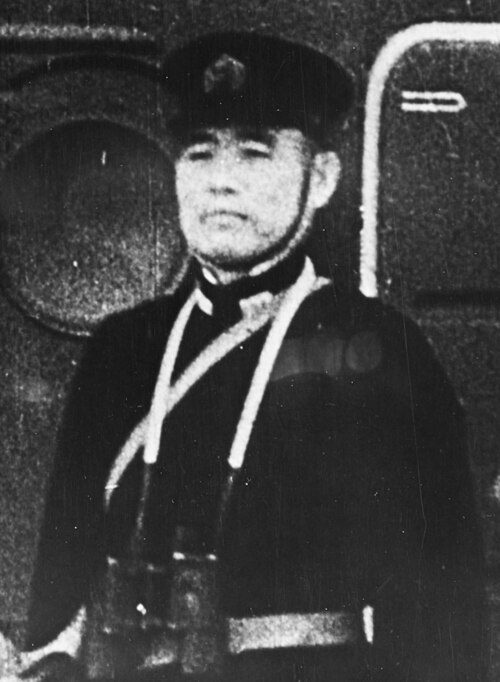
Takatsugu Jojima was born on 20 June 1890 in Saga Prefecture. He graduated from the Imperial Japanese Naval Academy in 1912, standing 111th in a class of 144, and began as a midshipman in the cruiser Azuma and the battlecruiser Ikoma. After he was commissioned he served in the battlecruiser Ibuki and the repair ship Akashi, then returned to Ikoma. As a sub-lieutenant he served in the cruiser Nisshin, the battleship Asahi, and the destroyer Hatsuharu.
In 1919 he completed advanced navigation training and was promoted to lieutenant. He spent the next years as chief navigator of the patrol vessel Manshu, the transport Takasaki, the minelayer Katsuriki, the seaplane carrier Wakamiya, the oiler Shiriya, the cruisers Tatsuta, Natori, Abukuma, and Haguro, and the carrier Kaga. The long tour made his name as a navigator. Colleagues said he could find a ship's position when the weather and the chart gave other officers little to work with. Promoted to commander in 1931, he moved into carrier duty. He commanded the fleet oiler Tsurumi from August 1936 and was promoted to captain that December.
On 16 October 1937 he became captain of Hosho, Japan's first purpose-built aircraft carrier. He remained in that command until 15 November 1939, while Japanese naval air units were fighting in China and Hosho divided her time between operations and the training of carrier aircrews. On leaving the ship he took command of the Kure Naval Air Group. In October 1940 he was sent to Yokosuka to supervise completion of a new fleet carrier, and for part of the fitting-out period he also oversaw the submarine tender Tsurugizaki, then being rebuilt as a light carrier.
Shokaku entered service at Yokosuka on 8 August 1941, and Jojima became her captain that day. She joined Carrier Division 5 of the First Air Fleet alongside her sister Zuikaku, and during working-up she briefly flew the fleet flag. In December he took her into the attack on Pearl Harbor. Through the opening months of 1942 the division went on to the strike on Rabaul, the raid into the Indian Ocean, and the move south aimed at Port Moresby.
At the Battle of the Coral Sea in May 1942, aircraft from Shokaku took part in the strikes on the American carrier force, and one of those carriers was lost after the action. Shokaku herself was badly hit by dive bombers. Bombs tore up her flight deck, fires and heavy casualties took her out of the fight, and Jojima asked permission to withdraw. The request was granted, and the ship reached Japan under her own power. The damage, and the loss of trained aircrews, kept her out of the Midway operation. Jojima had been promoted to rear admiral on 1 May 1942. He left Shokaku on 25 May, before she rejoined the fleet.
In June 1942 he served briefly on the staff of the Combined Fleet, then took command of a seaplane-tender division. From the Shortland Islands his ships and aircraft supported the struggle for Guadalcanal, covering reinforcement runs and the fighting off Cape Esperance in October 1942. Accounts of Admiral Yamamoto's inspection flight in April 1943 credit Jojima with warning that the schedule had been circulated too widely. The flight went ahead, and Yamamoto was killed when it was intercepted.
On 10 May 1943 he took the 50th Air Flotilla, a training command whose ships included Hosho. On 1 September 1943 he became commander of Carrier Division 2, with Junyo, Hiyo, and Ryuho. At the Battle of the Philippine Sea in June 1944 he launched his aircraft as soon as search planes reported the American fleet, sending the strike off while Admiral Ozawa's order was still taking shape. American carrier planes then hit the division. Hiyo was sunk, and Junyo and Ryuho were damaged. Jojima survived. From 10 July 1944 he commanded the 21st Air Flotilla, and from 20 December the 11th Combined Air Group. His service, which had begun in 1912, continued in shore-based naval aviation until the end of the war in 1945. He left the navy as a rear admiral.