Ships
- USS Melvin (DD-680) Captain, 24 November 1943 – 10 October 1944
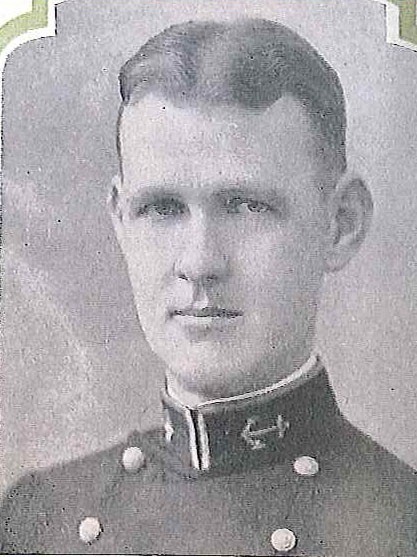
Warner Ryerson Edsall (7 May 1904 – 26 March 1953) was a United States Navy officer from New Jersey. He graduated from the Naval Academy in 1927 and spent most of the years between the wars in submarines, rising to command the old boat S-34 at Pearl Harbor. He also earned a master's degree in naval engineering. He spent the first year and a half of the Second World War on the headquarters staff of the Commander in Chief, United States Fleet, in Washington. He then commissioned the destroyer Melvin and commanded her in the Marianas in June 1944, when she was credited with sinking the Japanese submarine RO-36 and, with another destroyer, a second submarine. He commanded a destroyer division with the fast carriers through the winter of 1944–1945. At Okinawa he was operations officer to Rear Admiral Morton L. Deyo, commander of the gunfire and covering force. After the war he held staff and squadron posts, and in September 1952 he took command of the battleship Missouri for her second tour in the Korean War. On 26 March 1953, the day after her last bombardment of the Korean coast, he suffered a heart attack on her bridge as she entered the harbor at Sasebo, Japan, and died. He was forty-eight. He received the Legion of Merit twice, the second time posthumously, and the Bronze Star Medal five times.
According to his Navy biography, he was born on 7 May 1904 in Hamburg, New Jersey, the son of Robert L. and Katharine (Lawrence) Edsall. Hamburg is in the northwest of the state. By the time he went to the Naval Academy, the family was living in Haddonfield, a town in southern New Jersey across the Delaware River from Philadelphia, and his Academy yearbook gives Haddonfield as his home. The biography says he went to South Philadelphia High School and spent a year at the University of Pennsylvania before he was appointed to the Naval Academy in 1923. The sources examined here do not explain how a boy from Haddonfield came to attend a Philadelphia high school, and they say nothing about his father's work.
Newspaper notices of his marriage in 1930 describe him as "the youngest son of Mrs. R. L. Edsall of Haddonfield." They name only his mother, which may mean that his father had died by then, but the notices do not say so. One brother, Rembert T. Edsall, also of Haddonfield, was his best man. The notices also list a Dr. and Mrs. Frank H. Edsall of Wilmington, Delaware, among the guests, without stating their relationship to him. Nothing else about his childhood or family has been found.
He entered the Academy with the class of 1927. The 1927 Lucky Bag gave him three nicknames, "Duke," "Ed" and "Ducky," and its sketch of him is the only description of his temperament written during his lifetime that the sources examined here preserve. It opens: "The Duke is rather a self-conscious youth and quite sensitive to anything suggesting a slight." The joke behind the third nickname follows. His O.A.O. (Academy slang for a midshipman's "one and only") had called him Ducky in a letter, and "his wife discovered it, causing him no end of subsequent humiliation." In midshipman slang, "wife" meant a roommate. The writer also teased him about the girl's letters: "He has never been in love—he admits it. Nevertheless, just let the M. C. hand him a letter written in purple ink, and he is happy for a week." A later letter that began "Mother does not think—" could cast him "into the deepest, darkest, gloomiest pit of Hades."
The sketch takes his mind more seriously. "He has plenty of brains and a hard problem only stirs him to work harder. He has been known to work for four hours on a baffling Math prob, but after the four hours he emerged from a pile of paper, books, and blue smoke with the solution." It ends with the usual prophecy, worded more warmly than most: "The Navy needs men and 'stickers' like the Duke, and when he gets out in the Service he will rise to supreme heights." The list of his activities supports the description of a capable student. He wore an academic star in his first year, played on the varsity tennis squad in his last two years and on the class team before that, sang in the choir for all four years, and was in the cast of the gymkhana, the midshipmen's variety show. His Navy biography records the tennis and membership in the Musical Club.
He graduated and was commissioned an ensign on 2 June 1927. His biography says he spent the next three years in the battleships Arkansas and Wyoming of the Scouting Fleet, in gunnery and communications duties, and the Navy Directory of 1928 lists him in the Arkansas. By June 1930 he had orders to the Submarine School at New London, Connecticut, and he married before he reported. On 28 June 1930, at four in the afternoon, he married Margaret Norma Harriman, daughter of Mr. and Mrs. Norman Follette Harriman, at her parents' home in the Kenesaw, an apartment building in Washington, D.C. The Evening Star reported that the bride was a graduate of Miss Madeira's School and a member of the Kappa Delta sorority, and that her sister Mary was maid of honor. A chaplain from Fort Washington, Maryland, performed the ceremony, and the bridegroom wore whites. The bride cut the cake with her husband's sword. The couple left on a motor trip through New England and set up house at New London, where he was due at the school on 7 July. The sources examined here do not say whether they had children.
After the Submarine School he served until 1934 in the S-28, one of the small S-class boats of the Submarine Force based at Pearl Harbor. The Navy Directory of 1933 lists him in her as a lieutenant (junior grade). Her official history records that she reached Pearl Harbor in February 1931 and spent the next five years in local operations "interspersed with upkeep and maintenance at the navy yard." The sources do not say what his duties in her were. He was never her commanding officer; the roster of her captains in her official history does not include him.
He then turned to engineering. From 1934 to 1936 he was a student at the Naval Postgraduate School, then located at Annapolis, and in the following year he continued the course in naval engineering (design) at the University of California at Berkeley, which awarded him a Master of Science in June 1937. The registers show his promotion to lieutenant with rank from 30 June 1936.
He went back to submarines in 1937 for four more years. He was first division engineer officer of Submarine Division 8, attached to the S-28 and the S-24, and the Navy Directory of 1938 lists him in that post. He next served in the new fleet submarine Pompano, where the Directory of 1939 lists him. A ship-listing compilation says that he was her executive officer and acted as her commanding officer from January to April 1939, but that has not been confirmed in an official source. He then had his first command, the S-34, which the Directories of 1940 and 1941 list under his command as a lieutenant. Her official history says that she was based at Pearl Harbor from 1932 until April 1941 and then returned to San Diego. The same compilation dates his command from May 1940 to April 1941, which fits that record. No record of his time in command has been found other than these entries.
In the summer of 1941 he reported to the Supervisor of Shipbuilding at the Electric Boat Company in New London. Electric Boat was then building submarines for the expanding fleet, and he was there when the United States entered the war.
In February 1942 he was detached from New London and ordered to the headquarters of Admiral Ernest J. King, Commander in Chief, United States Fleet, in Washington, where he served until September 1943 as an assistant operations officer. The sources examined here say nothing about his work there beyond the language of two letters of commendation. The first, from the Commander in Chief, recognized "outstanding performance of duty as Assistant to the Fleet Operations Officer in Headquarters of the Commander in Chief, U.S. Fleet, from February 27, 1942 to September 1, 1943." The second came from the War Department and praised "meritorious service while attached to the Office of the Commander in Chief, U.S. Fleet, from February 28, 1942 to September 30, 1943." A submarine officer thus spent the first nineteen months of the war ashore, in the office that directed the Navy's operations worldwide. The sources do not say whether he asked to go to sea or how he felt about staying in Washington. While he was in Washington, the two submarines in which he had served longest went to war. The Pompano sailed in August 1943 for a patrol off the coast of Japan and was never heard from again.
His next orders sent him to sea in destroyers rather than submarines. After two months at the Fleet Sound School at Key West, Florida, and the Naval Training Station at Norfolk, Virginia, he reported to the Federal Shipbuilding and Dry Dock Company at Kearny, New Jersey, to fit out the new Fletcher-class destroyer Melvin. She was launched on 17 October 1943 and commissioned on 24 November 1943, Commander Warner R. Edsall in command. She had been built in his home state, and she was his first surface command. After a shakedown off Bermuda she sailed for the Pacific on 1 February 1944. She reached Pearl Harbor on 4 March and spent the following month at Majuro on antisubmarine patrols and on the blockade of the Japanese-held atolls of the Marshalls. She returned to Pearl Harbor on 2 May for intensive training in shore bombardment, and on 31 May she sailed for Saipan with Task Group 52.17, Rear Admiral Jesse B. Oldendorf's fire support group. The official history's order of battle lists "MELVIN, Cdr. W. R. Edsall" with the battleships Maryland and Colorado and the heavy cruiser Louisville in Oldendorf's own unit.
As the bombardment group approached Saipan on the night of 13–14 June, the Melvin found a Japanese submarine. The Japanese had ordered their submarines to the waters around the Marianas once the American fleet appeared there, and on 13 June the boat RO-36 sent a weather report from near Saipan. According to Samuel Eliot Morison's official history, she was "spotted and depth-charged out of existence by destroyer Melvin." Edsall's Legion of Merit citation gives his own part. When his ship made radar contact on an enemy submarine, he was ordered to go after it independently, and he "closed range to the contact during darkness (and) scored several probable hits before the submarine submerged. Despite the appearance of a wide diesel oil slick and a large white bubble at the diving point, he conducted a series of depth-charge attacks until sonar contact could no longer be obtained." The citation thus credits him with continuing the attack after there were already signs that the submarine had been hit. A Japanese-sourced record of the boat places the attack about seventy-five miles east of Saipan, around midnight of 13–14 June, and says that seventy-seven men were lost with her. That figure has not been checked against an official source.
A few hours later, according to the Melvin's official history, she engaged a merchant ship off northern Saipan, which "burned brightly for a few hours before sinking." His Bronze Star citation, for the period from 13 June to 7 August 1944, describes the action from his side: "Contacting a large enemy merchant vessel, (he) daringly and relentlessly closed in to prevent the ship's escape and, in spite of intense return fire, scored numerous hits until the enemy's destruction was assured." The sources examined here do not identify the merchant ship.
Two nights later the Melvin attacked another submarine. Morison writes that the same destroyer, "with the help of Wadleigh," caught RO-114, which had just been sent out from Japan to Saipan, on 16 June. The citation for a later Bronze Star, which calls this action "heroic achievement," says that his ship obtained a night radar contact on a suspected submarine, and that he "immediately proceeded to close the hostile vessel and, after executing one attack which exhausted his supply of depth charges, assisted another destroyer in making a series of attacks." The citation credits him with contributing "materially to the probable destruction of the enemy craft as evidenced by a heavy underwater explosion one minute after the last depth charge pattern . . . floating debris, bubbling diesel oil and a large oil slick." The sources disagree about the date. The citation and Morison give 16 June, while the Melvin's official history mentions only an enemy submarine damaged on the 17th, and the Japanese-sourced record dates the sinking to 17 June, about eighty miles west of Tinian, with fifty-five men lost. The attack may have run across midnight, but the sources examined here do not settle it.
For the rest of the Saipan operation the destroyer fired counter-battery missions, patrolled against submarines, answered calls for fire from the Marines ashore, escorted ships from Eniwetok, and took part in the bombardment of Tinian. On 8 July she left for Eniwetok, and on 18 July she sailed with the transports carrying troops to Guam. Morison's order of battle for Guam names "Cdr. W. R. Edsall" as commander of the screen of the Corps Reserve Group, which was made up of four destroyers, including the Melvin, two destroyer-minesweepers and two destroyer escorts. From 22 July to 7 August the Melvin screened transports and oilers off the island.
During those weeks a second of his old boats was lost. On 4 July 1944 the S-28, by then a training submarine at Pearl Harbor, dived for a practice approach on a Coast Guard cutter and did not come back up. Searchers found only an oil slick, and a court of inquiry could not determine the cause. No source examined here records whether he learned of it, or what he thought.
In September the Melvin took part in the capture of the southern Palaus and then in the unopposed occupation of Ulithi. She escorted landing ships to Hollandia and arrived at Manus to stage for the invasion of Leyte. His biography says he commanded her until October 1944. On 25 October, at the Battle of Surigao Strait, the Melvin fired torpedoes that her official history credits with hitting the Japanese battleship Fuso. By then she was under another captain. Morison's order of battle for that night lists her commanding officer as Commander B. K. Atkins. Edsall had trained the crew and brought the ship to the Pacific. He was not aboard for her most famous action, and the sources examined here do not record the date of his relief or anything he said about it.
His next post was a destroyer division command. According to his biography, he commanded Destroyer Division 110 for about five months, flying his pennant in the destroyer Laws. One of his citations covers the period from 22 November 1944 to 5 March 1945. Morison's task organization for the Third Fleet from 1 December 1944 to 23 January 1945 lists the Laws, "with Comdesdiv 110, Cdr. W. R. Edsall, embarked," in the screen of Rear Admiral Frederick C. Sherman's carrier group, Task Group 38.3. The same group included the light cruisers of Admiral Deyo's Cruiser Division 13, whose staff he would soon join. Those weeks included Halsey's strikes on Luzon, the typhoon that struck the Third Fleet on 18 December 1944, the January carrier raids on Formosa and into the South China Sea, and the support of the Lingayen landings. The Laws's official history describes her screening the carriers through the strikes on Luzon and Formosa and the raids on the China coast. It says nothing about the typhoon, and the sources examined here do not describe how his division fared in it. His citation for the whole period lists operations "in the vicinity of Luzon, Formosa, the Ryukyus, French Indo China, the Japanese Empire and the Bonins, and Volcanoes," and credits him with organizing his ships "to protect important heavy units of our Fleet from enemy submarine, aircraft and surface attacks."
In February 1945 the fast carriers went north for the first carrier strikes on Tokyo. Morison records that on 15 February "a scouting line of five destroyers ranged ahead of the carriers," and that the carriers reached their launching positions, sixty miles off the coast of Honshu, undetected at dawn on the 16th. The Laws's history says that she left Ulithi on 10 February as part of "a destroyer radar picket unit set up to give the carrier forces early warning of enemy attacks." Edsall's citation for 15 and 17 February describes "a destroyer scouting and patrol line which was at times within 35 miles of the Japanese mainland," and credits him with directing his ships "in destroying enemy aircraft, identifying and homing our returning flights, rescuing personnel from damaged aircraft and providing early warnings of the approach of enemy forces." The pickets were the ships of the force nearest the enemy coast. On 19 February the Laws screened the carriers during the strikes in support of the Iwo Jima landings.
He left the division in early March 1945, was promoted to captain with rank from 20 March 1945, and became chief of staff to Rear Admiral Deyo, Commander Cruiser Division 13. He held that post until November. For the Okinawa campaign Deyo also commanded Task Force 54, the gunfire and covering force, with his flag in the battleship Tennessee. Morison describes it as the largest gunfire and covering force yet assembled in the Pacific, with ten old battleships, seven heavy cruisers, three light cruisers, twenty-four destroyers and eight destroyer escorts. In daylight its ships were loaned out to bombard the island. At night and in the event of a surface action, Deyo commanded them as a single force. Edsall's citation for 25 March to 5 May 1945 calls him "Operations Officer on the staff of Commander Task Force FIFTY FOUR" and credits him with "invaluable assistance to the Task Force commander in organizing, directing and maneuvering his group in numerous combat missions while acting as gunfire and covering force during the assault and capture of Okinawa."
Morison was himself aboard the Tennessee that spring, and parts of his account of those weeks are written from personal observation. He does not mention Edsall by name, but he describes the work of Deyo's staff at its most intense. On 7 April, when the battleship Yamato sortied toward Okinawa, Deyo drew up a battle plan for six battleships, seven cruisers and twenty-one destroyers and took his force out of the roadstead to put it between the Japanese and the transports. "An eagerly anxious evening followed for TF 54," Morison writes. "Staff officers familiar with range tables took care to remind others" that the Yamato's 18.1-inch guns outranged every ship in the force. Carrier aircraft sank the Yamato before she came within range. Edsall was the operations officer of that staff, but the sources examined here do not record what he did that evening.
Five days later, on 12 April, a formation of suicide planes attacked the Tennessee. Morison writes that three of them "came in low on the port beam forward, as if determined to hit Admiral Deyo in flag plot," and were shot down by five-inch fire between a hundred and five hundred yards away. At the same moment a dive bomber headed straight for the battleship's bridge. According to Morison, a 40-millimeter burst that shot off one of its wheels "saved the lives of everyone on the bridge"; the plane's wing clipped the starboard wing of the bridge, and it crashed into a gun mount and slid aft, scattering burning gasoline, while its bomb exploded below decks. Twenty-three officers and men were killed and 106 wounded, many of them badly burned. Morison notes that President Roosevelt was stricken at almost the hour the last rites were being performed for the Tennessee's dead. The sources do not place Edsall in flag plot or anywhere else that afternoon. He was, however, the operations officer of the admiral the attackers seemed to be aiming at, on a staff embarked in the ship that was hit. Deyo left the force in early May, after Vice Admiral Oldendorf returned and the Tennessee was relieved, and Edsall's citation ends on 5 May. After the surrender, according to Morison, Deyo directed occupation landings in Kyushu and western Honshu. Edsall's biography keeps him on the staff of Cruiser Division 13 until November 1945, but the sources examined here do not describe any part he had in the occupation.
For his war service he received the Legion of Merit with the Combat "V," the Bronze Star Medal with four Gold Stars in lieu of further awards, and letters of commendation from the Commander in Chief, United States Fleet, and from the War Department. The citations say what his ships did and where. No letter, diary, interview or action report written by him has been found, and no surviving document records how he felt about the war.
He returned to Washington in January 1946 and served until April 1947 in the Office of the Chief of Naval Operations in the tactical publications section, OP-34. From then until July 1948 he commanded Destroyer Squadron 8 of the Atlantic Fleet. For the next two years he was assistant chief of staff for operations to the Commander in Chief, Atlantic Fleet. From August 1950 to June 1951 he was a student at the National War College in Washington, and for a year after that he served on the Joint Staff of the Joint Chiefs of Staff. His biography summarizes these seven years without detail, and the sources examined here add nothing to it.
In September 1952 he took command of the battleship Missouri, then preparing at Norfolk for her second tour in the Korean War. Unofficial compilations give 4 September 1952 as the date he assumed command. She sailed from Hampton Roads on 11 September, reached Yokosuka on 17 October, and two days later became flagship of Vice Admiral Joseph J. Clark, Commander Seventh Fleet. Her task was to support the troops ashore with her sixteen-inch guns. Between 25 October 1952 and 2 January 1953, according to her official history, she bombarded targets at Chongjin, Wonsan, Hamhung, Hungnam and in the Chaho, Tanchon and Sonjin areas on the east coast of North Korea. She put in at Inchon on 5 January and went on to Sasebo. On 23 January General Mark Clark, the United Nations commander, and Admiral Sir Guy Russell of the Royal Navy visited her. In the following weeks she returned to the patrol line off the east coast, and her strikes at Wonsan, Tanchon, Hungnam and Kojo were aimed at the supply routes along the coast. The ship's association records that on 22 March she drew fire from shore batteries at Wonsan, which were silenced by her five-inch guns. Her last gunstrike mission was against the Kojo area on 25 March 1953.
The next day she entered Sasebo. Her official history records that Captain Edsall "suffered a fatal heart attack while conning her through the submarine net at Sasebo." According to the ship's association, the navigator took the conn and called the medical officer to the bridge, and Edsall was pronounced dead after the ship had moored. The executive officer, Commander J. R. North, took temporary command and brought the ship to Yokosuka, where Captain Robert Brodie Jr. took command on 4 April. According to her official history, the New Jersey relieved her as flagship of the Seventh Fleet on 6 April, and the Missouri sailed for home the following day. Time reported his death in its Milestones column of 6 April 1953: "Captain Warner R. Edsall, 48, skipper since last September of the battleship Missouri; of a heart attack; aboard his ship in Sasebo harbor, Japan." The Navy's biography of him, headed "U.S. Navy, Deceased," is dated the same day he died. It records that he died on the bridge while the battleship was on combat duty in the Far East. The sources examined here say nothing about his health before that day.
He received a Gold Star in lieu of a second Legion of Merit, with the Combat "V," posthumously, for his service as commanding officer of the Missouri and Commander Task Group 70.1 from 19 October 1952 to 26 March 1953. His decorations also included the American Defense Service Medal, the American Campaign Medal, the Asiatic-Pacific Campaign Medal, the World War II Victory Medal, the Philippine Liberation Ribbon, the Korean Service Medal and the United Nations Service Medal. He also held the Expert Rifleman's Medal. The Korean War Project records his death as a non-hostile casualty, gives his service number as 61357, and states that he was buried in Arlington National Cemetery. It names his wife as Margaret Harriman Edsall of Arlington, Virginia. Nothing further has been found about her life after 1953, or about any children.
Most of what survives about him is official. There is a yearbook sketch of a sensitive, hardworking midshipman who spent four hours on a mathematics problem, and a society-page wedding at which the bridegroom wore whites and the bride cut the cake with his sword. There are more than ten years in submarines and engineering school, ending in command of an old S-boat at Pearl Harbor, followed by nineteen months at a desk in Washington. There are the citations from one month off Saipan, which describe a destroyer captain who kept attacking a submarine after the first signs that it had been hit, and who used up all his depth charges on another and then helped a second destroyer finish the attack. There is a picket line thirty-five miles off Japan, and a flagship at Okinawa that suicide pilots attacked as if aiming at the admiral's flag plot. And there is the last day, when he brought the Missouri in from her final bombardment of the Korean coast and was stricken on her bridge before she reached her mooring.