Ships
- USS Russell (DD-414) Captain, 14 January 1943 – 11 December 1943
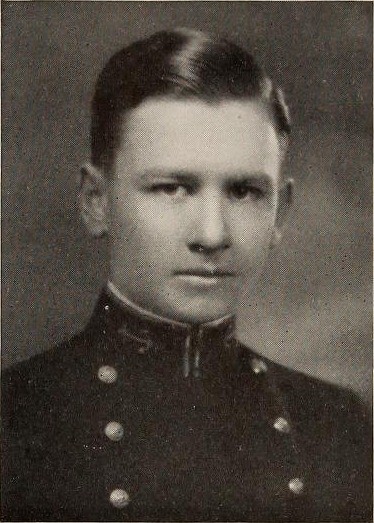
Warren Howard McClain (16 March 1909 – 8 November 1990) was a United States Navy officer from Georgia, a graduate of the Naval Academy in the class of 1930, who commanded the destroyer Russell (DD-414) from 14 January to 11 December 1943. In that year she escorted convoys to Guadalcanal, went north for the Aleutians campaign, and took part in the landing on Tarawa in November. He later commanded the destroyer Taussig at the end of the war and a destroyer division in the occupation of Japan, and retired as a captain in 1960. He then took a master's degree in accounting and taught the subject at a college in Berkeley. He died at El Toro, California, at eighty-one, and was buried at sea.
He was born on 16 March 1909 in Smithville, Georgia, and grew up in Athens, where his classmates later said he came from "the land of Peaches and Stone Mountains." In 1926, at seventeen, he was appointed to the Naval Academy. The biographical summary on which much of this account depends does not name his parents.
The 1930 Lucky Bag (the Academy yearbook) calls him "Mac" and "Po'k Chops," and its sketch makes a joke of his accent: "Coming from the land of Peaches and Stone Mountains, 'Mac' spoke a language that was quite unintelligible as far north as Annapolis and fell prey to that sure test for a Rebel. He said 'Po'k Chops,' and so he is to this day." The writers pictured "a sandblower with a ready smile, a genial disposition, and a bit of fire from the Old South." He played practical jokes on classmates: "if anyone receives a set of furniture or a bicycle on thirty days' free trial he may guess who filled out the coupon and borrowed the stamp to send it." They noted his red hair and the photographs of girls "pasted very neatly to the outside of Mac's waste basket," his "special gallery," and teased that this was why he was "such an apt student in Navigation. Mac never missed a star and often steered a great circle course across the Armory after a new fix." He was also a coxswain, "the little redhead calling the stroke and holding tightly to the rudder, wondering just how far he was going to miss the bridge." They ended with a toast: "in the years to come when you are on the China Station and someone mentions Georgia, and you think of Ty Cobb and General Sherman, don't forget 'Po'k Chops' McClain."
He graduated in June 1930 and was commissioned an ensign, at twenty-one. The Navy Directories place him in the battleship California in 1931 and in the cruiser Portland from 1933 into 1934, by which time he was a lieutenant (junior grade). In 1935 he is listed in the destroyer Claxton. From 1937 into 1938 he was on instruction duty at the Naval Academy. By 1939 he was a lieutenant in the battleship Maryland, and from 1940 into 1941 the directories show him in the destroyer Anderson as engineering officer.
On 8 November 1934, at twenty-five, he married Betty Jane Winters of Montreal, Quebec. They had two children, a son, James, and a daughter, Lorraine.
The family summary says he took part in the battles of the Coral Sea, Guadalcanal, Midway and Santa Cruz, at Tarawa, and in the Kiska occupation. Those are engagements fought by the Navy's ships in the Pacific in those years; the sources examined here do not say in which ship he served at each, or describe his own part in any of them.
On 14 January 1943 he took command of the Russell, a Sims-class destroyer. He was thirty-three and had held the rank of lieutenant commander since 30 June 1942 and, according to uboat.net, was a temporary commander from 15 October 1942. The Russell had been in the Solomons since the autumn. According to the Navy's history of the ship, she had rescued survivors of the carrier Hornet at Santa Cruz in October 1942, and in December 1942 and January 1943 she screened convoys to Guadalcanal, Tulagi and Rennell. In February she screened the carrier Enterprise, and in March she went back to convoy work, making one run to Australia and back by mid-April.
On 1 May the ship set a course for the West Coast. After an overhaul at Mare Island, at the end of July she steamed north to join the forces gathering for the landing at Kiska, and spent the summer on Aleutian patrol duty. In autumn she escorted landing craft to Hawaii and on to Wellington, New Zealand, and in early November she escorted transports to the New Hebrides and joined Task Force 53, which was preparing to attack the Gilbert Islands. The force got under way on 13 November. On 20 November the Russell arrived with the troop transports off Betio, at Tarawa, and screened the heavier units as they shelled the shore. She stayed until 25 November, providing gunfire support and screening the transports as they filled with Marine casualties. On 27 November she joined a carrier group for the Marshalls, and on 9 December she returned with the force to Pearl Harbor and went on to the West Coast. McClain left her on 11 December 1943, according to NavSource and uboat.net.
The family summary lists his decorations as the American Defense medal with an "A" clasp, a Bronze Star with a Gold Star in lieu of a second Bronze Star, and Asiatic-Pacific and other campaign ribbons. No citation text was found, and the sources examined here do not say which action each award honors. No action report, letter or recollection of his time commanding the Russell has been found.
From February 1944 to April 1945 he was stationed at the New York Navy Yard in Brooklyn. On 19 June 1945 he took command of the destroyer Taussig; the summary does not say where she was at the time. From January 1946 to March 1947 he commanded Destroyer Division 92, which comprised the Taussig, Blue, Maddox and Brush.
The summary records his postwar career in outline. From April 1947 to July 1950 he was at the Philadelphia Navy Yard. From 1950 to 1953 he was on the staff of the Commander, Destroyer Force, Atlantic Fleet, at Melville, Rhode Island, and was also athletic director for the force's 65,000 men. He served on a Naval Operations Inspection Team at the Pentagon in 1953 and 1954, and from 1954 to 1957 was a planning officer at the Long Beach Naval Shipyard in California. His last assignment was assistant industrial manager and superintendent of shipbuilding at Seattle. He retired in February 1960 and moved to El Cerrito, California, where he took a master's degree in accounting and taught the subject at Armstrong College in Berkeley. In 1975 he moved to Laguna Hills (now Laguna Woods), California, to be nearer his children and grandchildren.
He died on 8 November 1990 at El Toro, California, at eighty-one, and, according to the summary, was buried at sea. A memorial marker for him and for his wife, Betty, stands at Fort Rosecrans National Cemetery in San Diego. The family count in 2015 was two children, five grandchildren and seven great-grandchildren.
What remains of McClain is a yearbook portrait of a red-headed Georgian whose accent defeated Annapolis and who made a good navigator; a year at the head of a destroyer that went from the Guadalcanal convoys to the Aleutians to the lagoon at Tarawa; and a long postwar career in shipyards and staffs that ended in a classroom.