Ships
- USS Alabama (BB-60) Captain from 18 January 1945 · Relieved on 26 November 1945
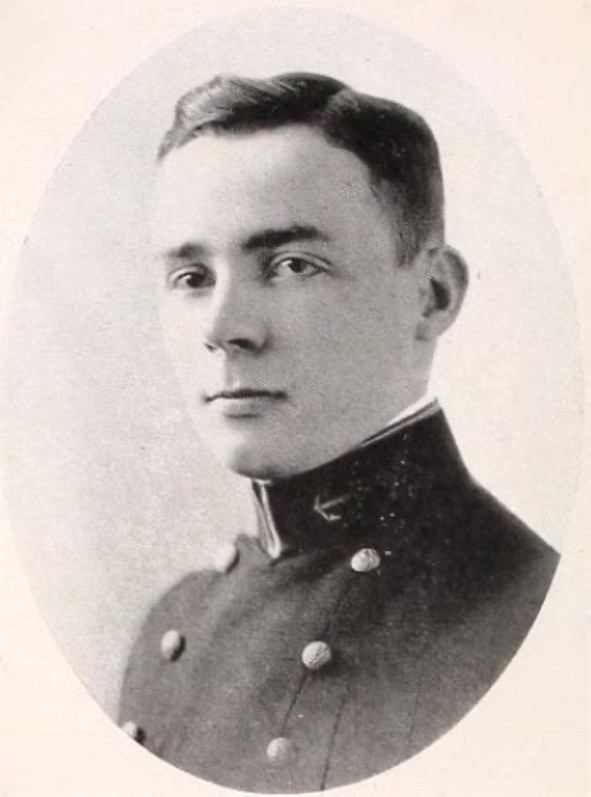
William Bernard Goggins was born on 10 September 1898, the son of William Goggins and Midge May Goggins. He entered the United States Naval Academy in 1916 with the Class of 1920, which the Navy graduated early for the First World War, and he was commissioned ensign on 6 June 1919. As a midshipman and new officer he served in the battleships Arkansas and Utah with the Atlantic Fleet.
In the years before the next war he navigated the light cruiser Trenton and, from 1939 to 1941, served on the staff of the Naval Academy. He went to the Pacific as executive officer of the light cruiser Marblehead. On 4 February 1942 Japanese aircraft caught the ship in the Java Sea and set her badly afire. Goggins was severely burned. He received the Purple Heart, and he and other wounded men were put ashore on Java while Marblehead made her long, damaged passage back toward the United States.
Promoted to captain in June 1942, he commanded the fleet oiler Ramapo from 17 June to 21 August 1942. That autumn he took charge of a Pacific Fleet radio intelligence unit under the Intelligence Center, Pacific Ocean Areas, and he remained in that post from 28 October 1942 until 5 January 1945. A Legion of Merit followed for the work of that unit through the central years of the Pacific war.
On 18 January 1945 Goggins relieved Vincent Raphael Murphy as commanding officer of the battleship Alabama. The ship was then at the Puget Sound Navy Yard, repairing damage from the December 1944 typhoon. She returned to the western Pacific in the spring. Under Goggins she screened carrier strikes against the Ryukyus, Okinawa, and Kyushu, passed through another typhoon in early June, and on 10 June bombarded Minami Daito Shima.
In July Alabama joined the raids on the Japanese home islands. On 17 and 18 July her guns hit the Hitachi district on Honshu, and the task unit commander specially commended the damage she did to her assigned targets. A second Legion of Merit marked his command of the battleship in those last months of the war. When Japan surrendered on 15 August, Alabama was off the southern coast of Honshu. She reached Japanese waters on 5 September, sailed for home on 20 September, and arrived at San Francisco on 15 October. Goggins was relieved on 26 November 1945 by Edward Harris Pierce.
After the war Admiral Sidney Souers chose him as chief of the Central Planning Staff of the Central Intelligence Group, and he also commanded that group's naval administrative unit in its work with the Office of Naval Intelligence. He was still in that circle when the group became the Central Intelligence Agency in 1947. His last seagoing-shore duty was with the 15th Naval District at Fort Amador in the Panama Canal Zone. He was promoted to rear admiral on 30 June 1949 and retired that year. In retirement he lived in Arlington, Virginia, and founded a computer and communications company in the Washington area. He died of cardiac arrest on 27 December 1985 at Fairfax Hospital.