Ships
- USS Radford (DD-446) Captain from 22 July 1942
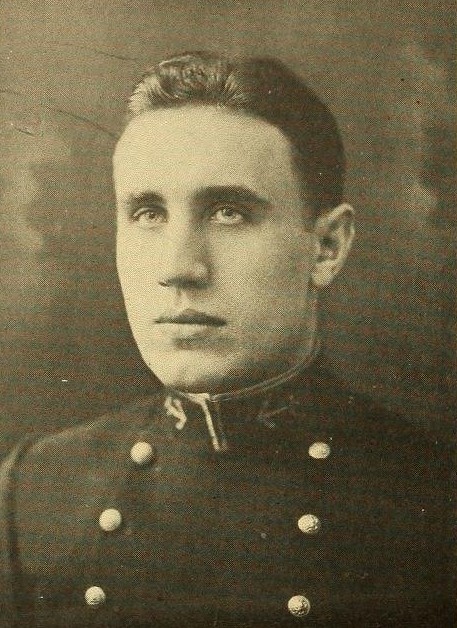
William Kilian Romoser (21 July 1903 – 1 November 1986) was a United States Navy officer from Baltimore, Maryland, a graduate of the Naval Academy in the class of 1926, who commanded the new Fletcher-class destroyer Radford from her commissioning on 22 July 1942 until 10 October 1943. In the Solomons he bombarded Munda and Kolombangara, fought off aircraft and submarines, screened the landing at Rice Anchorage in Kula Gulf, and on the night of 5–6 July 1943 fought in the Kula Gulf battle in which the cruiser Helena was sunk. Afterward his ship pulled 440 of her men out of the water. He received the Navy Cross, the Silver Star and three Legions of Merit, rose to rear admiral, commanded the Atlantic Fleet's Service Force, and died at Virginia Beach at eighty-three.
He was born on 21 July 1903 in Baltimore, the son of William H. Romoser and Elizabeth W. Kilian. A biographical note on the Radford published from material supplied by his grandson gives those names; the sources examined here say nothing more about the household, the father's work, or any brothers and sisters.
He went first to Lehigh University, in Bethlehem, Pennsylvania, for a year. He accepted an appointment to the Naval Academy and entered on 11 July 1922, ten days short of his nineteenth birthday.
The 1926 Lucky Bag gives his home as Baltimore and his nickname as "Bill." The sketch opens in a voice his classmates plainly enjoyed: "SKAG? No thanks, old man, I've knocked off smoking." "Dragging? No, I'm off that sort of thing — for the present at least." But he did not really mean it, the writers said, "for he's perfectly normal and is imbued with all the tendencies, desires and aspirations that are characteristic of the majority of us." He had "a gift of conversation and a knack at injecting romance into the most trivial of incidents," and his Lehigh year, spent "in the life of that 'old college on the hill,'" had been followed by midshipman cruises that gave him one tale after another of a European port, a baron's reception, a glorious night. Always, they said, he was "off on an insatiable longing for another cruise — to Europe, to the Mediterranean, anywhere rather than behind a mountain of textbooks." His large ambition was "to sail the seven seas of the air in a little bought plane," and the sketch closes with the hope that "a pair of gold wings will go well with that million dollar smile." The activities line under his name lists track, class soccer with numerals, and expert rifleman.
He graduated in June 1926, at twenty-two. He was commissioned an ensign with his class. A biographical note on the Radford says that from 1926 through 1937 he served in five ships, three of them destroyers, one a light cruiser and one a battleship, and that he attended flight school at Pensacola, Florida. The note does not name the ships.
The first command that can be dated is a small one. Uboat.net, a compilation, lists him as a lieutenant commanding the old flush-deck destroyer Greer from 4 March to 10 June 1940, and then the Upshur, another flush-decker, from 15 June 1940 until 9 May 1942. The Radford biography gives the end of the Upshur command as 31 May 1942. He was a lieutenant until 1 October 1940, according to the same compilation, and then a lieutenant commander. The sources examined here carry no narrative of what he did in either ship. Between them they gave him about two years of command before he was given a new Fletcher-class destroyer.
The Radford was laid down at Kearny, New Jersey, on 2 October 1941, launched on 3 May 1942, and commissioned on 22 July 1942, a day after his thirty-ninth birthday, with Lieutenant Commander William K. Romoser in command. Her history, as the Navy wrote it, begins with a rescue. After shakedown off New England she towed the burning transport Wakefield to Halifax, where the fires could be put out. She then patrolled off the East Coast and, on 5 December 1942, sailed for the Pacific.
In the early hours of the new year of 1943 the captain himself wrote the midwatch entry in the Radford's deck log. A student of the practice has remarked that it is the only New Year's log he has seen written by a ship's captain rather than a junior officer. It was in verse. "Yesterday was December's last / Today's the second, time goes fast!" it begins, and it records that the ship had lately crossed the equator, so that all hands could "boast quite true / They're Shellbacks and Golden Dragons too!" It names the admiral, "GIFFEN, Admiral is our Pa / And is riding in the WICHITA," gives the cruising speed and the boilers in use, and ends: "And so the RADFORD steams ahead / No running lights of green and red / Prepared to fight with any foe / And strike for Freedom one more blow." The year the poem opens was the year of the decorations that follow.
At Noumea the Radford joined a bombardment group, and on 19 January 1943 she shelled Japanese positions on Guadalcanal. On the night of 23–24 January she attacked the staging area on Kolombangara, and within the week she had shot down three aircraft. His first Legion of Merit, with Combat "V," covers the period from 19 January to 6 March 1943. The citation says he directed "continuous anti-submarine patrols, numerous bombardments of enemy shore positions, and participation in hazardous landing missions, covering the approach, landing and retirement of the barges." On a night patrol the ship attacked a submarine in extremely bad weather and inflicted probable severe damage; three times she helped destroy attacking planes; and in the second bombardment of Munda she silenced a shore battery within a minute of opening fire. The citation closes with a fact he would have counted more than any adjective: the ship came through "without damage."
The summer of 1943 was New Georgia. On 29 June the Radford went to Rendova with the first echelon of the Western Force to cover the landing, and shot down five aircraft. In the early hours of 1–2 July, escorting a convoy in Blanche Channel off Rendova, he made radar contact on a large surfaced submarine at fifteen thousand yards. The Gold Star in lieu of a second Legion of Merit describes what followed: "Quickly closing the target in a complete surprise approach, the RADFORD suddenly illuminated the enemy vessel and struck fiercely with torpedoes and gunfire, completing the destruction of the submarine by two full pattern depth-charge attacks after she sank." No damage came back on the ship. In an interview that year, a student of the Radford's deck logs records, he said of the submarine: "He was caught with his pants down."
A few nights later, on 4–5 July, he was screening the landing at Rice Anchorage in Kula Gulf, the narrow water beside enemy-held Kolombangara. The Navy Cross citation, awarded by Commander South Pacific, describes five hours in those confines: his ship "silenced an enemy shore battery and made depth charge attacks on enemy submarines," and at daylight "all men and equipment were landed and all of our light transports retired undamaged." He then did what the citation calls "perseverance and tenacity": with the landing finished, he got fuel and ammunition for his ship in time to rejoin his task force the following night.
On the night of 5–6 July an American cruiser-destroyer force met a Japanese force in Kula Gulf. The Radford fired guns and torpedoes. Japanese torpedoes sank the cruiser Helena, and when the shooting stopped the Radford and the Nicholas were sent to find her men on rafts, "within five miles of enemy-held territory." The citation says that in over three hours, until after daylight, the Radford "succeeded in rescuing four hundred and forty officers and men," and that three times she had to break off the rescue to close on enemy ships coming out of the gulf. With one assisting destroyer she sank a light cruiser and a destroyer and damaged a second destroyer, and took no damage from gunfire or torpedoes. Between them the two destroyers took more than 700 of her men, and each ship received the Presidential Unit Citation. The decoration for that week was the Navy Cross.
A week later, on 12–13 July, he was in the van of the small task force that met a Japanese cruiser and destroyer force off Kolombangara. The Silver Star citation says the Radford, while under gunfire, "in coordination with other destroyers in the van, made an aggressive and determined torpedo attack and engaged the enemy with guns," and that "at least four enemy ships were destroyed and two others were damaged and retired." The citation does not describe his own words or movements within the action, and no action report in his hand was examined here.
On 17 July the Radford left the Solomons for the New Hebrides and Auckland, and returned to Guadalcanal on 14 September. Romoser left her on 10 October 1943, nearly fifteen months after her commissioning, at forty. The ship went on without him to Makin, where she sank a Japanese submarine on 25 November 1943, and through the rest of the Pacific war, which gave her twelve battle stars.
He remained in the Navy, and the record of his later commands is that of a successful officer. His later commands, as the biographical note gives them, include the floating drydock Reliance (AFDL-47), from 1950 to October 1951, and then the heavy cruiser Salem (CA-139), which he commanded from 9 November 1951 to 9 October 1952. He was forty-eight when he took the cruiser.
He was promoted to rear admiral, and the Hall of Valor prints the citation for his third Legion of Merit, a Second Gold Star, for his service as Commander Service Force, U.S. Atlantic Fleet, from July 1960 to 1 July 1961. The citation credits him with improving "fleet logistic support, and the underway replenishment phases thereof," with the completion of Construction Battalion projects, and with "a smooth transition in the assumption by the Navy of the host functions in Iceland from the U.S. Air Force." It is a tidy summary of a logistics admiral's year, and almost the only document in which his later work is described.
He was married to Elsie Kalkman, according to his son's obituary, and they had at least two children. William Kilian Romoser Jr., born on 6 June 1934 in Annapolis, followed his father to the Naval Academy, where he swam and played water polo, retired as a lieutenant commander, and died in Fort Valley, Virginia, on 6 November 2018, aged eighty-four. A sister, Barbara Romoser Brock, survived him. The sources examined here do not say when the rear admiral himself retired from the service.
He died on 1 November 1986 at Virginia Beach, Virginia, at eighty-three. He was buried at Arlington National Cemetery.
What is left of Romoser in the public record is unusually well supplied with other people's verdicts - the Lucky Bag's sketch of a talker with a taste for faraway ports, the citations written by his superiors, a deck log poem in his own hand - and thin on everything he himself might have said about it. He wrote a New Year's greeting in verse for a ship that was a month from the war, and he commanded her through the nights that made her name. The writers of his yearbook wanted him in the air. The sea kept him.