Ships
- USS Mertz (DD-691) Captain from 19 November 1943
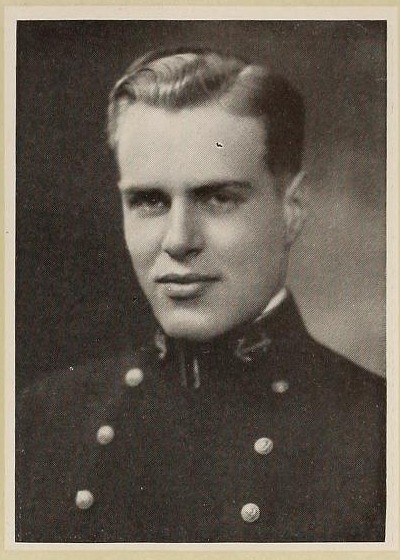
William Sears Estabrook Jr. (10 May 1908 – September 1972) was a United States Navy officer from Fayetteville, New York, near Syracuse. He graduated from the Naval Academy in 1930 and spent the next twelve years in a battleship, destroyers, a carrier and a cruiser, and at the Naval Academy. He trained as an engineer and was the first chief engineer of the destroyer Wilson. In the Second World War he commanded two very different ships. The first was the old four-stack destroyer Schenck, which escorted convoys on the North Atlantic run to Iceland through the winter of 1942–43. In February 1943, during the battle for convoy SC 118, she spent a night searching for survivors in the dark and was then ordered back to her station. The second was the new Fletcher-class destroyer Mertz, which he commissioned in November 1943 and took across the Pacific to the Marshalls, Saipan, the Palaus, Leyte Gulf, Mindoro and Lingayen. He received the Bronze Star Medal. One of his officers remembered him as a superb ship handler and a harsh and distrustful captain. After the war he was executive officer of the Naval Academy, where a midshipman who resigned in protest against the plebe system described a meeting with him in a national magazine. He later served in the Bureau of Ships and commanded the attack transport Navarro. He held the rank of captain for about the last decade of his career. He should not be confused with his father, also named William Sears Estabrook (born 1877), a Syracuse lawyer, or with a later William S. Estabrook III, a government tax lawyer in Washington.
The Estabrooks of Syracuse traced their family to Joseph Estabrook. According to a county history published in 1941, he came from England in 1660, graduated from Harvard College in 1664 and served as minister of the church at Concord, Massachusetts, until his death in 1711. His descendants moved west over the generations. The captain's grandfather, Charles Gouder Estabrook, was born in Cattaraugus County, New York, in 1850. He became a physician and surgeon and practised in Binghamton. On 18 November 1875 he married Caroline Miranda Sears of Newark Valley, New York, and the Sears name passed to their elder son. Dr. Estabrook died on 2 August 1880, not yet thirty. The 1941 history says his death "at the prime of life was an occasion of deep sorrow and a loss to his profession." He left his widow with two small boys, William Sears Estabrook, born 12 December 1877, and Charles Scott Estabrook, born in 1879. The younger boy went to the public schools of Syracuse, which suggests the family settled there.
Both sons became lawyers. William Sears Estabrook, the captain's father, was a member of the Cornell University class of 1900, where he belonged to the Chi Psi fraternity and served as an athletic editor. His brother took a Cornell law degree the same year and opened a practice in Syracuse. In 1904 the brothers formed the firm of Estabrook & Estabrook, with offices first in the Dillaye Building and later in the Herald Building. The firm became Estabrook, Estabrook & Harding after William H. Harding joined it in 1920. A fraternity journal of 1903 reported William's engagement to a Miss Evans of Washington, D.C. Church records from Fayetteville, a village east of Syracuse, record his marriage to Eleanor Evans on 14 May 1904. The sources examined here do not include a birth record naming the captain's mother. Eleanor Evans Estabrook is presumably that mother, since the son was born four years after the marriage, but no record examined states it directly.
William Sears Estabrook Jr. was born on 10 May 1908, the date given in the Navy's official registers of commissioned officers. One compilation of naval officers gives his birthplace as Fayetteville, and his Naval Academy yearbook gave Fayetteville as his home. The family was well established in the village. His uncle Charles prospered as a lawyer and businessman. He was a director of the Syracuse Trust Company, vice-president of the company that published the Post-Standard, and husband of Laura Curry, the daughter of a partner of Andrew Carnegie in the steel business. In 1922 and 1923 he built a large Tudor-style house in Fayetteville, designed by the Syracuse architect Ward Wellington Ward. The house is now listed on the National Register of Historic Places. His cousins included Elizabeth, Charles Jr. and Henry Curry Estabrook. It was a family of professional men in upstate New York, and Cornell and the law were its usual path. No surviving source explains why he chose the Navy instead. His yearbook offered only a joke: "Having tired of life in the far north, Bill sallied forth to seek new thrills. He settled on the Navy."
He was appointed a midshipman on 30 June 1926, at eighteen. His four years at Annapolis are described in the 1930 Lucky Bag, which, like all such entries, was written by classmates in a tone of affectionate teasing. He was "Bill" and also "Foggy." The entry says he found his thrills at once, "while boxing for the company, Plebe Summer. Such a striking start (Will the Marines never come?) won him many friends, and he has continued to make them in whatever he does." It noted that "blue eyes and blonde hair are assets" and that "little girls and a big accordion are his greatest weaknesses." His classmates described his playing at length: "To see him wrap himself around that miniature piano and pull and squeeze grunts, groans and squeaks from it is a sight in itself."
The entry describes an eager, sociable young man. "Bill is saturated with enthusiasm. It manifests itself in anything he does, from 'Acs' to sports. It is invariably, 'Sure, let's go!'" He was a good student. "Academics hold no terrors for him. It isn't everyone who can spend two months in the hospital, and then make the star boys fight for their places." The entry does not say what kept him in the hospital. He was left-handed, and lacrosse was "his favorite method of getting rid of excess energy, and that southpaw of his has worried 'em consistently." He played on the soccer squad for all four years and on the plebe varsity lacrosse team, joined the wrestling squad, played class basketball and lacrosse, and became a midshipman petty officer. The entry closes with a line about friendship: "You can tell your secret sorrows to Bill, and be sure they'll be safe. He wears your size in shoes and shirts, and smokes your brand. What more could one ask in a roommate?"
His entry shares a page with that of Lance Edward Massey of Watertown, New York, a classmate from the same corner of the state. Massey became a naval aviator and was killed leading Torpedo Squadron Three against the Japanese carriers at Midway in June 1942.
The class of 1930 graduated 403 men in June of that year. A service weekly that printed the order of merit placed W. S. Estabrook Jr. 102nd. He was commissioned an ensign and sent to the battleship West Virginia, where the Navy directories list him from 1930 to 1932. In January 1933 the Army and Navy Journal reported that Ensign W. S. Estabrook Jr. would be detached from the destroyer Waters in February and ordered to the Hale. Both were flush-decked destroyers of the First World War. The directory of 1933 and the register of 1934 place him in the Hale. In 1934 and 1935 he was in the aircraft carrier Langley, the Navy's first carrier, a converted collier then near the end of her career as a flight deck. By 1934 he was a lieutenant (junior grade). By early 1936 he was in the light cruiser Richmond on the West Coast.
In the spring of 1936 he married. The Washington Post of 29 March 1936 reported the wedding at San Diego of Miss Alice Billings Watson, daughter of Mr. and Mrs. Edmond Penn Watson of San Diego, to William Sears Estabrook Jr., "son of Mr. William Sears Estabrook," then "attached to the U.S.S. Richmond." The couple were to live in San Diego until 1 June and then move to Annapolis, "where Lieut. Estabrook will assume his new duties." The digitized copy of the article examined here does not show the wedding date clearly.
The new duties were at the Naval Academy. The register of 1936 lists him under instruction there, and the directories of 1937 do the same. The registers later credited him with completing the postgraduate course in naval engineering (operating), which was then taught at Annapolis, and a course in torpedo instruction. He became a lieutenant on 1 July 1937. The postgraduate engineering course prepared officers to run ships' machinery, and it determined his next assignment. On 5 July 1939 the destroyer Wilson was commissioned at the Puget Sound Navy Yard, and the registers show him on duty in her from that date. The directories of 1939 to 1941 list him as her engineer officer. She was one of the Benham class. In 1940 she went to Hawaii with the fleet, and in June 1941 she was transferred to the Atlantic, where the Navy was being drawn into an undeclared war against German submarines. The sources examined here do not say when he left her. In the summer of 1942 the Wilson went to the South Pacific and fought at Guadalcanal and Savo Island, and no evidence found places him aboard for that.
He became a lieutenant commander, temporarily from 1 January 1942 and permanently from 30 June 1942, according to a compilation of Allied commanders. He had been a commissioned officer for twelve years, with sea duty in a battleship, two old destroyers, a carrier, a cruiser and a new destroyer. He had never commanded a ship.
He took command of the Schenck on 18 September 1942, according to ship-listing compilations. She was a four-stack destroyer of the Wickes class, completed in 1919. Her official history records that from 18 August 1942 to 23 March 1943 she was based in Iceland, escorting convoys in and out of Icelandic ports. The work was mostly that of a shuttle. Slow convoys from North America to Britain passed south of Iceland, and the American escorts based at Reykjavik took the Iceland-bound ships out of the main convoys and brought outbound ships to join them. The other ships on this service included the Coast Guard cutters Ingham, Duane and Bibb and the destroyers Babbitt and Leary. William H. Wallace's history of the Coast Guard's part in the Atlantic war, The Bloodstained Sea, follows the Schenck through that autumn. On 5 October she sailed with the Ingham and Duane escorting an eight-ship outbound convoy. Later she sailed with the Duane to meet the slow convoy SC 114. On one run to Reykjavik with the Duane, a passage that should have been easy "degenerated into a constant struggle" when two of the four merchant ships could not keep their stations. The official history says that the weather "frequently" caused minor structural damage to the old ship.
The Schenck had her hardest test in February 1943, with the slow convoy SC 118. The convoy was guarded by a British escort group whose commander, Proudfoot, directed the American reinforcements, and U-boats were gathering against it. The Schenck and Babbitt, with the cutter Ingham, were sent from Iceland as reinforcements. Wallace says the two destroyers joined on the morning of 6 February, and the Navy's official chronology gives the 5th.
In the early hours of 7 February, according to Wallace, the Schenck received orders to "go and assist Campanula," a British corvette. He describes what followed: "As Schenck steamed across the stern of the convoy at twenty knots, the crew felt an explosion followed by a blast of flame." The explosion was the torpedoing of the British convoy rescue ship Toward. "Schenck soon was among life rafts and began her primary job of hunting for U-boats in the area." Star shells from the destroyer lit up "a suspicious black shape." Closing at full speed, the Schenck had to reverse her engines suddenly to avoid colliding with the Campanula. Her lookouts saw signal lights blinking. She passed through an oil slick, sighted the Bibb, and investigated machine-gun fire before rejoining the convoy at 5:31 in the morning. Wallace quotes Estabrook's report: "Searching was made difficult by the unusual darkness of the night." Wallace adds that the report makes no mention of seeing any survivors.
What followed is the decision for which Estabrook appears in the histories of the battle. Shortly after the Schenck rejoined, the escort commander ordered her back to the area of the Toward's sinking, about twenty-two miles astern, to arrive at dawn and search for survivors for an hour. Five minutes later Proudfoot cancelled the order. At 5:55, Wallace writes, the Schenck "saw several lights bobbing in the water; the destroyer's crew believed that they belonged to the survivors on life rafts. Estabrook asked permission to remain in the vicinity until daylight to pick up survivors. Proudfoot replied that Lobelia would rescue survivors and Schenck should return to the convoy. Following this last order, Schenck returned to her station."
Estabrook had asked to stay, was refused, and obeyed. That same night the U-boat U-402 torpedoed the American troop transport Henry R. Mallory, which was carrying merchant seamen, Navy Armed Guard gunners and passengers. The official chronology records that 49 of her 77 merchant crew, 15 of her 34 Armed Guard sailors and 208 of her 283 passengers were lost, most of them to exposure in the freezing water. The cutters Bibb and Ingham rescued 227 survivors. Wallace states that the Schenck did not know of the Mallory's sinking. John M. Waters Jr., a Coast Guard officer who served in the Ingham and later wrote a history of that winter, Bloody Winter, noted that apart from the Schenck no escort was near the Mallory's survivors. A history of the soldiers lost at sea in the war calls it ironic that the Schenck was sweeping the stern area for the Toward's survivors when she was ordered back to the convoy. No source examined here establishes whose lights the destroyer's lookouts saw. On 8 February, the chronology records, U-608 attacked the Schenck without success. No record of Estabrook's own thoughts on that night has been found beyond the one sentence in his report.
Weather also caused a mishap. On 13 March 1943, in an Icelandic port, a gale made her drag her anchor, and she collided with the merchant ship Exterminator. She was sent to Boston for repairs and then put on more southerly routes, escorting convoys from the end of April between the East Coast, the Caribbean and North Africa. A compilation of commanders dates his temporary promotion to commander from 15 October 1942. He left the Schenck on 1 September 1943, according to ship-listing compilations. Her best-known success, the sinking of U-645 with the escort carrier Card's group on Christmas Eve 1943, came under his successor.
His next ship was very different. The Mertz was a Fletcher-class destroyer, armed with five 5-inch guns and ten torpedo tubes, built by the Bath Iron Works in Maine. She was commissioned at Charlestown, Massachusetts, on 19 November 1943, "Comdr. William S. Estabrook, Jr., in command." He was thirty-five, and the ship was his to train from the start.
The most detailed account of him in command comes from one source, and it is not friendly. Alvin G. Gottschall, a young officer from New Orleans, joined the Mertz as an engineering officer with about a hundred machinist's mates under him. Some fifty years later he described the ship and her captain in letters to his daughter, published in 1997 as Growing Up in New Orleans. The passages about the captain were written in a letter of 1995. They are the memory of one junior officer, written long after, and the published book has been examined here only in searchable excerpts. They are also the only close view of Estabrook at sea in the sources examined here.
Gottschall wrote that once the ship was in commission the captain "changed his colors from being a quiet reserved person to a character that was worse than Captain Queeg in The Caine Mutiny. While a very competent naval officer and ship handler, he trusted no one and came down hard on everybody on that ship." The shakedown off Bermuda lasted, by his account, about five weeks of watch-on-watch work. Before the ship left, an inspecting senior officer was dissatisfied with her. Afterward, Gottschall wrote, Estabrook "gave Andrea" (the executive officer, Lieutenant Commander James P. Andrea) "and all the officers holy hell and finally said, 'I'm tired of being the son of a bitch on this ship,' and promptly retired to his stateroom. Estabrook took this whole situation personally."
The crew called him "Esty." Gottschall remembered a man who stayed on the bridge or in his sea cabin for days, often ate alone, and left standing orders that he be called "if the slightest unusual thing happened." As a former engineer, he gave the chief engineer constant trouble over smoke from the stacks. Gottschall also remembered him as a former navigator who knew the stars, and wrote that he had the chief engineer wire a constellation of tiny lights above the bunk in his sea cabin. Gottschall described his habits: "always chewing on his lower lip or picking on his lip fever blisters or rubbing the mole on his face. He smoked, but no one else smoked until after he pulled out a cigarette." He added: "Estabrook was so weather-beaten that he looked like a man of fifty most of the time. Lots of sea duty will do this."
The officers of the deck, in this account, "caught hell frequently," and Gottschall could not recall him "complimenting any officer even it was well deserved." Gottschall reconstructed an exchange on the bridge with a young officer, in which the captain demanded, "do you respect me?" and told him to "skintillate," and the officer recited the punishments he had learned to expect: "Call my relief, sir." "Leave the bridge, sir." "Go down to my room and count rivets, sir." In another story the captain threw his cigarette lighter over the side, saying, "Even this goddamn cigarette lighter has no respect for me." He is said to have made one officer knock and re-enter three times. According to Gottschall, when fitness reports came due the captain marked more than half of his twenty-two officers unsatisfactory, though not Gottschall himself. The squadron commander sent the reports back for resubmission and, according to the wardroom grapevine, suggested that if a captain had so many unsatisfactory officers, something might be wrong with the captain. With enlisted men, Gottschall wrote, the captain hardly spoke. The exception was the senior chief machinist's mate, Eduard Gregoire, "who always treated him with the utmost respect, but thought he was a first class s.o.b. and a disgrace to the Navy."
The same letter is fair to him in other ways. "As I look back on our experience with him you had to feel sorry for the guy. He couldn't have been more than thirty-five then." Gottschall continued: "He was well trained, very intelligent and knew all the naval regulations by heart, but apparently never really knew how to get along with people. Basically, he lacked confidence in himself (and shouldn't have) and, because of this trait, he had little confidence and trust in those whom he supervised." On seamanship he gave unreserved praise. "He was an outstanding ship handler. He had a keen sense of direction in the middle of the ocean with no reference points," with "an uncanny ability to know where his ship was," and an unusual ability to bring a ship alongside a pier or to a mooring in any conditions. The cheerful, generous midshipman of the 1930 yearbook and the captain of Gottschall's letter are hard to reconcile. The sources examined here cover the fourteen years between them only in lists of ships and dates.
The Mertz left Norfolk on 26 January 1944, passed through the Panama Canal, called at San Diego, and reached Pearl Harbor on 5 March. She escorted a convoy to Majuro in the Marshalls. She was assigned to Destroyer Squadron 54 under Captain Jesse G. Coward, with the Remey, Wadleigh, Norman Scott, Monssen, McNair and others. On 22 March she sailed to join Task Group 58.2 of the fast carrier force, to act as an escort for its return to Majuro. Her official history records that at 0600 on 31 March "she caught a Japanese maru in the glare of her searchlights. The enemy merchant ship maneuvered to get away, only to go down under the hail of 5-inch projectiles from Mertz." Gottschall's version is less heroic: "The next day we found and finally sank a Jap transport ship. Our marksmanship wasn't very good." In April she screened the escort carrier Barnes to Espiritu Santo, and in mid-May she returned to Pearl Harbor to prepare for the Marianas.
At Saipan she did the work that, by Gottschall's account, brought her captain his decoration. Morison's history lists her in the first unit of Fire Support Group One under Rear Admiral Howard F. Kingman, with the old battleships Tennessee and California, the cruisers Indianapolis and Birmingham, and the destroyers of Coward's squadron. Morison misspells her captain as "Cdr. W. S. Eastabrook." From 14 June the Mertz took station close inshore. Her official history says she spent the days "pounding gun emplacements" and the nights "maintaining illumination over the enemy lines," until 22 June, when she went to convoy duty. The register of 1945 records that Estabrook was awarded the Bronze Star Medal. Gottschall wrote that the award was for "superior performance in shore bombardment at Saipan," and that the squadron commander came aboard in the Marshalls, with the crew paraded in dress whites on the forecastle, and pinned the medal on the captain's chest. Gottschall also recorded a protest. A machinist's mate, whom he called "a real screwball," had sworn to do something drastic if the captain ever received an award. He broke ranks and made "a swan dive off the bow." The memoir does not say what punishment followed. The citation itself has not been found.
In September the Mertz supported the landings at Peleliu and Angaur in the Palaus, and then went to Manus in the Admiralties to prepare for the Philippines. On 20 October, the first day of the Leyte landings, she escorted landing craft to the beaches through air attacks and then patrolled off Dinagat Island at the entrance to Leyte Gulf. Morison lists her, "Cdr. W. S. Estabrook," in the destroyer screen of the Southern Attack Force under Coward. On the night of 24–25 October, as the Japanese southern force came up Surigao Strait, Coward took most of his squadron down the strait to make the first torpedo attacks of the battle. Morison writes that "the remaining two destroyers of his squadron were left on picket patrol between Desolation Point and Homonhon Island, an entrance to the Gulf that had to be covered in case another enemy force attempted to approach that way." Those two were the Mertz and McNair. While the battleships and cruisers destroyed the Japanese force in the strait to the south, the Mertz guarded the other entrance, where no enemy came. Later that day she shot down a Japanese "Zeke" fighter at a few hundred yards' range with machine-gun fire.
The rest of his command was spent escorting in the southern Philippines. After replenishing at Hollandia, the Mertz escorted a reinforcement convoy to Leyte from 9 to 14 November. She then staged at Manus for the Mindoro operation, which went through the Sulu Sea and met both a typhoon and heavy air attacks. Her official history credits her with an "Oscar" on 15 December and a share in several others. On 4 January 1945 she left San Pedro Bay through the Sulu Sea for the Lingayen Gulf landing on Luzon. Morison's order of battle lists her, again under "Cdr. W. S. Estabrook," with the McDermut and McGowan screening the tank landing ships of Rear Admiral Richard L. Conolly's reinforcement group. She was back in San Pedro Bay on 16 January.
He left the ship on 27 January 1945, according to ship-listing compilations, and was relieved by Commander W. S. Maddox. Gottschall described the departure in his letter: "On the day of his departure, we all shook his hand and wished him the best. When he went down the sea ladder to the captain's gig the poor guy was almost in tears. As the boat went around our bow he stood up and saluted his ship." The Mertz earned ten battle stars. Under his successor she helped sink the Japanese submarines RO-56 and I-56 off Okinawa in April 1945.
He was ordered to the Naval Academy, "of all places," as Gottschall put it. In November 1945 the Army and Navy Journal listed Mrs. W. S. Estabrook Jr. among the officers' wives assisting at a reception given by the Superintendent's wife at Annapolis. The Academy's annual register for 1946–47 lists Captain William S. Estabrook Jr. as executive officer under the Commandant of Midshipmen, Rear Admiral Stuart H. Ingersoll. The 1948 Lucky Bag shows him in the same post, in an executive department that also included Commander John D. Bulkeley, who had commanded PT boats in the Philippines in 1942, as assistant to the commandant.
In that post he appears in a well-known public criticism of the Academy. In January 1947 a midshipman named Ralph Lee Smith submitted his resignation with a long written statement attacking the plebe system, the hazing of first-year men by upperclassmen. In October 1947 The Atlantic published Smith's account, "Why I Resigned from Annapolis." Smith wrote that a newly reported ensign, an assistant crew coach, came to his room after reporting to Captain Estabrook, "the Executive Officer of the Academy," whom he had found "reading my statement. Captain Estabrook had handed him the statement and asked him, 'Do you think this is true?'" Smith was summoned the next day and told, "I'm busy now. I'll call you in tomorrow." After several days of silence he went to the office himself. In his telling, the interview "got off to a bad start." "As far as I can ascertain," Captain Estabrook began, "the only reason for submitting a statement of the type that you have is to drum up an argument merely for the sake of arguing." Asked how he would abolish the plebe system, Smith replied that he would sign an order. Estabrook objected that "even under the present setup, it is quite impossible to obtain complete compliance with any regulation." Smith replied that by that logic every regulation would have to go. "The interview, unfortunately, was not very profitable for either of us." The next officer to see him was Captain W. G. Ebert, whom Smith called "an exceptionally capable officer." The Atlantic later printed a reply defending the Academy.
Smith's article does not describe intimidation, only an officer who was busy, brusque and unconvinced. Half a century later Gottschall, who had heard about his old captain's later career, remembered the article differently, as the story of a midshipman who resigned because he could not stand "the intimidation by a certain officer in the faculty organization—one W. S. Estabrook, Captain, USN." Smith's statement was written before he ever met Estabrook, and Gottschall's recollection does not match the article itself.
The records of his rank in these years do not agree. The Academy publications of 1946 to 1948 and Smith's article call him captain. The Army and Navy Journal of 9 April 1949, however, lists W. S. Estabrook Jr. among the officers nominated by President Truman for temporary appointment to captain, and later registers date his rank from 1 March 1949. The earlier title may reflect a courtesy usage or a temporary rank that the sources examined here do not record.
In 1950 the Official Register of the United States listed him in the Bureau of Ships, under the assistant chief for research and development, as director of the Planning and Technical Security Division. From 10 March 1952 to 2 January 1953, according to ship-listing compilations, he commanded the attack transport Navarro. She was a Haskell-class ship built in 1944, recommissioned for the Korean War, and then operating from Norfolk with the Amphibious Force of the Atlantic Fleet. Her official history records Mediterranean and Caribbean deployments in those years, and a ship-listing compilation credits her with occupation service in European waters from May to October 1952, within the dates of his command. No account of his time in her has been found.
The registers carry him as a captain on the active list through 1960. He does not appear on the active list of 1961, which suggests that he retired around then, after about thirty years of commissioned service, but the retirement date was not found. Gottschall had heard that after leaving the Academy he commanded a tanker. The sources examined here confirm only the Navarro.
According to a compilation of Allied naval commanders, William Sears Estabrook Jr. died in September 1972 at Tyler, Texas, at the age of sixty-four. No obituary, burial record or account of his family in later life was found. Whether he and Alice Watson Estabrook had children is not established by the sources examined here. A William Sears Estabrook III graduated from Oberlin College in 1961, and a William S. Estabrook III later served for many years as an appellate attorney in the Tax Division of the Department of Justice. A son of the captain may be meant in either record, but no document examined here makes the connection.