Ships
- USS Nevada (BB-36) Captain from 30 April 1932 · Relieved on 4 December 1933
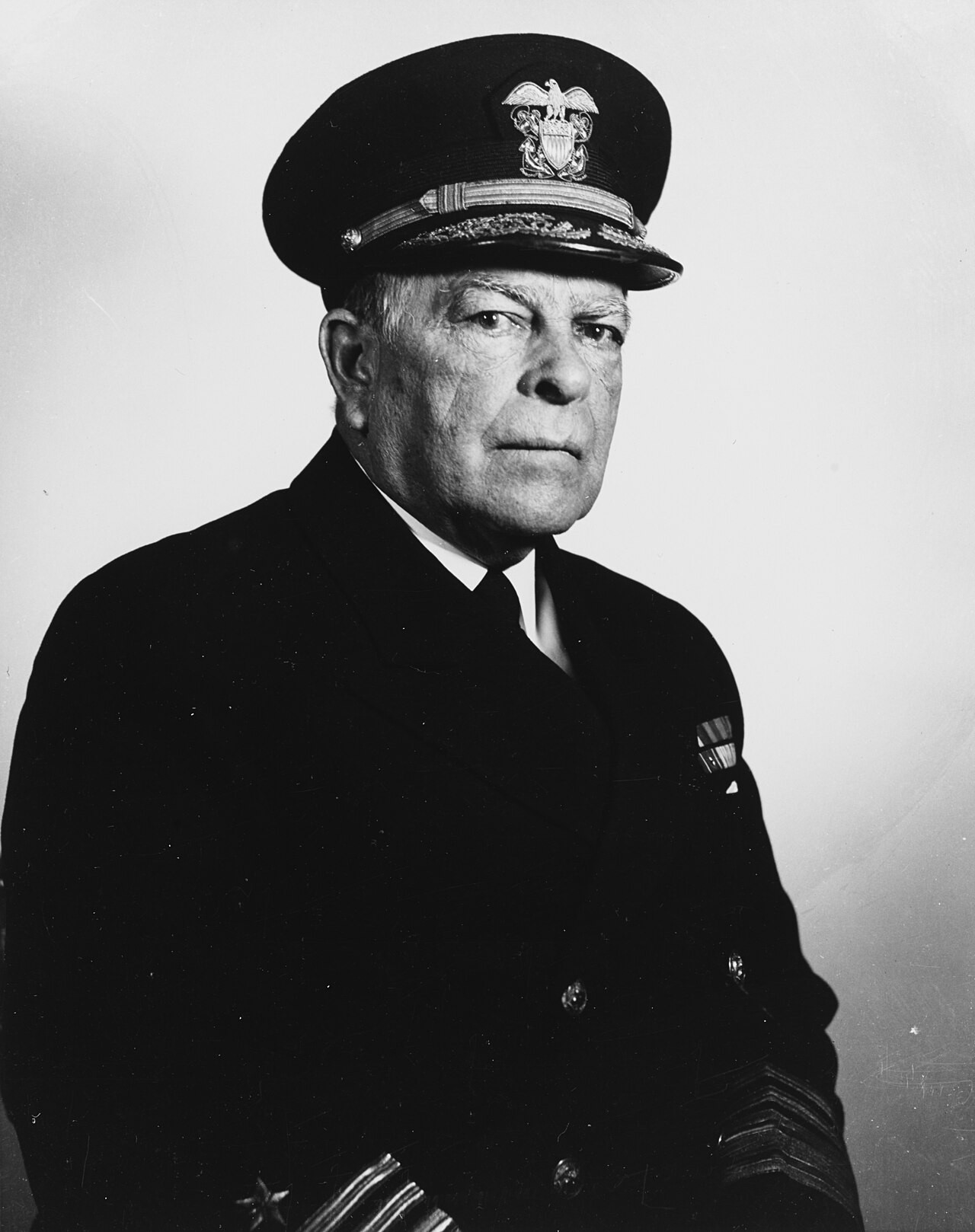
William Satterlee Pye was born in Minneapolis, Minnesota, on 9 June 1880. He entered the United States Naval Academy in 1897, graduated in 1901, and was commissioned an ensign in June 1903. From 1901 to 1915 his duty took him through five battleships and an armored cruiser, with intervals on the staff of the Naval Academy and at the Naval War College.
In February 1916 he placed the new destroyer Jacob Jones in commission and commanded her until early 1917. He then joined the staff of the Commander in Chief, Atlantic Fleet, and stayed there through the First World War. The Navy awarded him the Navy Cross for that work. From 1919 to 1921 he served in the Office of the Chief of Naval Operations. He was executive officer of the battleship Pennsylvania in 1922 and 1923, held a short command of a destroyer squadron, and returned to the Navy Department in Washington, where he remained into 1927.
In the years that followed he commanded the minelayer Oglala, served again in the department, and headed the United States Naval Mission to Peru. On 30 April 1932 he became commanding officer of the battleship Nevada. The ship had already completed a major modernization and was serving with the Battle Force. His tour was a peacetime one of gunnery, training, and the fleet's regular exercises. He was relieved on 4 December 1933.
As a rear admiral he was chief of staff to the commander of the Scouting Force, attended the Naval War College, and held further Navy Department posts. Much of his reputation among fellow officers rested on war plans for a possible campaign in the Pacific. He later commanded the destroyers of the Scouting Force and then the destroyers of the Battle Force. In 1940, with the temporary rank of vice admiral, he took command of the battleships of the Battle Force. In 1941 he became commander of the Battle Force and, under the fleet's new task organization, also led Task Force One.
On 6 December 1941, after a briefing on Japanese movements to the south, Pye judged that Japan would not go to war with the United States, a country he considered too big, too powerful, and too strong. The next morning Japanese aircraft attacked Pearl Harbor, where he was serving as commander of the Battle Force. After Admiral Husband E. Kimmel was relieved, Pye became acting commander in chief of the Pacific Fleet on 17 December. He held that duty until Admiral Chester W. Nimitz took command on 31 December.
Those two weeks turned on Wake Island. A relief expedition built around the carrier Saratoga was already at sea under a plan begun while Kimmel was still in command. The garrison had beaten off a Japanese landing on 11 December, and Pye let the operation continue until 22 December. Fresh reports of Japanese landings, set against the battered state of the fleet, persuaded him that the carrier force should not be risked. He ordered it back to Pearl Harbor. Japanese troops seized Wake on 23 December. The recall drew hard criticism in the service and became the decision for which his wartime command is chiefly remembered.
When Nimitz assumed command, Pye returned to the Battle Force. Into the autumn of 1942 that force, operating as Task Force One, watched the West Coast while a Japanese raid there still seemed possible. He left the seagoing command in October 1942 to become president of the Naval War College at Newport, Rhode Island, and at the same time commanded the naval operating base there. He retired in July 1944 and remained president of the college until he was released from active duty in December 1945. Pye died in Bethesda, Maryland, on 4 May 1959, and was buried at Arlington National Cemetery.