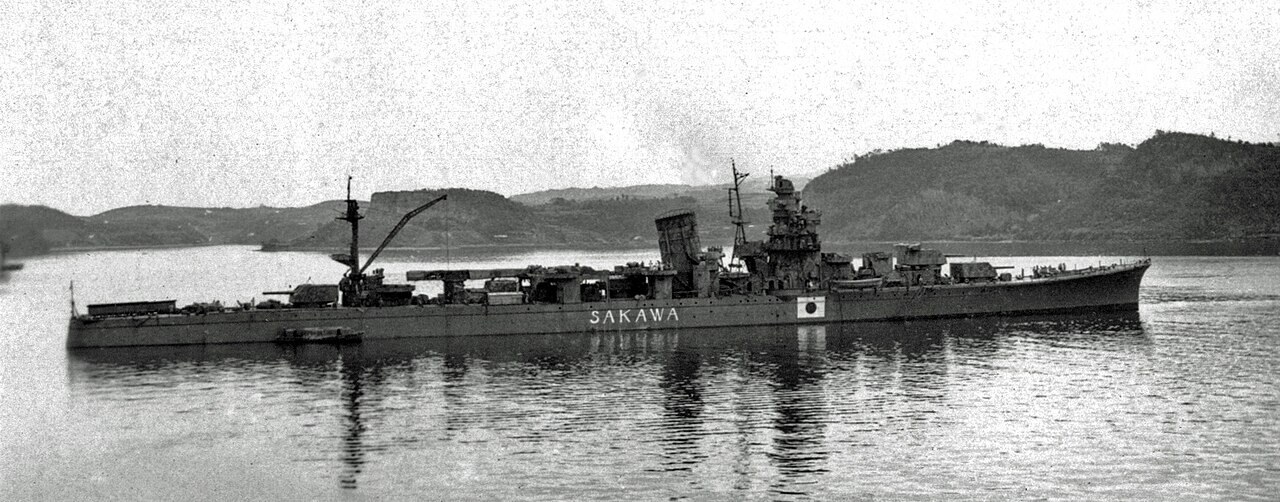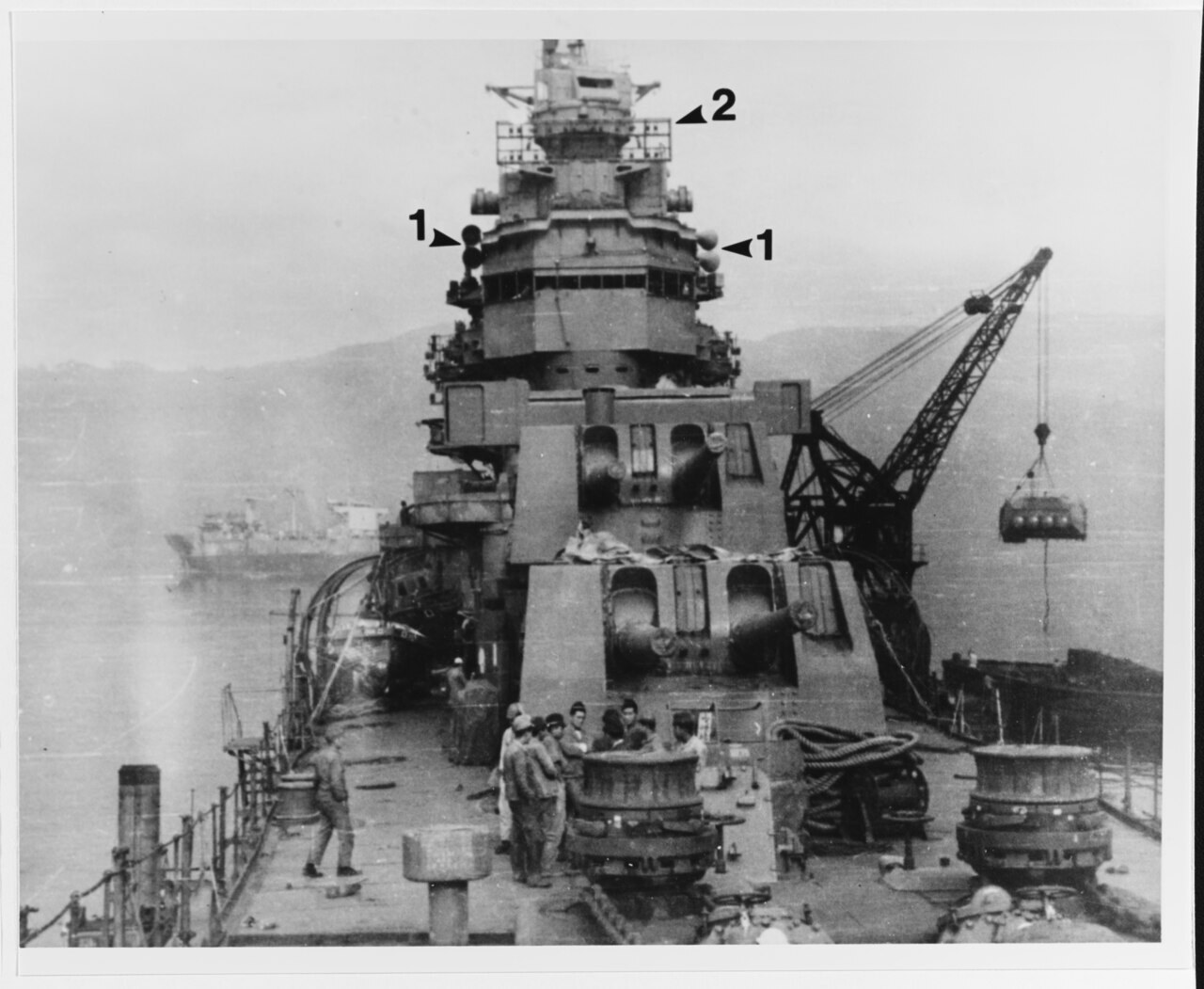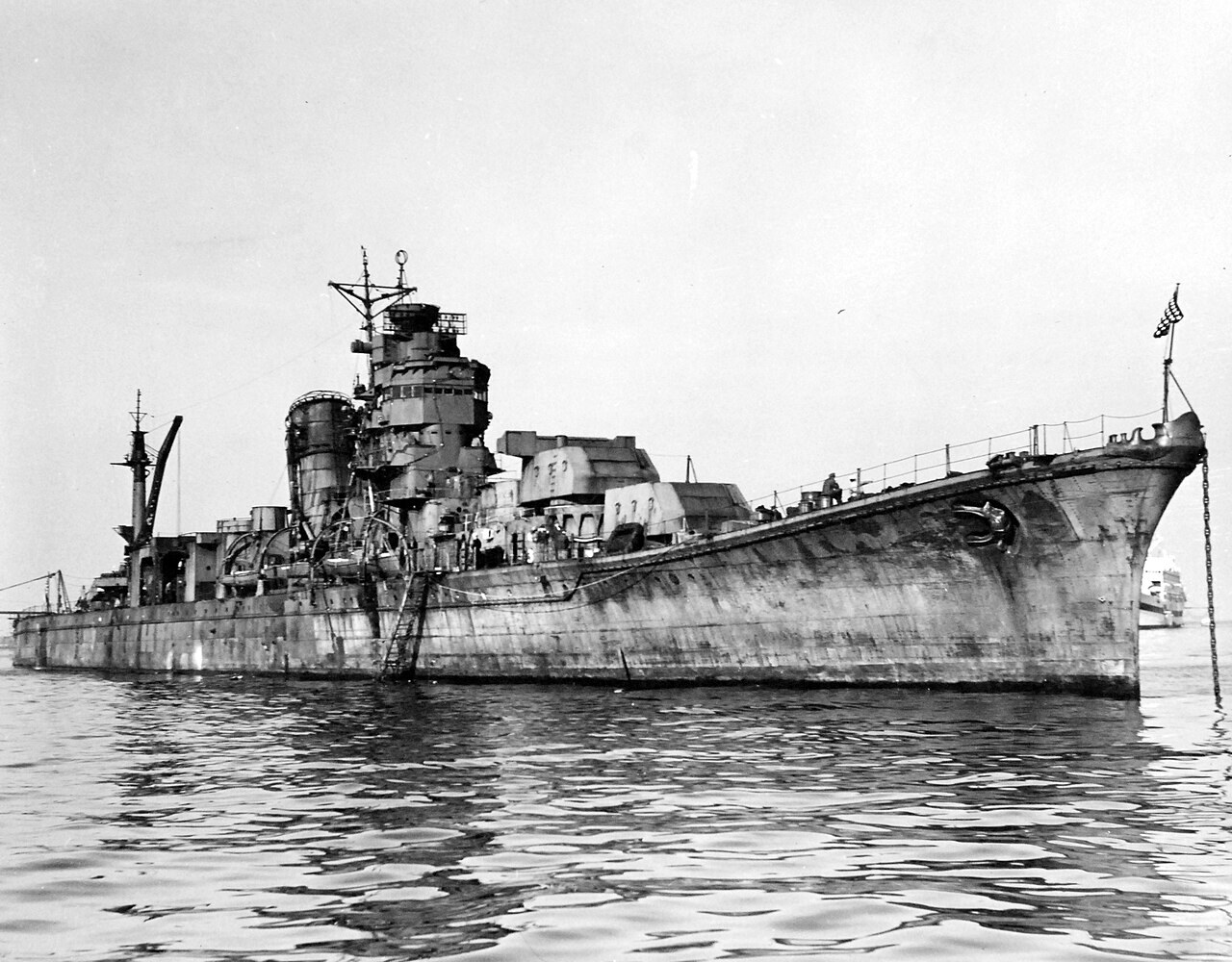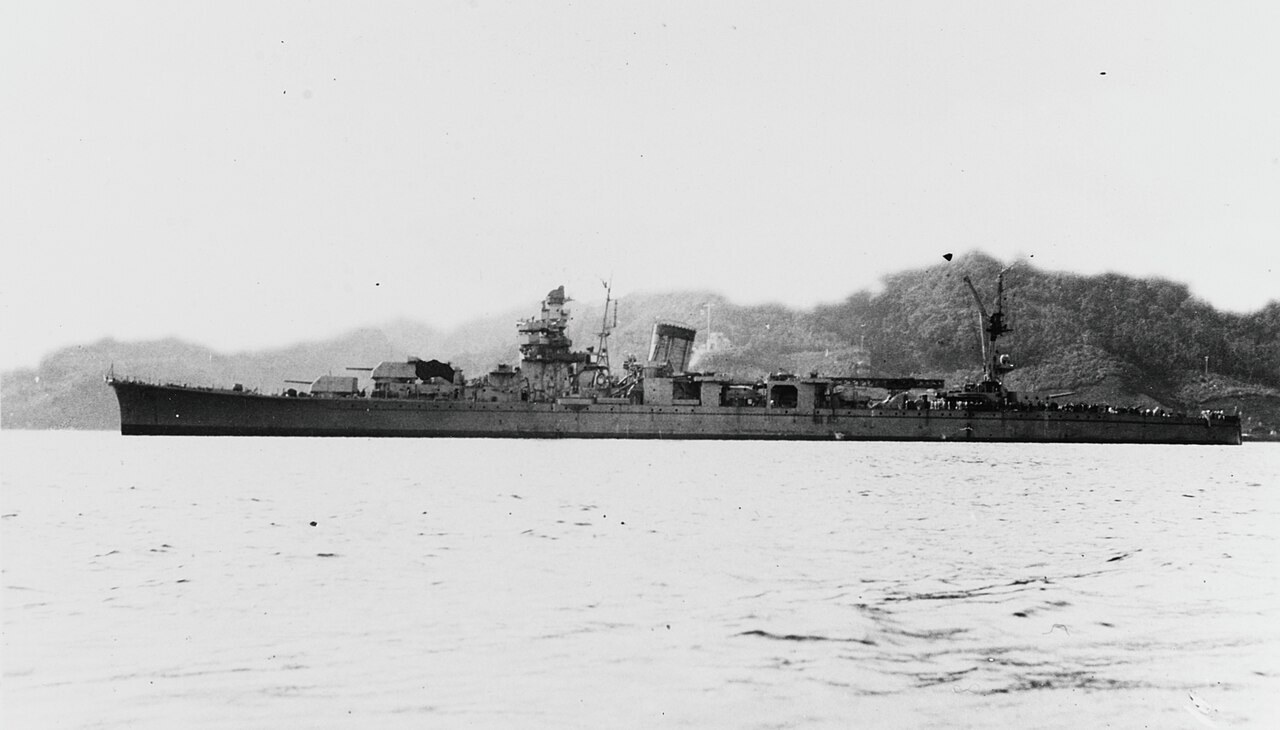
Sakawa was the fourth and last of the Agano-class light cruisers and the last cruiser Japan ever completed. She was named for the Sakawa River in Kanagawa. The Sasebo Navy Yard laid her down as warship No. 135 on 21 November 1942 and launched her on 9 April 1944. Captain Toshimichi Ohara, who had commanded Destroyer Division 19, was named her chief equipping officer on 25 September 1944. She was completed and handed over at 1000 on 30 November 1944, and Ohara became her captain. Like her sisters she carried six 152-millimeter guns in three twin turrets, eight torpedo tubes and two floatplanes, and was meant as a destroyer-flotilla flagship.
She sailed for Kure in early December. On the way the lagging on her heating steam pipes caught fire in several places, and the captain signaled for 258 meters of new pipe. From 15 January 1945 she was flagship of Destroyer Squadron 11, the training squadron for new destroyers in the western Inland Sea. Early in 1945 she also served in trials of an anti-radar coating for submarines, trying to find coated boats with her own radar.
When the Navy sent Yamato toward Okinawa on 6 April 1945 in Operation Ten-Go, Sakawa and her squadron were attached to Vice Admiral Seiichi Ito's Second Fleet. There was no fuel for them, and they stayed behind. After Yamato was sunk the squadron went back to the Combined Fleet. In late May she moved to Maizuru on the Sea of Japan with a few destroyers, scraping her bottom in the Kammon Strait on the way. In mid-July two mines went off near her and did only slight damage, and she returned to Maizuru on 19 July. On 25 July aircraft from Yorktown attacked shipping in Maizuru harbor and did not damage her. She was there when Japan surrendered.
After the surrender she was disarmed and went to the repatriation service on 1 December 1945. From December to February she brought soldiers home from New Guinea, Korea and other places. Then the Americans took her for the atomic tests at Bikini. On 18 March 1946 she sailed from Yokosuka for Eniwetok with an American crew of 165 under Lieutenant Commander Jesse E. Miller, where wartime Japanese crews had numbered about 1,100. On 28 March, 300 miles from Eniwetok, she broke down. Nagato took her in tow until Nagato's own boiler failed, and both lay stopped in bad weather until help came. At Eniwetok five of her American sailors sabotaged her fuel system in the hope of being relieved of duty aboard her.
On 1 July 1946 she lay near the center of the target fleet at Bikini for the test called Able, the first air-burst atomic bomb at sea. She was moored off the port quarter of Nevada, the aiming point. The bomb missed Nevada and went off about 490 yards above and slightly to starboard of Sakawa's stern. It crushed her superstructure, damaged her hull and breached her stern. She burned for twenty-four hours and began to flood aft. Caged and tethered animals had been put aboard her to test the effects of radiation. On 2 July the tug Achomawi tried to tow her to the beach. As the tow took the strain her bow rose, she heeled 85 degrees to port and began to go down by the stern, and the cable was finally cut. At 1042 she capsized and sank in Bikini Lagoon, taking about 700 feet of tow cable with her. She had been struck from the Navy List on 5 October 1945.
A note on sources. This history follows the Tabular Record of Movement for Sakawa by Bob Hackett and Sander Kingsepp at combinedfleet.com and the Japanese Wikipedia article on Sakawa. The record gives her launch only as October 1944, which is a mistake for her completion month; the Japanese article gives 9 April 1944 for her launch and 21 November 1942 for her keel, and those dates are used here. The Japanese list of captains dates Ohara's command from 10 November 1944, and the record from her completion on 30 November.