Ships
- IJN Yamato Flag, not her captain, 7 April 1945 · Lost with her
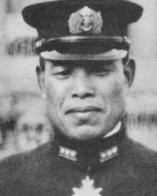
Seiichi Ito was born on 26 July 1890 in Takada, Miike County, Fukuoka Prefecture, a town later brought into the city of Miyama. He graduated from the Imperial Japanese Naval Academy in 1911 with the 39th class, fifteenth among 148 cadets. As a midshipman he served in the cruiser Aso and the battleship Aki. The peacetime navy then advanced him on its usual dates: ensign on 1 December 1912, sub-lieutenant on 1 December 1914, and lieutenant on 1 December 1917.
In 1923 he completed the 21st class of the Naval Staff College as a lieutenant commander. From May to December 1927 he lived in the United States, and he was promoted to commander on his return. That stay gave him a direct look at American industry. He became a captain on 1 December 1931, and through 1932 and 1933 he served in China and in Manchukuo.
His cruiser commands began in November 1933 with the light cruiser Kiso. He had the heavy cruiser Mogami from November 1935 and Atago from April 1936, then the battleship Haruna from December 1936, in the months after fighting spread in China. On 15 November 1937 he left Haruna to become chief of staff of the Second Fleet, and on 1 December he was promoted to rear admiral. From 15 December 1938 he directed the Personnel Bureau of the Navy Ministry for two years.
On 28 November 1940 he took command of Cruiser Division 8. On 10 April 1941 Matome Ugaki relieved him there, and Ito became chief of staff of the Combined Fleet under Isoroku Yamamoto. Ito's months in America in 1927 had fallen during Yamamoto's tour as naval attaché in Washington, and both men treated the gap in industrial power as the fact that would govern a war with the United States. Ito's time on the Combined Fleet staff lasted through the summer. On 1 September 1941 he became vice chief of the Naval General Staff in Tokyo, and on 15 October he was promoted to vice admiral.
He remained vice chief from the autumn of 1941 until December 1944, under successive chiefs of the Naval General Staff, while the Pacific War turned against Japan. In the planning before the war he judged that the opening offensive through Southeast Asia would take six to eight months. In 1942 he opposed the Midway operation at the outset. When Yamamoto put his own standing behind the plan, Ito let the objection go. The long staff tour showed him, from the center of the navy, how carrier losses and scarce oil were wearing the fleet down.
On 23 December 1944 he returned to sea as commander of the Second Fleet, in place of Takeo Kurita. The force waiting in the Inland Sea was a remnant gathered around Yamato. Ito had passed the war years at a desk in Tokyo. Over the winter he drilled what was left of the surface fleet in home waters.
In April 1945 the high command gave him Operation Ten-Go. Yamato was to sail with the light cruiser Yahagi and eight destroyers, in step with a large air attack, and fight the American ships off Okinawa. Fighter cover would be thin, and the fuel embarked would get the ships to the island with little left for a voyage home. Ito thought the plan would spend the last big ship for no lasting result. He agreed to go after he was told that the Emperor expected the navy to strike. On 6 April 1945 he stood out of Tokuyama with his flag in Yamato, bound for Okinawa. He was not her captain. Kosaku Aruga had the ship.
On 7 April American carrier aircraft found the force in the East China Sea, still short of Okinawa, and struck in waves. Bombs and torpedoes left Yamato unable to steam. Yahagi and four of the destroyers were sunk in the same attacks. Ito cancelled the operation and ordered the escorts still afloat to pick up survivors. Aircraft sank Yamato that day, and he was lost with her. His chief of staff, Nobuei Morishita, came through the sinking as the senior survivor from the battleship. The navy promoted Ito to admiral after his death.