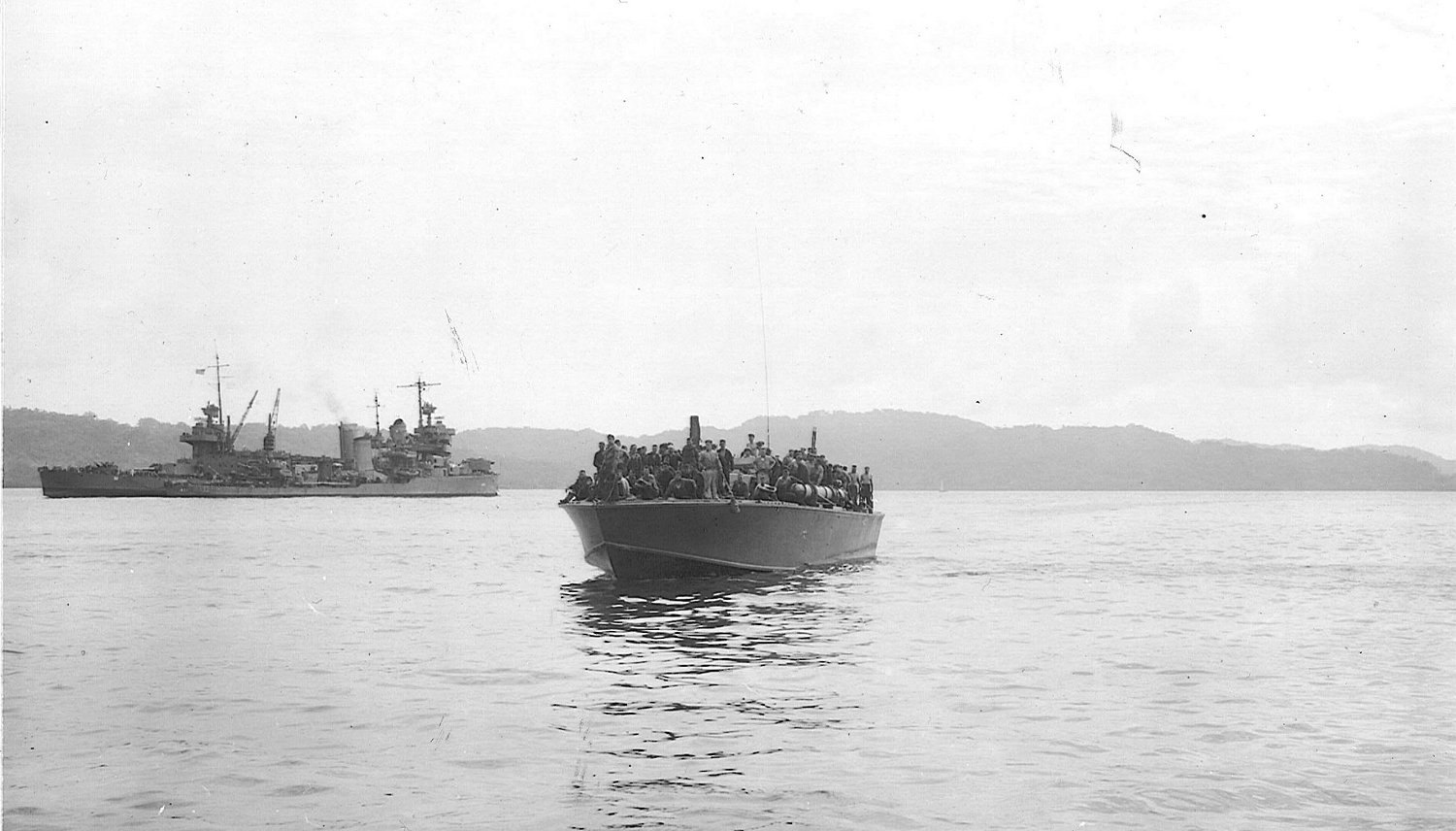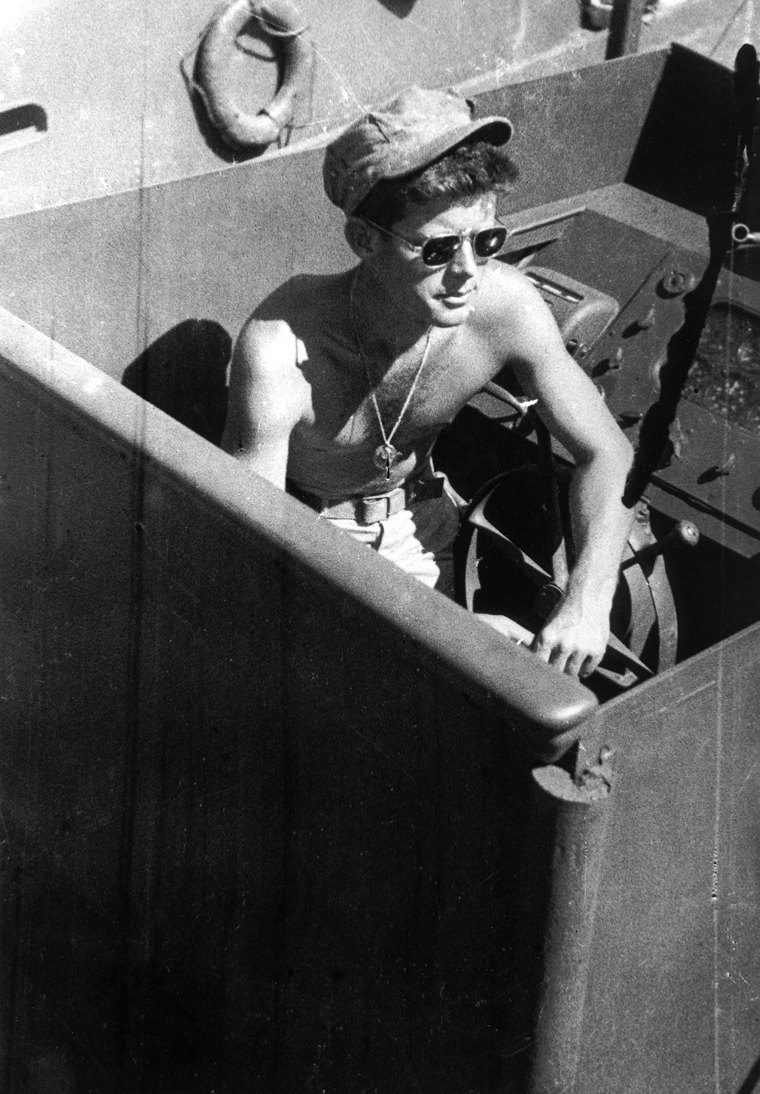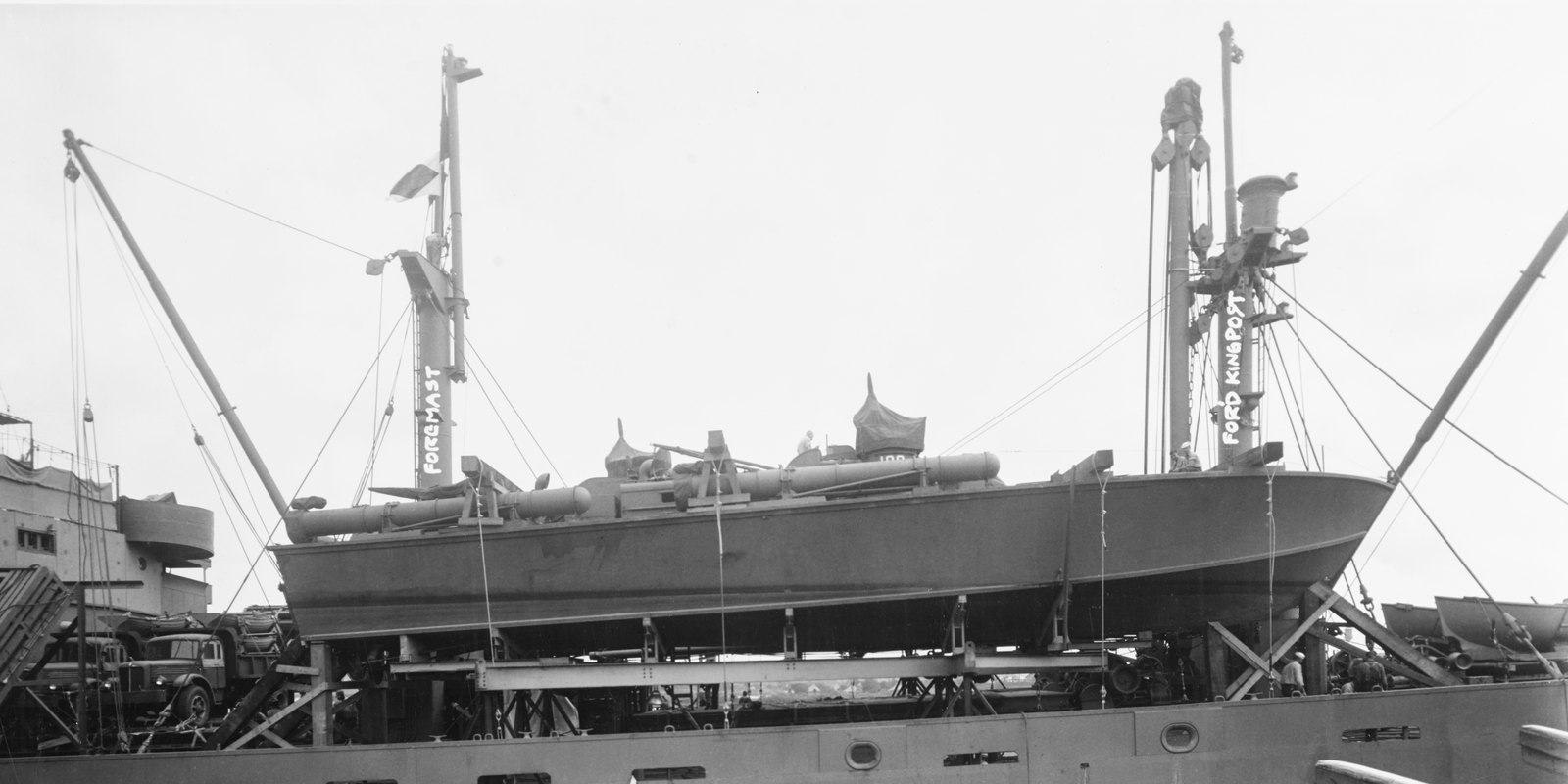
PT-109 was an Elco boat, eighty feet, built at Bayonne, one of Motor Torpedo Boat Squadron 2. By August 1943 she was lying in a bush berth at Rendova under Lieutenant (junior grade) John F. Kennedy. She carried four 21-inch torpedoes, a 20 mm aft, and pairs of .50-caliber guns. The day before her last patrol an Army 37 mm anti-tank gun was lashed to the foredeck, because the boats were being sent after barges and the torpedoes were a poor tool for that. Ensign George Ross was aboard to fire it.
On the night of 1 August, fifteen boats went up from Rendova to stop a Tokyo Express run into Vila, on Kolombangara. Only the section leaders had radar. They fired on radar bearings and were ordered home. The rest were left in Blackett Strait, nearly blind, engines held down so aircraft would not see the wake. Torpedoes went into the dark. None of them hit. PT-109 was idling on one engine between Kolombangara and Arundel.
Around two in the morning the destroyer Amagiri came back down the strait, finished with the landing. Kennedy called for a turn and full power, and for Ross to use the 37 mm. There was no time to load it, and the boat did not get clear. Amagiri’s stem took her on the starboard side and broke the wooden hull in two. The gasoline went up. The boats nearest her fired, or tried to, and did not come back.
Thirteen men were aboard. Two were killed in the break, in the forward part of the boat: Motor Machinist’s Mate Harold Marney and Torpedoman Andrew Kirksey. The other eleven got to the bow section, which was still afloat. Motor Machinist’s Mate Patrick McMahon was burned over most of his body. Kennedy got him onto the wreckage. They held on through the morning. By early afternoon the bow was settling. They kicked for Plum Pudding Island, about three and a half miles off, a scrap of sand and trees a hundred yards across. The men who could not swim hung on a timber from the 37 mm mount. Kennedy towed McMahon with a strap from the life jacket clenched in his teeth. It took about five hours. Japanese barges passed. They dragged themselves in under the trees.
That night Kennedy swam out alone toward Ferguson Passage, about two miles, to flag a PT boat on the usual route. None came. He swam back. On 4 August the eleven left Plum Pudding and swam south to Olasana, about another three and a half miles, against the current. Kennedy had McMahon again. Olasana had coconuts and no fresh water. On 5 August Kennedy and Ross swam on to Naru. They found a canoe, Japanese crackers and candy, and a drum of water the garrison had left, and brought them back to the others.
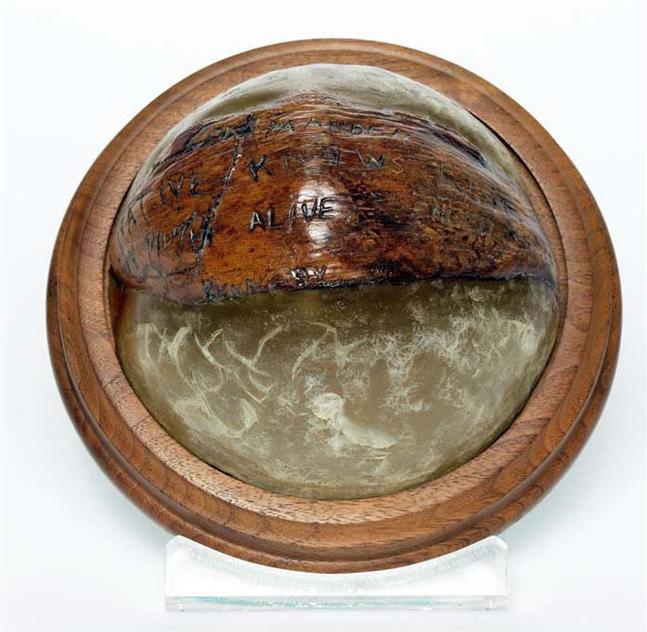
Two Solomon Islands scouts found them there. Biuku Gasa and Eroni Kumana were working for the Australian coastwatcher, Lieutenant Arthur Reginald Evans, who had a post on Kolombangara and had seen the fireball on the night of the collision. Kennedy cut a message into a coconut husk:
NAURO ISL
COMMANDER … NATIVE KNOWS POS’IT …
HE CAN PILOT … 11 ALIVE
NEED SMALL BOAT … KENNEDY
Ensign Leonard Thom, the executive officer, wrote the same news out in a note and asked for a small boat, because some of the men were too burned to swim another mile. Gasa and Kumana took the coconut and the note and paddled them through water the Japanese were using, down to the coastwatcher line and on to Rendova. Evans got a radio message through on 7 August.
Before dawn on 8 August, PT-157, Lieutenant William Liebenow, came up to Olasana with PT-171 scouting ahead. Kennedy stood up and shouted for his men. The boat crews, close to the Japanese shore, did not like the noise. All eleven came off, and the scouts with them. They had been in the islands six days. They had eaten coconuts, a little rainwater, and the crackers from Naru. Amagiri had reported the collision and was back in Rabaul the afternoon of the 2nd, with a split stem and a nicked propeller. Whether her captain aimed the bow is still argued. The hull of PT-109 was gone either way.
Asked later how he had come to be a hero, Kennedy said it was involuntary. They sank his boat.