Ships
- USS New Orleans (CA-32) Captain from 15 February 1934
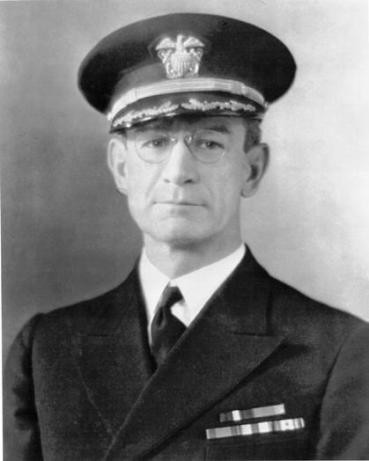
Allen B. Reed was born Allen Bevins Reed in Liberty, Missouri, on 3 April 1884, the son of James French Reed, who had served as sheriff of Clay County. He finished high school in Liberty in 1900 and entered the Naval Academy that September. He graduated with the class of 1904, whose members included William F. Halsey and Husband E. Kimmel. After a short tour in the school ship Mohican, he joined the Asiatic Fleet as a passed midshipman and served in the gunboat Paragua, first as executive officer and, from February 1906, as commanding officer. The boat patrolled the Philippines and supported Army expeditions against Moro fighters. At Pata Island in May 1905, while he was still a midshipman, he went ashore with an infantry company, handled signals back to the gunboat, and took a place on the firing line.
In 1912, as a lieutenant and navigator of the cruiser Denver, Reed led a landing force of about 120 men ashore at Corinto, Nicaragua. The party went in during the late summer to hold the railroad and the telegraph line after a revolt against President Adolfo Díaz. Two years later he commanded the torpedo-flotilla tender Iris on the Mexican west coast during the unrest that followed the Tampico affair. In May and June 1914 Iris carried American refugees out of Mazatlán and Acapulco, among them Consul Clement S. Edwards. By June 1915 he was captain of the port at Balboa, on the Pacific side of the Panama Canal.
During the First World War, Reed was among the officers given a temporary promotion to commander. He commanded the transport Susquehanna on the run that carried troops and supplies to Europe. In 1920 he received the Navy Cross for that service, cited as exacting and hazardous duty through waters sown with enemy submarines and mines. The War Department also sent him a letter of commendation for carrying soldiers to Europe and home again.
After the war he attended the Naval War College at Newport, in the senior class that finished in 1926, and served in the Ships' Movements Division under the Chief of Naval Operations. He was promoted to captain on 16 March 1927. In the middle of the decade he commanded the destroyers Worden and Converse, and Worden spent a year with the Naval Forces in Europe on patrol in the Mediterranean. He then led destroyer divisions of the Battle Fleet, using McCawley and later Preble as his flagship. From 1930 to 1932 he was back in Washington in the Material Division of the Office of the Chief of Naval Operations.
On 15 February 1934 Reed became the first commanding officer of the heavy cruiser New Orleans when she was commissioned at the New York Navy Yard. She was the name ship of a new class of treaty cruisers, armed with nine 8-inch guns. In May and June he took her on a shakedown cruise to northern Europe, with calls at Stockholm, Copenhagen, Amsterdam, and Portsmouth, and brought her back to New York on 28 June. On 5 July New Orleans sailed to meet the cruiser Houston, which had President Franklin D. Roosevelt on board. The ships passed through the Panama Canal, exercised off California with the Navy airship Macon and her airplanes, and ended the voyage at Astoria, Oregon, on 2 August. New Orleans then continued to Panama and Cuba and trained off New England into 1935.
That spring, on her way to join Cruiser Division 6 in the eastern Pacific, the cruiser made her first visit to the city for which she was named. On 30 March 1935, Governor Oscar K. Allen presented the ship with the silver services of the battleship Louisiana and of an earlier cruiser named New Orleans, and he made Reed an honorary citizen of the city. Liberty, his hometown, set aside a day in his honor while the ship lay at the city wharves. Reed remained in command through that summer and left New Orleans at the end of August 1935. The cruiser he had put into commission later served through the Pacific war, from Pearl Harbor to the Philippines.
From October 1935 he was Director of the Fleet Maintenance Division in the Office of the Chief of Naval Operations. He also sat on the Joint Economy Board between the Army and the Navy and chaired the executive committee of the Army and Navy Munitions Board. He left the active list in 1939 and stayed on in Washington as a Navy liaison with the Maritime Commission and the Office of Production Management, working to ready ships and industry as war drew near. He came off active duty in 1941. During the war he worked with private shipyards in Charleston, Houston, and New York, and in 1944 he was named chairman of the Maryland committee of the USO. His wife, Bessie Moorhead Reed, whom he had married in Omaha in 1909, sponsored the submarine Torsk at her launch that September. Reed died in Bethesda, Maryland, on 28 February 1965, and was buried at Arlington National Cemetery.