Ships
- USS Pensacola (CA-24) Captain, 19 May 1943 – October 1943
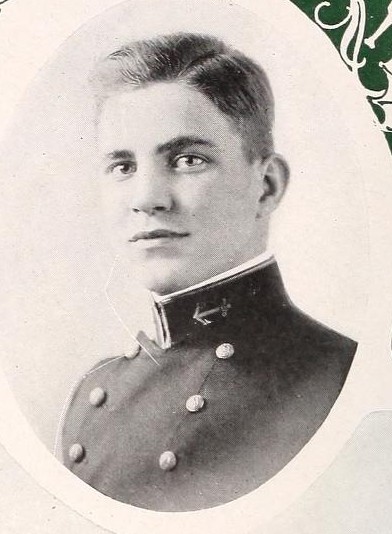
Allen Prather Mullinix was born on 12 December 1898 in Attica, Indiana, and spent his working life in the United States Navy. He graduated from the Naval Academy with the Class of 1920 and went to sea in a fleet still close to the lessons of the First World War. From that first commission he rose, over the next three decades, to flag rank, and he retired as a rear admiral. He died in Washington, D.C., on 4 January 1978, and he was buried at Arlington National Cemetery.
An early and severe test came on 8 September 1923. Mullinix, then a lieutenant, was serving in the destroyer Delphy when she led a column of destroyers onto the rocks at Honda Point, on the California coast, in thick fog. The ships had been bound for San Diego at cruising speed, and seven destroyers were lost in the grounding. Mullinix escaped injury. For the officers of his year the wreck was a hard lesson in formation steaming along a coast that could appear with almost no warning.
He stayed with the peacetime Navy and was promoted to commander on 1 July 1939. After the United States entered the war he was advanced to temporary captain on 18 June 1942, the rank he held in his cruiser command. The Pacific fighting reached his family the next year. His older brother, Rear Admiral Henry Maston Mullinnix, was aboard the escort carrier Liscome Bay when a submarine torpedoed her off Makin, in the Gilbert Islands, on 24 November 1943. The carrier sank with a great loss of life, and the admiral was among those killed.
Mullinix became captain of the heavy cruiser Pensacola on 19 May 1943 and remained in command until October 1943. Pensacola, namesake of her class, carried a main battery of ten 8-inch guns and had already been through the early carrier battles of the Pacific war. She came to him still scarred by the night action off Tassafaronga in November 1942, when a Japanese torpedo tore into her side and 125 of her crew were killed. Repairs kept the cruiser out of action well into 1943. His months aboard were the months in which that damaged ship was finished in the yard, tried at sea, and made ready for the fleet that was about to move into the Gilberts.
He stood in a line of captains who had the same cruiser. Andrew Daniel Denney commanded Pensacola in the late 1930s, and Norman Scott had her from the end of 1939 into the first weeks of 1942. Randall Euesta Dees and Willard John Suits also served as captain of Pensacola during the war. Mullinix's own tour closed in October 1943, with the Central Pacific offensive about to open and the cruiser nearly ready to take a place in it again.
The job he held that summer and autumn was a captain's command on a heavy cruiser at the turn of the Pacific war, between a ship that had nearly been lost and a ship the Navy could send back into battle. He left Pensacola as a temporary captain and finished his service as a rear admiral. His burial at Arlington in 1978 closed a career that had run from the Naval Academy class of 1920 through the destroyer disaster at Honda Point and a wartime command of Pensacola.