Ships
- USS Sterett (DD-407) Captain, 15 August 1939 – 1 April 1941
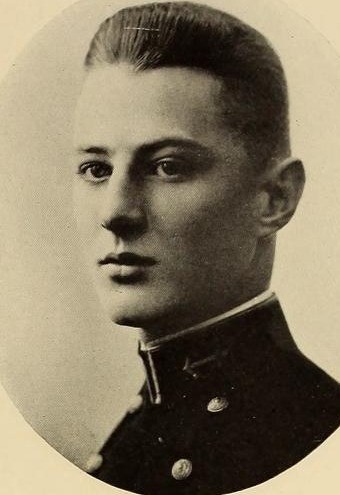
Atherton Macondray Jr. was born in San Francisco on 29 July 1900. He entered the United States Naval Academy in 1917 with the class of 1921 and spent thirty-two years in the Navy, rising from lieutenant commander to rear admiral. He died of a heart ailment on 21 March 1950 at Bethesda Naval Hospital, at the age of forty-nine, and was buried at Arlington National Cemetery.
On 15 August 1939, still a lieutenant commander, he became the first commanding officer of the destroyer Sterett when she was commissioned at the Charleston Navy Yard. The Benham-class ship, about 1,500 tons, had been laid down at that yard in December 1936 and launched on 27 October 1938. She was the second Navy vessel to carry the name of Andrew Sterett, a lieutenant of the early republic. Macondray's work was to take a yard-new destroyer and her crew through trials and into the fleet, in the weeks before war began in Europe.
He took Sterett to sea for shakedown on 28 October 1939. The new destroyers Hughes and Mustin sailed with her. The cruise ran through the Gulf of Mexico and the Caribbean, with stops at Veracruz, Mobile, Cristóbal, and Guantánamo Bay, and Sterett was back at Charleston on 20 December. Overhaul and trials held her at the yard into the spring.
Pacific orders followed. On 4 May 1940 Sterett, assigned to Destroyer Division 15, met the destroyer Hammann at Guantánamo Bay. The two ships passed the Panama Canal and reached San Diego on 23 May. For the next month the crew trained and stood plane-guard duty with the carrier Enterprise. On 24 June Sterett sailed for Hawaii with Enterprise and five other destroyers, entering Pearl Harbor on 2 July. Exercises and patrols out of Pearl Harbor filled the months after that, and on 23 July the ship crossed the equator near Jarvis Island. Macondray kept command through those first months in Hawaiian waters. On 1 April 1941 Jesse Grant Coward relieved him. Under Coward and the commanding officers who followed, Frank Gardner Gould, Francis Joseph Lucien Blouin, and Gordon Bennett Williams, Sterett went on to fight in the Pacific.
His next sea command was the fleet oiler Tippecanoe, from 19 April 1941 until 21 September 1942. He was promoted to commander on 1 July 1941, while in that ship, and to temporary captain on 20 June 1942. The Secretary of the Navy later commended him for his work as a logistics planner in the office of the Chief of Naval Operations.
On 21 March 1945 he took command of the light cruiser Nashville and stayed in her until January 1946, with the Seventh Fleet in the last campaigns of the war. He received the Bronze Star for the part Nashville played in the Borneo campaign, and the Seventh Fleet commander also commended him for the cruiser's service. After the war he served in the Navy public relations office, first as director of civil relations and then as deputy chief of public relations. Illness led to his retirement about two months before his death. He was survived by his widow, the former Helen Cowles Tucker Andrews, by his mother in San Francisco, and by three stepdaughters and two sisters.