Ships
- USS Franklin (CV-13) Captain from 8 June 1946 · Relieved on 17 February 1947
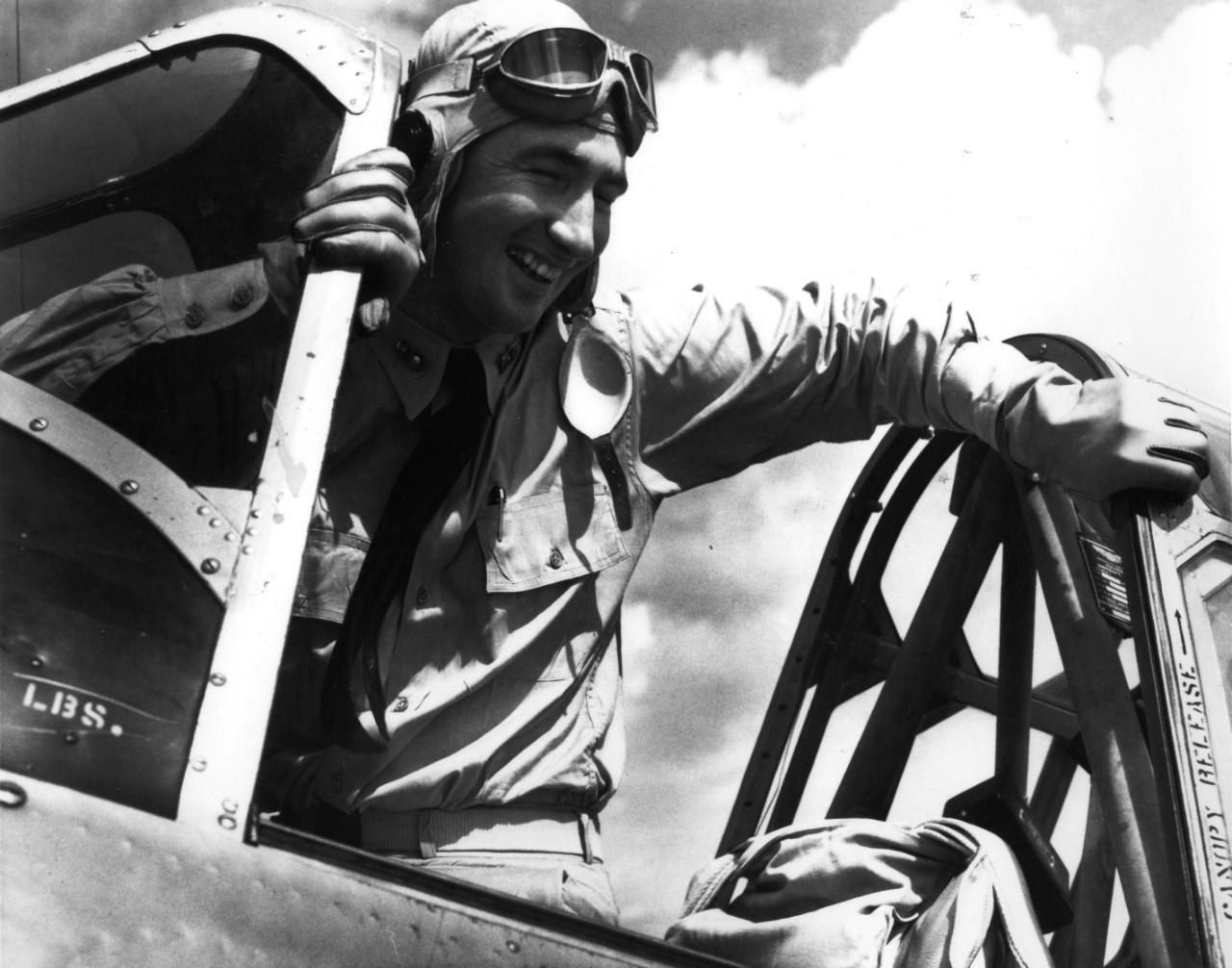
Clarence Earle Dickinson, Jr., was born in Jacksonville, Florida, on 1 December 1912, and spent part of his boyhood in North Carolina. He graduated from the United States Naval Academy in 1934 and went to sea that June. Early duty included the destroyer Phelps. He qualified as a naval aviator, and by late 1941 he was flight officer of Scouting Squadron Six, flying the Douglas SBD Dauntless from the carrier Enterprise.
On the morning of 7 December 1941, Enterprise was nearing Pearl Harbor and launched aircraft ahead to Ford Island. Dickinson, with radioman William C. Miller in the rear seat, flew into the Japanese attack over Oahu. Fighters shot the Dauntless down. Dickinson parachuted and reached the ground alive. Miller was killed. Dickinson made his way to Ford Island and was soon airborne again on search flights.
On 10 December 1941 he took part in a bombing attack credited with the sinking of a Japanese submarine in Hawaiian waters. His conduct on the morning of the raid and that submarine attack brought him Navy Crosses. A third Navy Cross followed his flying at Midway, so that during 1942 he stood among the small number of naval aviators who held the decoration three times. He also received the Air Medal.
At the Battle of Midway on 4 June 1942 he flew with Scouting Squadron Six in the dive-bombing attack on the Japanese carrier Kaga. He was credited with a bomb hit that helped leave the carrier burning and out of the action. His own aircraft did not get back to Enterprise. He and his gunner survived in the water and were picked up.
The carrier he would later command was still in the building yard during those battles. Franklin (CV-13), an Essex-class ship nicknamed Big Ben, was commissioned on 31 January 1944 with James Marshall Shoemaker in command. She went to the Pacific, took battle damage, and returned to Puget Sound for repair. Leslie Edward Gehres succeeded Shoemaker in November 1944. On 19 March 1945, while Franklin was launching strikes off Japan, a Japanese dive bomber hit her with two bombs. Fire and explosions killed 724 of her men and wounded 265. The crew that stayed aboard kept the ship afloat, and she was brought home. She was still under repair when the war ended.
Dickinson became captain of Franklin on 8 June 1946, with the fighting over and the carrier back in American waters. His command covered her last months in commission. On Navy Day, 27 October 1946, the ship was opened to visitors. He was relieved on 17 February 1947, and that same day Franklin was decommissioned and laid up at Bayonne, New Jersey. Dickinson remained in the Navy and retired as a rear admiral. He died on 4 October 1984.