Ships
- USS Trout (SS-202) Captain from 15 November 1940
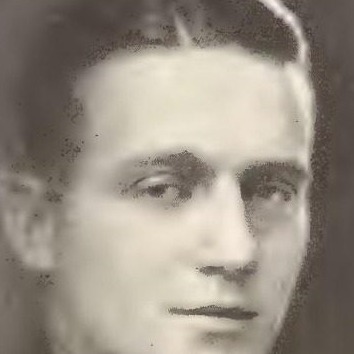
Frank Wesley Fenno Jr. (11 September 1902 – 16 August 1973) was a United States Navy submarine officer from Westminster, Massachusetts, who graduated from the Naval Academy in the class of 1925 and retired as a rear admiral. As commissioning commanding officer of the fleet submarine Trout, he carried antiaircraft ammunition into the minefields of Corregidor in early 1942 and brought out Philippine gold and silver that had been moved there for safekeeping; he later commissioned and commanded Runner, led a coordinated submarine attack group, and commanded a submarine division and squadron. He received the Army Distinguished Service Cross, three Navy Crosses, the Silver Star, and two awards of the Legion of Merit. Classmates and shipmates called him Mike.
He was born in Westminster, Worcester County, Massachusetts, on 11 September 1902. The Navy registers print that date of birth beside his name; the 1925 Academy yearbook places him in Westminster; and later compilations that give Bethesda, Maryland, as his place of death also give Westminster as his birthplace.
He was the son of a man also named Frank Wesley Fenno. The Navy directories and registers distinguish the officer as “Frank W. Fenno, Jr.” throughout his career. The father’s own life is outside the scope of the naval record used here, and the mother’s name does not appear in the Lucky Bag, the registers, or the award citations.
Local newspaper notices of his death, as summarized in later reference accounts, place him at Fitchburg High School and then for a time at the University of Maine before he entered the Naval Academy. The yearbook does not expand on that schooling. What it does record is the ambition that shaped his midshipman years. Under the nicknames “Mike” and “Rudy,” the 1925 Lucky Bag sketched a Massachusetts boy who was no scholar—“Steam was a puzzle; juice, a mystery”—and whose “life’s ambition was to play baseball.” Center field was his position. He lettered in Navy baseball for four years, captained the 1925 team, and hit .410 in the 1924 season, for which the Navy Athletic Association gave him a medal that still survives in a private collection. The yearbook, with its usual mixture of satire and affection, declined to describe “that home run in the Army-Navy Game,” citing “a warped sense of modesty.”
Family recollection, reported many years later by a grandson, holds that Connie Mack of the Philadelphia Athletics offered him a contract, and that Mack himself urged the Naval Academy appointment as the better livelihood. That story is family memory rather than a contemporary contract record. What the Academy record itself shows is a midshipman whose time and talent went into the outfield, and who was commissioned an ensign with the class of 1925.
He entered the Academy in the summer of 1921 and graduated in June 1925. The Navy Directory of 1925 lists him first at the Boston Navy Yard as an ensign, then in the battleship Utah. By 1926 and through 1928 the directories place him in the battleship Florida. Those early battleship tours were ordinary junior duty for a new ensign of his class.
He then went into submarines. The Navy Directory of 1930 lists him as a lieutenant (junior grade) in the S-37, an old S-boat of the Asiatic Fleet’s submarine force, and the Register of that year notes him as ordered to the Asiatic submarine division. The 1931 directory still has him in the S-37. What the directories do show is the pattern of an officer who left the battleships for the small diesel boats of the Asiatic station and then came home.
In 1932 the directory lists him under instruction in the First Naval District. From 1933 through 1935 he was assigned to the Naval Academy at Annapolis. Those Academy years coincided with the period in which later baseball historians describe him as connected with Navy baseball as a coach or manager after his own playing days; the directories themselves state only the Academy assignment. In 1936, as a lieutenant (junior grade), he appears as commanding officer of the Mallard, a minesweeper then used in submarine-support work. By 1937 and into 1938 he was a lieutenant in command of the submarine S-45. The directories of late 1938, 1939, and early 1940 place him at the Submarine School at the Submarine Base, New London—duty that prepared officers for the new fleet boats then building.
He was promoted to lieutenant commander in 1940. The directory of that year, in its later state, already lists him as commanding the new Tambor-class submarine Trout (SS-202). She had been built at the Portsmouth Navy Yard, launched on 21 May 1940, and commissioned on 15 November 1940 with Fenno, then a lieutenant commander, in command. He was thirty-eight. The ship’s official history and the wartime narrative that follows it treat him as her first captain.
When the Japanese attacked Pearl Harbor, Trout was already at sea on a simulated war patrol off Midway. On the night of 7 December 1941 her lookouts saw two Japanese destroyers shell the island. She closed at full speed on the surface but could not reach an attack position before the destroyers retired. She remained on unrestricted patrol until 20 December, then returned to Pearl Harbor without having fired a shot. That was her first war patrol: a near miss at the edge of the war’s first morning, and no sinkings.
Her second patrol made his name. On 12 January 1942 Trout sailed from Pearl Harbor loaded with roughly 3,500 rounds of three-inch antiaircraft ammunition for the forces holding Corregidor and Bataan. She refueled at Midway on the 16th and ran west, on the surface until late January and submerged by day thereafter. On the night of 27 January, near the Bonin Islands, she closed a lighted vessel, fired a stern torpedo that missed, closed again, recognized a submarine chaser, and broke off—having been ordered to avoid small craft. On the night of 3 February she met a motor torpedo boat off Corregidor—PT-34 in the ship’s history—and followed it at high speed through a winding channel in the minefield to South Dock.
There she unloaded the ammunition, took fuel, and embarked two torpedoes. She also needed ballast to replace what had been removed to make room for the shells. Sandbags and concrete were wanted ashore for the defense. What Corregidor could spare, and what the Philippine and American authorities needed taken out of reach of the Japanese, was bullion and coin: gold bars and silver pesos that had already been moved to the Rock from Manila, together with securities, mail, and State Department dispatches. The Army Distinguished Service Cross citation for Fenno, issued by the Hawaiian Department on 17 March 1942, states the load as “twenty tons of gold and silver, securities, diplomatic and United States mail and two additional torpedoes.” The ship’s history describes the same transfer. The U.S. High Commissioner’s wartime report, written later that year, accounts in more detail for the Commonwealth gold held on Corregidor—hundreds of bars melted from United States gold coin after the 1933 devaluation—and for large numbers of silver one-peso coins, much of which went out as ballast in the same submarine that carried High Commissioner gold. Paper currency on the Rock was inventoried and largely burned rather than shipped. Contemporary and near-contemporary Navy accounts put the metal in the bilges as ballast; one wartime narrative, quoted later from Commander Harley Cope’s Serpent of the Seas, has Fenno signing for the treasure and asking cheerfully, as he prepared to dive, “Any passengers?” The men who had assembled the cargo on the dock—among them Commonwealth officials headed by Vice President Sergio Osmeña and members of the High Commissioner’s staff—were not among the passengers.
Trout cleared the dock in the early morning of 4 February, bottomed in Manila Bay through daylight, surfaced that night for more securities and mail, and was escorted back out through the minefield. She shaped course for the East China Sea. On the afternoon of 10 February she attacked a freighter, missed with the first torpedo, closed, and hit with the next two. The postwar Joint Army-Navy Assessment Committee (JANAC) credits Trout with sinking the cargo ship Chuwa Maru, 2,719 gross tons, that day in position 25°30′ N, 122°38′ E. That evening, near the Bonins, she fired at another vessel, was herself the target of enemy torpedoes that passed alongside and overhead, and then sank her attacker with a third torpedo. Wartime credit treated that target as a small patrol ship of about two hundred tons. JANAC does not list it among the merchant and naval losses it assessed. Trout reached Pearl Harbor on 3 March after fifty-one days at sea and transferred her ballast to the cruiser Detroit.
The mission was publicized when the United States badly needed a success story. Trout received a Presidential Unit Citation. Fenno received both the Navy Cross and the Army Distinguished Service Cross for the same patrol; the Navy Cross text emphasizes the “unusual and special mission” and the two sinkings on the return. General Delos C. Emmons of the Hawaiian Department decorated the officers and men at Pearl Harbor in mid-March; the crew received Army Silver Stars for participation in the same operation. Photographs of the ceremony show Fenno standing with Emmons beside the boat.
His third patrol, from 24 March to 17 May 1942, took Trout into Japanese home waters. The Navy Cross citation for that patrol credited him with sinking 31,000 tons of merchant shipping and damaging another 15,000 tons “in the Pacific waters in immediate proximity to enemy shores.” The ship’s narrative records a hard patrol of misses, partial hits, and depth-charging, and two confirmed sinkings late in the cruise: the cargo ship Uzan Maru, 5,014 tons, on 2 May, and the converted gunboat Kongōsan Maru, 2,119 tons, on 4 May, after which Trout endured a long depth-charge attack. JANAC confirms those two sinkings and no others for Trout in that period. The gap between the wartime tonnage claim and the postwar assessment is the familiar one of early-war submarine reporting: explosions heard, ships seen down by the bow, and tonnages estimated high. Between mid and late April the boat also covered approaches for the Doolittle Raid task force. For the patrol she received a second Presidential Unit Citation, and Fenno a gold star in lieu of a second Navy Cross.
His fourth patrol was the Midway deployment. Trout sailed from Pearl Harbor on 21 May 1942 as part of Task Group 7.1, stationed south of Midway. She did not fire a torpedo. On 4 June she dived under a fighter; on 9 June she passed through oil and wreckage and took aboard two Japanese survivors from the sunken cruiser Mikuma. She returned to Pearl Harbor on 14 June. After that patrol Fenno left the ship. Lawson P. “Red” Ramage took Trout south on her fifth patrol. Fenno’s four patrols in her had spanned Midway on the first day of the war, the Corregidor gold run, a cruise into Japanese home waters, and the Midway battle line of submarines. He was still a lieutenant commander.
He next fitted out and commissioned the new Gato-class submarine Runner (SS-275) at Portsmouth on 30 July 1942. After shakedown from New London she reached Pearl Harbor by way of the Panama Canal on 10 January 1943. Her first war patrol, 18 January to 7 March 1943, ran between Midway and the Palaus. The official history records five cargo ships torpedoed and none confirmed sunk. On the last attack, off Peleliu, a near miss from a patrol bomber knocked out her sound gear and the power for both periscope hoists; she escaped deep, made emergency repairs, and came home. Fenno’s third Navy Cross citation, covering that patrol, credits him with sinking three freighters totaling 19,915 tons and damaging two totaling 14,189 tons. JANAC lists no Runner sinkings in January–March 1943. The postwar assessment thus does not sustain the citation’s sinkings; the patrol’s confirmed result, as the ship’s history states it, was damage to the boat and no verified kills.
On her second patrol, 1 April to 6 May 1943, Runner laid mines off Pedro Blanco Rock and then worked toward Hainan Strait. She torpedoed a ship later identified as the hospital ship Buenos Aires Maru, which was damaged but not sunk. Fenno brought Runner into Midway on 6 May. He then left her. On 27 May she sailed for the Kuriles under another commanding officer and was never heard from again; postwar Japanese records were later read as showing sinkings by Runner in June 1943, after Fenno’s departure. She was declared lost that summer.
From September 1943 to March 1945 Fenno commanded Submarine Division 201, and from March to September 1945 Submarine Squadron 24. The Legion of Merit citation for that period credits his “executive and administrative ability” and the successful war patrols of the boats under him. In May and June 1944 he also led a coordinated attack group of submarines northwest of Guam. The Silver Star citation for that duty, covering 4 May to 27 June 1944, credits the group with sinking five enemy ships totaling 24,700 tons, including an escort and a destroyer, and damaging two more totaling 15,000 tons, and praises his handling of the pack “despite severe enemy countermeasures and in being broken up to search for downed friendly aviators.” Clay Blair’s history of the submarine war later referred to the group as “Fenno’s Ferrets.” The wartime tonnage figures in the citation are again claims of the period; the sources examined here do not restate them boat by boat against JANAC.
By the end of the war he held, for combat and command service, the Distinguished Service Cross, three Navy Crosses, the Silver Star, and the Legion of Merit, together with the unit honors that attached to Trout’s early patrols. He had also been promoted through commander to captain. The registers of the mid-1940s print the Navy Cross and Distinguished Service Cross codes beside his name.
He remained in the submarine force and in senior shore and base commands into the Cold War. In the mid-1950s he served as chief of staff to Vice Admiral Stewart H. Ingersoll, the first commander of the United States Taiwan Defense Command. A photographer who served in the command’s photo lab in 1955–1956 later wrote that Rear Admiral Fenno was the chief of staff in those years, that he reenlisted photo-lab sailors in August 1956, and that he played on the command softball team—continuity with the midshipman who had lived for center field.
From November 1958 to October 1960 he commanded the United States Naval Base at Guantánamo Bay, Cuba, through the first years of the Castro government. The Gold Star in lieu of a second Legion of Merit, awarded on the recommendation of the Chief of Naval Operations in March 1961, credits him with “exceptional initiative, leadership, and wisdom in evaluating the Cuban political climate,” with planning “for any eventuality,” and with maintaining morale “at an incredibly high level” while the base was “particularly sensitive” amid “local instability, misunderstanding, and tension.” The citation is staff language, but it places him as the Navy’s senior officer on a base whose relationship with its host country was changing under his feet.
He retired from the Navy as a rear admiral in 1962, after nearly four decades of commissioned service. A contemporary Maine newspaper notice is cited in later summaries for the retirement year; the registers of the late 1950s already list him among the rear admirals. The sources examined here do not describe his civilian occupations after retirement.
He died on 16 August 1973 in Bethesda, Maryland, at the age of seventy. The Fitchburg Sentinel printed notice of the death two days later under a headline that still called him a Westminster man. He was buried in Arlington National Cemetery. A later local remembrance describes a simple stone among thousands: Massachusetts, rear admiral, United States Navy, with the dates of birth and death.
His wife, Avis Ann Cochran Fenno, is named in later biographical summaries; the Navy sources examined here do not give the date or place of the marriage. At least one son, Eric Neil Fenno, appears in the Navy registers of the 1950s as a junior officer, so the name continued on the active list into the next generation. In 1957 the television anthology The Silent Service dramatized Trout’s Corregidor patrol under the title “The Trout at the Rainbow’s End”; Fenno appeared at the end of the episode in his own person to speak about the patrol. That brief appearance is one of the few times his own voice enters the public record of the gold run.
What the record otherwise leaves is the shape of a career rather than a private journal. A Massachusetts baseball captain who chose the Navy over the chance of a professional contract became an S-boat officer on the Asiatic station, commanded a Tambor-class boat into Corregidor’s minefield with the Philippine treasury in her bilges, and finished as a rear admiral who kept Guantánamo running while the island around it changed governments. The citations speak of fearlessness and zeal; the postwar assessments cut the tonnage claims of his early patrols down to a handful of named ships. Between those two kinds of paper stands the night of 3–4 February 1942, when a submarine captain signed for gold because sandbags could not be spared, and took it to sea.