Ships
- USS Alabama (BB-60) Captain from 20 March 1943 · Relieved on 12 August 1944
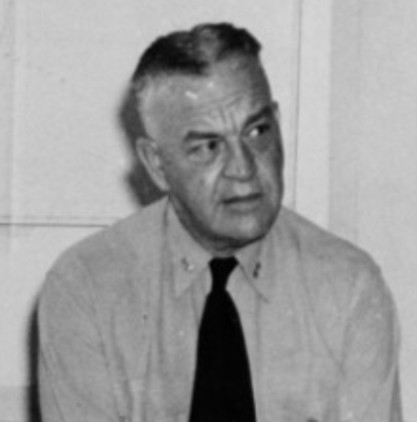
Fred Durrel Kirtland was born in Salina, Kansas, on 6 November 1892. He attended Salina High School and in 1912 received an appointment from Kansas to the United States Naval Academy. He graduated with the Class of 1916 and was commissioned an ensign that June. His first ship was the battleship Wyoming. In the First World War she operated with the British Grand Fleet, made sweeps into the North Sea, and was present at Scapa Flow when the German High Seas Fleet surrendered.
In June 1921 he left Wyoming for the postgraduate school at Annapolis and began a course in electrical engineering, which he completed at Columbia University. He received a master of science degree in June 1923. Temporary duty followed, including work in the Bureau of Engineering and a chemical-warfare course at Edgewood Arsenal. In October 1923 he reported as assistant engineer officer of California, then flagship of the Battle Fleet. From October 1926 he served at the fuel-oil testing plant at the Philadelphia Navy Yard. In February 1929 he went to the Brown-Boveri plant at Camden, New Jersey, to help fit out the heavy cruiser Salt Lake City, and he joined her as engineer officer when she was commissioned on 11 December 1929. He remained in that billet until May 1932, then spent two years in the Design and Construction Division of the Bureau of Engineering.
His first command was the destroyer Breckinridge, which he took in May 1934 and operated with the Destroyers, Scouting Force, until May 1936. He was promoted to commander that July. He served next as executive officer of the repair ship Medusa until June 1937, and then as officer in charge of the Material Laboratory in New York until June 1939. After a course at the Naval War College, he fitted out Destroyer Division 66 at Philadelphia in September 1939. When the division was commissioned on 4 October he assumed command, with additional duty as commanding officer of Breckinridge. In January 1941 he moved to Destroyer Division 14. From December 1941 to June 1942 he commanded Destroyer Squadron 7. He was promoted to captain in 1942.
He returned to the Naval War College for further instruction, then in December 1942 reported to the Bethlehem Steel yard at Quincy, Massachusetts, for fitting-out duty in the heavy cruiser Baltimore. He was detached in March 1943, before that cruiser was commissioned. On 20 March 1943 he became captain of the new battleship Alabama. George Barry Wilson had brought her into commission in August 1942. From 17 March the executive officer, Neil Kittrell Dietrich, stood in command until Kirtland arrived.
Alabama and the battleship South Dakota formed Battleship Division Nine and joined the British Home Fleet. By way of Argentia, Newfoundland, Alabama reached Scapa Flow on 19 May 1943. Through the early summer she trained with British ships and stood ready for operations between Iceland, the British Isles, and the Murmansk route. In July the division took part in a feint toward Norway, timed with the landings in Sicily and intended to draw the German battleship Tirpitz out of her fjord. The German heavy ships stayed in harbor. Released from the Home Fleet on 1 August, Alabama reached Norfolk on 9 August, finished a short overhaul, and sailed for the Pacific on 20 August. She passed the Panama Canal on 25 August and anchored at Havannah Harbor, Efate, in the New Hebrides, on 14 September.
A new SK air-search radar had been intended for Alabama before she left the Atlantic, but the yard could not install it in the time on hand. Kirtland had the set brought aboard. At Efate his crew, with men from a repair ship, took down the old antenna and mounted the new one high on the foremast with block and tackle, work that ordinarily waited on a navy-yard crane. That radar and its operators remained with the ship into the summer of 1944. In November Alabama joined the Gilbert Islands operation, screened the fast carriers, supported the landing at Tarawa on 20 November, and covered strikes against Jaluit and Mili. On 8 December she bombarded the phosphate island of Nauru and put 535 rounds into the shore works. When a Japanese battery hit the destroyer Boyd, Alabama took her alongside and brought three wounded men aboard for treatment.
In late January 1944 she covered the invasion of the Marshalls and bombarded Roi and Namur. Through the late winter and spring she stayed with the fast carrier force for strikes in the Carolines, including the first raids on Palau, and in May she bombarded Ponape. On the night of 21–22 February, as the carriers struck Saipan, Tinian, and Guam, Japanese aircraft found the force. The screen, with Alabama in it, shot down at least eight of them and turned the rest away before they could damage the ships. The Commander in Chief of the Pacific Fleet commended Kirtland for that action and authorized the Commendation Ribbon with the combat V.
The Marianas campaign opened in June. Alabama shelled Saipan on 13 June, then on 19 June fought in the Battle of the Philippine Sea with Task Group 58.7. That morning her air-search radar detected a large formation of Japanese aircraft still far to the west, beyond the reach of the other ships' sets. Kirtland accepted the plot. At 10:06 Alabama sent the task force its first warning of the raid: a large group bearing almost due west, 141 miles out, at 24,000 feet or higher, and closing. Fighters got off in time to meet it, and the day's fighting broke the Japanese carrier air groups. Vice Admiral Willis A. Lee's signal credited Iowa with a good report and Alabama with a better one. For his command through these bombardments and air attacks, Kirtland received the Legion of Merit with the combat V. He was relieved on 12 August 1944 by Vincent Raphael Murphy.
From Alabama he went to the Naval Ordnance Plant at Louisville, Kentucky, and later returned to the Pacific as commandant of the Naval Operating Base at Okinawa. He then commanded the Amphibious Training Command of the Atlantic Fleet at Little Creek, Virginia, and in August 1949 became Commander, Training Command, Atlantic Fleet, at Norfolk. In July 1950 he reported to Washington as Assistant Chief of Naval Operations for Logistics. On 30 June 1951 he was transferred to the retired list as a rear admiral and advanced to vice admiral on the strength of his combat awards. He remained on active duty in New York as president of the permanent general court-martial of the Third Naval District until 15 July 1953. In retirement he lived in Port Washington, New York. He died in October 1972, at the age of 79, at St. Francis Hospital in Flower Hill, and was buried at Mount St. Mary Cemetery in Flushing.