Ships
- IJN Chokai Flag, not her captain, 9 August 1942
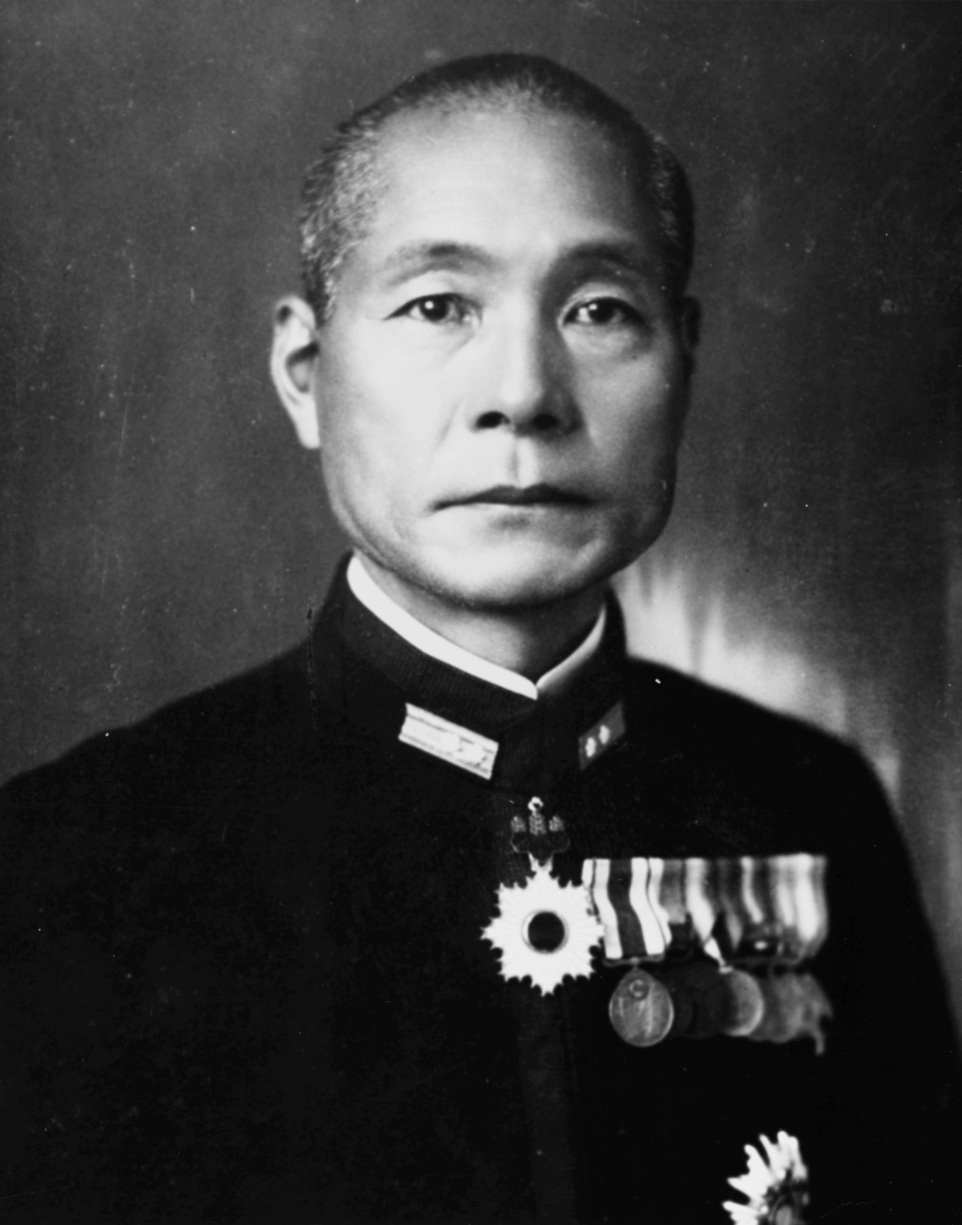
Vice Admiral Gunichi Mikawa was a career officer of the Imperial Japanese Navy whose wartime reputation rests on the night action off Guadalcanal in August 1942. He had already spent decades in cruisers and on staff duty before that fight, and the navy later placed him in charge of successive fleets in the South Pacific and the Philippines.
On the night of 8–9 August 1942 he led the Eighth Fleet’s cruiser force into the waters between Guadalcanal and Florida Island, what the Allies came to call Ironbottom Sound. His flag flew in the heavy cruiser Chokai. He was not her captain. The column included the heavy cruisers Aoba, Kako, Kinugasa, and Furutaka, with the light cruisers Tenryu and Yubari and the destroyer Yunagi. In a short, close-range fight off Savo Island the Japanese ships struck the Allied screening force and left four heavy cruisers lost or sinking: the Australian Canberra and the American Astoria, Quincy, and Vincennes. Chicago was damaged. Chokai herself was hit and was not sunk that night. Mikawa then turned the force away rather than pressing on toward the transports still unloading off the beaches. The decision spared those ships and has been argued ever since.
The same cruise was not a clean withdrawal. On 10 August the submarine S-44 torpedoed Kako as the cruisers neared Kavieng, and Kako went down. Mikawa remained in command of the Eighth Fleet at Rabaul through the rest of the Guadalcanal campaign, sending cruisers and destroyers down the Slot in the night reinforcement runs that followed.
Later in the war the navy moved him to other sea commands. He led the Southwest Area Fleet as the fighting in the Netherlands East Indies and the Philippines tightened, and he held the Second Southern Expeditionary Fleet in that theater as well. Those were commands of scattered bases and thin forces, not of another battle line like the one he took to Savo.
Among the officers whose paths crossed his in those years were Kosaku Aruga, Seishichi Watanabe, and Jo Tanaka. Aruga’s destroyer service and later battleship command sat in the same navy that Mikawa had helped shape at sea. Watanabe and Tanaka served in the cruiser and staff world that fed the southern fleets.
Mikawa’s public name remains tied to one night: a well-handled cruiser attack that broke an Allied screen, a flagship that took hits and stayed afloat, and a withdrawal that left the transports untouched. The rest of his career was the longer, quieter work of a vice admiral moving from one southern command to the next as Japan’s position at sea narrowed.