Ships
- USS Missouri (BB-63) Captain, 5 February 1949 – 10 December 1949
- USS Missouri (BB-63) Captain, 7 February 1950 – 19 April 1950
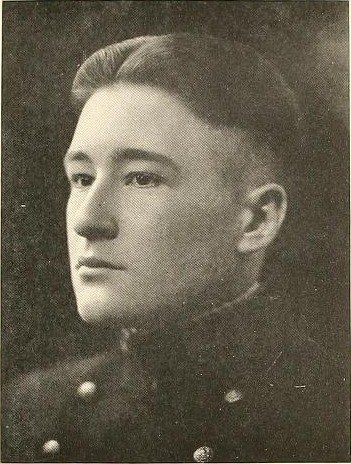
Harold P. Smith was born on 17 February 1904. He graduated from the United States Naval Academy in 1924 and went to sea in the battleship Idaho (BB-42). He next served in the auxiliary Procyon (AG-11), then as a division officer in the battleship Arizona (BB-39) in 1928 and 1929, and afterward in the battleship Nevada (BB-36). In the mid-1930s he was gunnery officer of the new destroyer Farragut (DD-348).
In 1940 Smith took command of the destroyer Stewart (DD-224), one of the older four-stack ships of the Asiatic Fleet. On the night of 19–20 February 1942, in Badoeng Strait off Bali, Stewart engaged a Japanese force much stronger than a single destroyer. Smith, then a lieutenant commander, closed under heavy fire and pressed the attack. The Japanese ships took serious damage. Stewart came away with light damage and one casualty among her crew. He received the Navy Cross for the action. In 1942 he appeared in a parade in New York City for men returned from the early fighting, and through 1942 and 1943 he served in the war plans section of the United States Fleet staff.
Near the end of the war he commanded Destroyer Squadron Four. From 4 September 1944 to 5 January 1945 the squadron operated against Wake, Marcus, and the Volcano and Bonin Islands. The Legion of Merit recognized that command. In the years after Japan's surrender he was chief of staff to the commander of the Atlantic destroyer force, and he held other duty in Washington.
Late in 1948 Smith learned that he would command the battleship Missouri (BB-63). He relieved James H. Thach, Jr. on 5 February 1949. Missouri remained in commission for training and flag visits while the other American battleships lay in reserve. Through 1949 she worked in the Atlantic, and that summer she carried midshipmen on a training cruise. The crew was much smaller than the wartime complement. She still used floatplanes, and helicopters had come into use aboard her. In October 1949 she entered the Norfolk Naval Shipyard for a scheduled overhaul. Smith was detached on 10 December 1949.
William D. Brown took command the day Smith left. On 17 January 1950, during Brown's tour, Missouri grounded on a shoal in Chesapeake Bay as she stood out past Old Point Comfort, near Thimble Shoal Light. She remained fast for more than two weeks. The grounding injured no one. The hull was damaged, and after she was pulled free she went into dry dock for repairs that were completed in short order. A court of inquiry found Brown negligent. Smith's first tour was already over, and the grounding fell in the interval before he was ordered back.
George E. Peckham, a commander, had the ship from 3 February 1950. Smith resumed command on 7 February 1950. He was sent to steady the officers and crew after the grounding and to carry Missouri through the repair period and back into routine service. On 19 April 1950 he turned her over to Irving T. Duke. The return tour had run a little over two months.
In 1950 and 1951 Smith was the Navy's deputy chief of information. He served in the Office of the Secretary of Defense from 1951 to 1953 and in the Office of the Comptroller of the Navy in 1955 and 1956. From 1958 to 1960 he was Chief of Naval Personnel. After the funeral of Fleet Admiral William Frederick Halsey, Jr. in 1959, Fleet Admiral Chester William Nimitz came to Smith's office, a call Smith remembered long afterward. Smith retired with the rank of admiral. He died on 4 January 1993.