Ships
- USS Cogswell (DD-651) Captain, 17 August 1943 – 31 October 1944
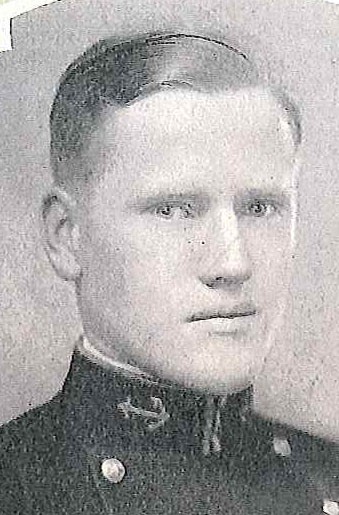
Harold Thomas Deutermann (8 October 1903 – 30 June 1996) was a United States Navy officer from New York who graduated from the Naval Academy in 1927 and retired in 1965 as a vice admiral. He spent most of his junior career as an engineer in destroyers and cruisers. He was chief engineer of the antiaircraft cruiser San Juan in the first year of the Pacific war, through the Guadalcanal landings and the Battle of the Santa Cruz Islands. He then commissioned and commanded the destroyer Cogswell, which screened the fast carriers from the Marshalls in early 1944 to the Philippines that autumn. He received the Silver Star for his ship's part in shepherding two torpedoed cruisers out of range of Formosa in October 1944. In 1945 he was a destroyer division commander and, during the Okinawa campaign, chief staff officer to the commander of the screen that ran the radar picket line. After the war he commanded the cruiser Roanoke, became a flag officer, and held command of the Second Fleet, the post of chief of staff to the Supreme Allied Commander Atlantic, and the chairmanship of the American delegation to the United Nations Military Staff Committee. He was the younger brother of Captain William Vincent Deutermann, also a naval officer, and the father of three sons who served in the Navy, among them the naval officer and novelist P. T. Deutermann.
He was born in New York City on 8 October 1903, the son of William and Emma Ward Deutermann. His Navy biography gives his birthplace as New York, New York. His Academy yearbook places it, in its joking style, "up in Gotham, near the Bronix." Some later reference compilations give White Plains, the Westchester County town where the family lived by the time he finished school, as his birthplace, but the official biography does not.
The yearbook also says that his parents were "aided by three older brothers" in raising him. Only one of those brothers can be followed in the records examined here. William Vincent Deutermann, born in New York City on 9 August 1900 to the same parents, also went to White Plains High School and entered the Naval Academy in 1920. He graduated in 1924, served in battleships and in the big early fleet submarines V-1 and V-3, and trained at the California Institute of Technology as an aerologist, a naval weather officer. In the Second World War he served on the staff of the Third Amphibious Force in the Solomons and then commanded an LCI flotilla and amphibious task units in the Philippines. He retired as a captain with the honorary rank of rear admiral and died in 1981. The two brothers appear side by side in the Navy registers for twenty years, and the official history of the war refers to "Commander W. V. Deutermann" at the Ormoc, Mindoro and southern Philippine landings. Those passages concern the elder brother, not Harold. The names of the other brothers, and anything about the father's work, do not appear in the sources examined here.
He graduated from White Plains High School in 1921. According to the yearbook, he "followed a commercial course in school" rather than a college preparatory one, and then went to work. His Navy biography says he worked for two years in Scarsdale, the next town, and served in that time as a member of the Organized Militia, New York National Guard. The yearbook describes the same years with more color, as "three years as a stenographer, iceman, chauffeur and banker respectively." The two accounts differ on the length of the interval, and neither names his employers. The yearbook is clear about what turned him toward the Navy: "Seeing his brother a finished product of the Naval Academy, he lost civilian interests and embarked on his own Academic cruise."
He nearly did not get in. His son Peter, writing in 1999 for his own Academy class's website, recorded the family account that Harold had been the third alternate for the appointment from White Plains and "arrived two weeks after the class went in for plebe summer, after the principal appointee and the first two alternates failed their physicals." The official biography supports the late start. It records that he entered the Academy on 10 July 1923. He was nineteen and had already earned his own living.
The 1927 Lucky Bag entry on him, under the nicknames "Dutch" and "Barbarossa," describes a cheerful and confident young man. "The upperclassmen soon found that Dutch is the kind that can amuse without half trying." As an upperclassman he ran the plebes hard, a skill his classmates attributed to "hard-earned knowledge" of his own, but "he was a good 'daddy' to the Plebes, to wit, 'Who's your Sea Daddy, Son?' — 'You are, sir.'" His studies gave him little trouble. "Naturally savvy, he has had little worry over Acs. A slug of demerits or an academic slip occasioned little anxiety, for he could easily handle both." On a midshipman cruise to Europe, the entry says, "In London our worthy cousins were at a loss to follow his mental processes, while in France he ably acted as Ship's Interpreter." The class did not predict fame for him. "Though not of headline material his accomplishments are numerous, and we expect a furtherance in the Fleet." He played class football, managed the class baseball team for four years, worked on the yearbook, and was in the cast of the gymkhana, the midshipmen's variety show, for three years.
He graduated and was commissioned an ensign on 2 June 1927. His first ship was the light cruiser Richmond of the Scouting Force, where the Navy Directory of 1928 lists him. Early in 1929 he went to the Naval Torpedo Station at Newport for instruction, and that year he also had preliminary flight training at Pensacola. The sources do not say why he did not go on in aviation, and he never became a naval aviator. Later in 1929, according to his biography, he went to sea as chief engineer of the old four-stack destroyer Humphreys. The Navy Directory of 1930 and the Register of 1931 list him in that ship.
From 1931 to 1933 he served in the Asiatic Fleet as chief engineer and torpedo officer of the destroyer Smith Thompson of Destroyer Squadron 5. It was not quiet duty. Civil war and banditry in China kept a division of destroyers in Chinese waters, and the Smith Thompson was assigned at times to the Yangtze Patrol and the South China Patrol. On 1 February 1932, after Japanese forces attacked the Chinese districts of Shanghai, she was one of the Asiatic Fleet ships rushed there to protect the International Settlement. She stayed on special patrols on the China coast until late May. Deutermann's later decorations included the Yangtze Service Medal.
He found his wife on that station. According to his son's account, he met Dorothy Tinan in Manila, where she was living with her father, an executive with the Studebaker Corporation, and they married there. Their first son, David Ward Deutermann, was born in Manila on 17 May 1933. From 1933 to 1934 Deutermann served in the gunnery department of the heavy cruiser Houston, and the family lived for a time in Shanghai.
In September 1934 he returned to Annapolis for the postgraduate course in naval (operating) engineering, which then met in buildings near the Academy boathouse. The course, which ran until June 1936, confirmed the direction of his career. He then became chief engineer of the new destroyer Preston (DD-379), a ship of the Mahan class. His biography says he served in her "from her commissioning in January 1937 until December 1940." Her official history dates her commissioning to 27 October 1936, so he either joined her soon afterward or the biography's date is slightly off. The directories of 1937, 1938 and 1939 list him in the Preston as engineer officer. Four years as chief engineer of one destroyer was a long tour, and by its end he had spent most of his career at sea running ships' engineering plants.
At the end of 1940 he went ashore to the Boston Navy Yard, in its Production and Planning Department. The directories of 1940 and 1941 list him there. His second son, Peter Thomas, was born in Boston in 1941, and the register of 1942 shows him as a lieutenant commander, apparently from August 1941.
After Pearl Harbor he was ordered as chief engineer of the San Juan, an Atlanta-class antiaircraft cruiser then completing at the Bethlehem Steel yard at Quincy, Massachusetts. She was commissioned on 28 February 1942. (His biography says she was commissioned at Bath, Maine, which confuses her with his next ship.) The Atlanta-class cruisers were small, fast ships armed with sixteen five-inch guns, built to stay with the carriers and defend them against air attack.
The San Juan left Hampton Roads in June 1942 with the carrier Wasp and reached the South Pacific in time for the first American offensive. On 7 August she gave gunfire support to the Marines landing at Tulagi. On the night of 8–9 August she was patrolling the eastern approach to the transport area when the gun flashes of the Battle of Savo Island lit the sky to the west, where a Japanese cruiser force sank four Allied cruisers. She left with the empty transports the next day. His Bronze Star citation describes his part in those days: "During the supporting bombardment of the landing of our Marines on Guadalcanal on August 7, and in the air attack the following day, Captain (then Lieutenant Commander) Deutermann directed the operations of the engineering plant during periods of constant maneuvering, frequently at high speed."
In October the cruiser raided through the Gilbert Islands and sank two Japanese patrol vessels, then joined the carrier Enterprise. On 26 October 1942, at the Battle of the Santa Cruz Islands, the Hornet was lost and the Enterprise damaged. During the last dive-bombing attack on the Enterprise group, a bomb passed through the San Juan's stern, flooding several compartments and damaging her rudder, though she was not disabled. The citation credits him with "the successful performance of the engineering plant while operating at high speed in close proximity to other vessels of the Task Group and while under enemy air attack." The Preston, the destroyer whose machinery he had run for four years, was also in the carrier screen that day. Three weeks later, on the night of 14–15 November 1942, she was sunk in the naval battle off Guadalcanal, and 116 of her crew went down with her. No surviving source records what he thought of the loss of his old ship.
The Bronze Star, with the Combat "V," covered his service in the San Juan from 7 August 1942 to 24 April 1943. His son's account has him in the cruiser until August 1943. The citation's end date and the timing of his next command suggest that he left her in the spring of 1943 to fit out a new destroyer, but the sources do not give the date he was detached.
The new ship was the Fletcher-class destroyer Cogswell, launched by the Bath Iron Works on 5 June 1943 and commissioned at Bath on 17 August 1943 with Commander Deutermann in command. (Her official history prints his initials as "H. K.") It was his first command, at the age of thirty-nine, after sixteen years of commissioned service spent mostly in the engineering departments of other men's ships. A commissioning captain had to train a largely new crew and bring a new ship to fighting condition in a few months. The Cogswell reached Pearl Harbor on 9 December 1943.
For the next ten months she was part of the fast carrier force, and her record during that time was one of steady, repeated work rather than a single great action. In the Marshall Islands operation she screened Rear Admiral John W. Reeves's carrier group, with the Enterprise, Yorktown and Belleau Wood. The official history's order of battle lists "Cogswell Cdr. H. T. Deutermann" in Destroyer Squadron 50, with the commander of Destroyer Division 100 embarked, so that his ship also served as a division flagship. She was at sea from 16 January to 12 February 1944 and bombarded Gugewe Island. She screened the carriers for the raids on Truk in February and on the Marianas, then the support of the Emirau landing in March, the strikes on the Palaus, Yap and Woleai, the Hollandia landings in April, and new raids on Truk, Satawan and Ponape. In June she covered the landings in the Marianas. On 16 June she was detached to bombard Guam, and she rejoined the carriers to guard them in the Battle of the Philippine Sea on 19 and 20 June. In the raids on the Bonins at the beginning of August she joined in the surface gunfire that sank several ships of a Japanese convoy already mauled by carrier aircraft. In 1944 his family moved to La Jolla, California, where they lived for the rest of the war.
From 30 August to the end of September 1944 the Cogswell screened the carriers striking the Palaus and the Philippines during the invasion of Peleliu. On 6 October she sailed from Ulithi for the strikes on Okinawa and Formosa that prepared for the Leyte landings. During the Formosa air battle of 12 to 14 October, the Japanese sent their land-based air forces against the carrier groups in what Morison called, with the possible exception of the Battle of the Philippine Sea, the heaviest series of air attacks the Japanese ever launched against American naval forces. At dusk on 13 October an aerial torpedo struck the new heavy cruiser Canberra (CA-70) between her firerooms, flooding her engine spaces and stopping her dead about ninety miles from Formosa. The next evening another torpedo struck the light cruiser Houston (CL-81). She was not the heavy cruiser Houston lost in 1942. Her engineering spaces flooded completely and she lost all power, and destroyers closed to take off her crew before her captain decided to try to save her. Admiral William F. Halsey decided not to scuttle the cruisers but to tow them out of range.
The two cripples, under tow at about three knots, were screened by cruisers and destroyers as a group that sailors called "Cripdiv 1." When Halsey began to hope that they would lure the Japanese fleet into a trap, they were called "Baitdiv 1." Samuel Eliot Morison's history describes the screen's work: the destroyers "zigzagged violently at 12 knots in order to maintain their relative positions yet not expose themselves to submarine attack," and, when attack threatened, "steamed at 15 knots in a tight circle around the tow." On the afternoon of 16 October a large Japanese strike reached the group, and a second torpedo hit the Houston on the stern, knocking about twenty men overboard. Her captain asked for the removal of about 300 men not needed to work the ship. Morison writes that this "was handled in a seamanlike manner by the destroyers, without loss or injury," and that eventually all but 200 of the cruiser's crew were taken off. "The destroyers and cruisers became expert in the art of breeches-buoy and suspended stretcher, and expended all their heavy manila line." Both cruisers reached Ulithi.
Morison does not list the destroyers of the screen by name, but Deutermann's Silver Star citation places the Cogswell there. It describes her as "assigned as a screening vessel to a Task Group protecting the withdrawal from enemy waters of two severely damaged ships, under tow," and credits him with "outstanding seamanship in directing his ship through missions of rescue, of transferal of personnel under adverse conditions of wind and sea, and when under enemy air attacks." Work of that kind meant holding a destroyer close alongside a larger ship in a seaway, with lines rigged between them, while men were hauled across in a breeches buoy or a stretcher, with enemy aircraft expected. The citation covers 13 to 17 October 1944. It is the most specific record that survives of how he handled his ship under pressure.
After the cripples were clear, the Cogswell rejoined the carriers for strikes on Luzon and the Visayas, and on 25 October 1944, during the Battle for Leyte Gulf, Morison's order of battle lists her among the destroyers assigned to Task Force 34, the battle line that Halsey formed from his fast battleships. His Legion of Merit citation, from the Commander, Second Carrier Task Force, covers his command from 30 August to 11 November 1944. It says that he "capably and effectively handled and fought his ship in more than thirty Japanese air attacks, a bombardment of enemy territory and a surface engagement, delivering certain damage to the enemy and stoutly defending our own forces." The citation does not identify the bombardment or the surface engagement, and the sources examined here do not settle which actions it meant.
The record is also unclear about exactly when he left the ship. His biography says he held command until October 1944, and ship-listing compilations give his relief by Commander Robert E. Lockwood as 31 October 1944. The Legion of Merit citation, however, describes him as commanding officer through 11 November. In early November the Cogswell escorted the light cruiser Reno, damaged by a submarine's torpedo, to Ulithi. If the citation's dates are exact, he was still in command for that passage. The sources examined here do not resolve the difference.
His next post was a destroyer division command. According to his biography, two months after leaving the Cogswell he became Commander Destroyer Division 132, with his flag in the Massey. He was not her captain. His son's account dates the division command from November 1944. The Massey was a new Allen M. Sumner-class destroyer, commissioned at Seattle on 24 November 1944. She sailed from Bremerton on 13 February 1945, trained at Tulagi, and stood off Okinawa on 1 April, screening the escort carriers. In May she went on radar picket duty, and before she left Okinawan waters on 24 June her guns had brought down nine suicide planes. On 4 May, at picket station No. 2, she escaped with superficial damage from near misses. The sources examined here do not show whether Deutermann was aboard at any of these times, and Morison's order of battle for the landings does not list a division commander in her.
His principal assignment at Okinawa was on a staff. His biography describes him as "Chief Staff and Operations Officer for the Radar Picket Screen," and his second Legion of Merit, awarded by the Commander, Amphibious Forces, Pacific, names him "Chief Staff Officer to the Commander of the Objective Area Screen" from March to June 1945. That commander was Captain Frederick Moosbrugger, a veteran destroyer commander, who commanded the screening and radar picket ships from the amphibious command ship Biscayne. The radar pickets were destroyers and smaller craft placed on a ring of stations around the island to give early warning of air raids and to direct fighters against them. The Japanese suicide pilots, coming down from Kyushu and Formosa, often attacked the first ships they met, and the pickets suffered some of the heaviest losses of the naval war. A recent study of the campaign records that Moosbrugger judged a full reserve of ships to be the minimum needed for the duty but never had anything near that number in April or early May. At the start of the operation he had nineteen suitable destroyers for ten stations, and replacements for sunk and damaged ships were slow to arrive. Moosbrugger's own action report, which Morison quoted, said: "Never in the annals of our glorious naval history have naval forces done so much with so little against such odds for so long a period."
The citation describes Deutermann's part in that ordeal in staff language. He "capably coordinated the numerous and diversified functions of the command to meet emergencies and provide adequate logistic support for all the ships of the group," and "was able to meet constant and intricate operational demands." It gives no details, but its terms, emergencies, logistic support for every ship of the group and constant operational demands, point to the business of keeping the ring of stations manned and supplied as ships were sunk and damaged. The award carried the Combat "V." No document by him from these months has been found.
His son later wrote that he never learned the story from his father. In the author's note to Sentinels of Fire, a 2014 novel about a picket destroyer off Okinawa, P. T. Deutermann wrote: "My father was a division commander (Commodore) of destroyers at Okinawa in 1945. I wish I could say that he told me all about it; he did not. He wouldn't speak of it. It was simply that bad." His family thus remembered him as a commodore who would not discuss Okinawa. No other record of his feelings about the war has been found.
For his war service he received the Silver Star, the Legion of Merit with a Gold Star in lieu of a second award, the Bronze Star Medal with Combat "V," and two Letters of Commendation from the Commander in Chief, Pacific Fleet, with ribbon, bronze star and Combat "V." The commendations are not described in the sources examined here. A ship-listing compilation dates his temporary promotion to captain from 20 March 1945. After the surrender he took part in the occupation of Japan and the demobilization of the fleet as Commander Destroyer Squadron 50 and Commander Destroyer Division 99. His son's account places the squadron command in early 1945, before the surrender. In 1944 the Cogswell had steamed in that same squadron.
He returned to the United States, and in March 1946 he became commanding officer of the Recruit Training Command at Bainbridge, Maryland. In 1947 and 1948 he took the senior course in strategy and tactics at the Naval War College at Newport. From June 1948 to June 1950 he was senior naval adviser in Buenos Aires, Argentina, "during the time of the Peron's," in his son's phrase. His family went with him, and the Argentine government later made him a commander of its Order of Naval Merit.
In 1950 he became assistant director of fleet operations in the Office of the Chief of Naval Operations. His son recalled that he reported two weeks before North Korea invaded the South. He spent the first two years of the Korean War in that office. After a course at the Gunfire Support School at Norfolk, he took command of the light cruiser Roanoke on 18 October 1952. She was one of the two Worcester-class cruisers, ships of 18,400 tons at full load armed with twelve six-inch guns. In those years she operated with the Battleship-Cruiser Force of the Atlantic Fleet and in the Mediterranean. Her official history does not name her captains or describe his year in command. He then returned to the Office of the Chief of Naval Operations as assistant director of the Material Division.
His son wrote that he was selected for rear admiral in 1955. In August of that year he became deputy commandant of the Industrial College of the Armed Forces in Washington, which trained senior officers in mobilization and the economics of war. From May 1957 to June 1958 he commanded Destroyer Flotilla Two in the Atlantic Fleet, based at Newport. In June 1958 he went to Omaha, Nebraska, as Commander Naval Reserve Training Command. Peter graduated from Creighton Prep in Omaha in 1959 and entered the Naval Academy that summer.
On 2 January 1960 he became a vice admiral and Commander Second Fleet, the Navy's striking fleet in the Atlantic, which also carried the NATO title of Commander Striking Fleet Atlantic. His flagship was the command cruiser Northampton. In early 1960 she operated with the Sixth and Second Fleets in the Mediterranean and the eastern Atlantic and then made a goodwill tour to Palma, Greenock, Oslo, Stockholm and Portsmouth. That autumn, aboard the Northampton, he received the Read Cup, a British-American naval sailing trophy that officers of Second Fleet ships and of the naval headquarters in London had won in races at Portsmouth. In February 1961 he became chief of staff and aide to the Supreme Allied Commander Atlantic, NATO's naval command at Norfolk. He held that post until January 1963, a period that included the Cuban missile crisis, but the sources examined here do not describe his work there.
His last assignment combined three roles. In January 1963 he became vice chairman of the United States delegation to the United Nations Military Staff Committee in New York. At the same time he became Commander Eastern Sea Frontier, responsible for the coastal waters of the eastern United States, and Commander Atlantic Reserve Fleet, responsible for the ships laid up after the war. A year later he became chairman of the delegation. His Distinguished Service Medal, for the period from February 1963 to April 1965, credits him with "keen and perceptive analyses of the problems which arose incident to various crises, such as the Tonkin Gulf incidents and the Congo rescue mission," the Belgian and American airborne rescue of hostages at Stanleyville in November 1964. It also cites his representation of the Defense Department on the American delegation to the Trusteeship Council, "where he worked tirelessly to protect the vital interests of the United States in relation to its overseas territories, especially the strategic Trust Territory of the Pacific Islands," the former Japanese island mandates that American forces, including his own ships, had fought through in 1944. As commander of the frontier and the reserve fleet, the citation adds, he improved the procedures and facilities for shipping from the East Coast. His son Peter was then in the destroyer Morton in the Gulf of Tonkin and was aboard during the second Tonkin Gulf incident, in September 1964. The father was analyzing at the United Nations a crisis in which his son's ship was involved, but no source examined here says whether either man remarked on it.
He was hospitalized in July 1965, and on 1 October 1965 he was transferred to the retired list, after thirty-eight years of commissioned service. The sources do not say what illness put him in hospital. According to his son, he retired to Melrose, Florida, and taught mathematics at the University of Florida in Gainesville. In 1975 he moved to San Diego.
All three of his sons served in the Navy. David Ward Deutermann graduated from the Academy in 1956, served in diesel submarines and destroyers, wintered over in Antarctica, and left the Navy in 1968 to become an engineer. Peter Thomas Deutermann graduated in 1963. He commanded a Swift boat in Vietnam, the guided missile destroyer Tattnall, and Destroyer Squadron 25, retired after twenty-six years, and became a novelist. Several of his books are set in the destroyer navy of the Second World War. Stephen Deutermann, commissioned through the Naval Reserve Officers Training Corps at Marquette University, served twenty years as a surface warfare officer in destroyers and amphibious ships. In 1999 Peter counted four Deutermanns who had graduated from the Academy, beginning with his uncle William in 1924, and wrote that there had been Deutermanns serving in the Navy "for going on seventy-six years."
Harold Thomas Deutermann died on 30 June 1996, at the age of ninety-two. A ship-listing compilation gives the place of death as San Diego, where he and his wife lived. He was buried in the family plot in the Naval Academy Cemetery on Hospital Point at Annapolis. His wife, Dorothy, survived him.
The record left by this man is mostly official. There is a yearbook sketch of a boy from a commercial course who had worked as a stenographer and an iceman, came in late as a third alternate, and was "naturally savvy." There are four tours as a chief engineer and a citation for keeping the San Juan's plant running at high speed under the bombs at Santa Cruz. There are ten months of carrier screening in the Cogswell and a Silver Star for the slow, dangerous work of passing men by breeches buoy beside a crippled cruiser. There is a staff citation from Okinawa, where the work was keeping the picket line manned as ships were lost. And there is the testimony of a son who became a destroyer captain himself and later a writer, and who said his father would never talk about that spring.