Ships
- USS Saratoga (CV-3) Captain from 16 November 1927 · Relieved on 15 September 1928
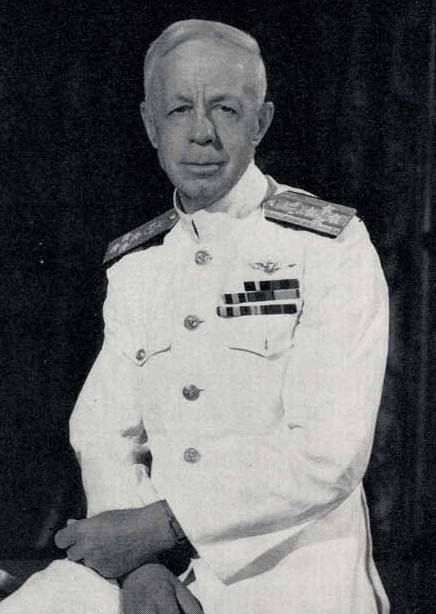
Harry Ervin Yarnell was born near Independence, Iowa, on 18 October 1875. Appointed from Iowa, he entered the Naval Academy in 1893 and graduated with distinction in the Class of 1897, standing fourth. As a naval cadet he was aboard the battleship Oregon at the Battle of Santiago on 3 July 1898. He was commissioned ensign on 1 July 1899.
His first commissioned service was on the Asiatic Station. He served in the Philippines during the war against Aguinaldo and on the China Station during the Boxer Rebellion. From Asia he reported to the battleship Connecticut at her commissioning and sailed with the Great White Fleet on its cruise around the world.
Duty at the Newport Torpedo Station, on the staff of the Atlantic Fleet commander, and at the Naval War College occupied him until the First World War. During the war he served at Gibraltar and in London on the staff of the commander of United States naval forces in European waters, and he also worked in the Office of the Chief of Naval Operations. The Navy Cross recognized that staff service. After the armistice he was one of the original officers of the War Plans Division and took a hand in the earliest interwar drafts of the plan for a Pacific war.
The 1920s turned him toward aviation. He commanded the Naval Air Station at Hampton Roads for two years, with flying duty from February 1923, and in June 1924 he became commander of the aircraft squadrons of the Scouting Fleet. After a tour on the Naval War College staff he reported to Pensacola in July 1927, qualified as a naval aviation observer, and that September was sent to Camden, New Jersey, to fit out Saratoga. While the ship was completing he worked on her arresting gear, on the training of the aviation units that would go aboard, and on catapults at the Washington Navy Yard.
He placed Saratoga in commission on 16 November 1927 and was her captain until he was relieved on 15 September 1928. The carrier was the Navy's first large fast flight deck, rebuilt from a battle-cruiser hull, and her early months were spent making aircraft, deck gear, and a very fast ship operate as one unit. The practice he gained in that first command shaped the rest of his sea service.
He moved from the carrier to Chief of the Bureau of Engineering and Engineer in Chief of the Navy, with the rank of rear admiral, in succession to John Halligan, Jr., and he remained at the bureau into 1931. From January to April 1930 he was naval adviser to the American delegation at the London Naval Conference. In the bureau's debate over the fleet submarine he pressed for a large boat, and he warned that Japan had a record of opening hostilities with an attack delivered before any declaration of war.
In June 1931 he returned to sea as Commander, Aircraft, Battle Force, with additional duty as Commander, Aircraft, U.S. Fleet, and hoisted his flag in Saratoga. In the grand joint exercise of February 1932 he took Saratoga and Lexington north of Hawaii. The battle line stayed behind. At dawn on a Sunday his carriers launched a strike against Pearl Harbor that caught the defenses unready and showed that fleet aircraft could reach the base from the open sea.
From June 1933 to October 1936 he was commandant of the Fourteenth Naval District at Pearl Harbor. In October 1936 he was made admiral and Commander in Chief of the Asiatic Fleet, relieving Orin G. Murfin and breaking his flag in the heavy cruiser Augusta. He held that command until July 1939, through the spread of war in China. American residents, merchant ships, and river gunboats had to be protected, and in December 1937 Japanese aircraft bombed and sank the gunboat Panay. Congress awarded him the Distinguished Service Medal for the steadiness with which he handled the long emergency. China gave him the Cloud Standard, Second Class, and Britain made him a Companion of the Order of the British Empire.
Yarnell went on the retired list in 1939 in his permanent rank of rear admiral. On 1 November 1941 he was recalled to the Office of the Secretary of the Navy as special adviser to the Chinese Military Mission and served in Washington during the early part of the Second World War. On 16 July 1942 he was advanced to admiral on the retired list. He died at Newport, Rhode Island, on 7 July 1959.