Ships
- USS Hoggatt Bay (CVE-75) Captain, 22 December 1944 – 14 September 1945
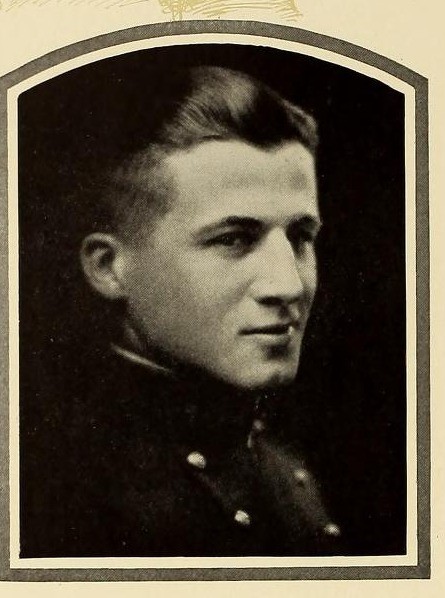
Josephus Asa Briggs was born in Omaha, Nebraska, on 6 September 1900. He entered the Naval Academy in 1919 and graduated in 1923, when he was commissioned an ensign. He rose through the peacetime grades and was a lieutenant commander by 1938.
On 28 June 1940 he took command of Greene at San Diego as the old flush-deck destroyer was being returned to service. In April 1941 she was converted to a seaplane tender and redesignated AVD-13. Briggs took her through training in the Caribbean, tending patrol planes off Puerto Rico and Bermuda. A week after the attack on Pearl Harbor she sailed for Brazil, and he kept her at Natal as a tender until he left the ship on 28 May 1942.
His next command was the small seaplane tender Barnegat, from 5 July 1942 to 14 June 1943. By then he was a commander. The ship was working in Icelandic waters, supplying patrol planes, including Norwegian floatplanes based in the north of the island. Late in October she was ordered to the landings in French Morocco. She fired in support of the troops off Mehdia on 8 November 1942, then went up the Sebou River. Through early December her crew helped open the naval air station at Port Lyautey. Briggs also directed a patrol wing flying antisubmarine searches from that field, and he oversaw the salvage of ships scuttled in the river. The patrol was credited with a clear local record: no Allied ship was sunk in the water it covered. He received the Legion of Merit for that duty. On 1 May 1943 he was made a temporary captain, shortly before he gave up Barnegat.
His wartime seagoing command after that was the escort carrier Hoggatt Bay. He relieved William Vincent Saunders at Manus on 22 December 1944, and he was a captain. The Casablanca-class ship was already assigned to Task Force 77 for the landing at Lingayen Gulf. She sailed from Manus on 27 December. Kamikaze attacks met the force as it closed Luzon in the first days of January 1945. Hoggatt Bay entered the gulf on 6 January, and her Avengers and Wildcats went to work over the beaches. Between 3 and 18 January the planes from the ship flew 548 sorties.
On 15 January 1945 an Avenger came back from a close-support flight with a bomb it could not drop. The bomb exploded on the flight deck after the plane was aboard. Thirteen men were killed and fourteen were wounded. Fire broke out and the deck was buckled, but the crew had Hoggatt Bay flying again within three hours. She left the gulf on 17 January, stopped at Ulithi, and reached San Diego on 15 February for repairs and for work that fitted her as a flagship.
Harold M. Martin, rear admiral and commander of Carrier Division 23, raised his flag in Hoggatt Bay on 2 April 1945. Briggs remained her captain. She crossed the Pacific in April, embarked Composite Squadron 99 at Saipan, and on 8 May joined the fleet off Okinawa. From 12 May through late June her aircraft flew combat air patrol, photographed the ground, dropped supplies to cut-off troops, and struck Japanese positions. The squadron's flying ran past the planned program and totaled well over a thousand sorties. On 5 June she met Typhoon Connie. The carrier rolled as much as twenty-seven degrees, with gusts logged at a hundred knots, and she stayed on station. Two days later her guns were credited with a kamikaze diving on a sister ship. For Lingayen Gulf and for Okinawa, Briggs received two further awards of the Legion of Merit, each with the combat distinguishing device.
After Okinawa, Hoggatt Bay replenished at Leyte and trained in Philippine waters, then headed in August for the Aleutians to join the northern force. Japan surrendered while she was still at sea. She anchored in Kuluk Bay in the middle of August and early in September moved to Mutsu Bay as the occupation of Hokkaido and northern Honshu began. Her planes flew patrols and dropped supplies to camps holding Allied prisoners. Frederick Norman Kivette relieved Briggs on 14 September 1945. Briggs remained in the Navy until 1 July 1953, when he retired as a rear admiral. He died in Virginia on 28 May 1993.