Ships
- IJN Ryujo Captain from 15 November 1939 · Also commanding officer of Itsukushima until 10 December 1939 · Relieved on 21 June 1940
- IJN Akagi Captain from 25 March 1941
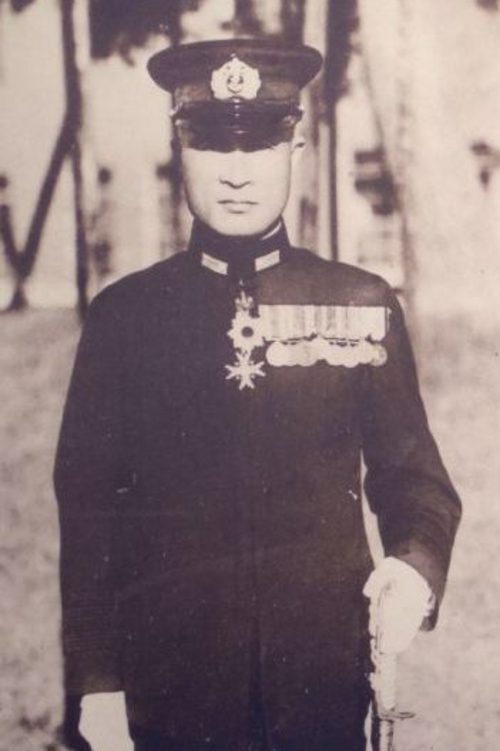
Kiichi Hasegawa was born in Saitama Prefecture on 15 April 1894. He graduated from the Imperial Japanese Naval Academy with the 42nd class on 19 December 1914, twenty-seventh of 117 midshipmen, and began his sea duty in the cruiser Soya. He passed through the advanced course at the torpedo school, served in the cruiser Tenryu, and in the early 1920s trained as a pilot at Yokosuka before joining a fighter unit at Kasumigaura. A tour in the seaplane carrier Wakamiya followed. Promoted to lieutenant commander in December 1926 and to commander in December 1931, he spent much of that decade on aviation staff duty at Yokosuka and in the Naval Aviation Bureau.
In May 1933 the navy sent him on an official tour of the United States and Europe, and he was home again before the end of the year. He became executive officer of the light carrier Ryujo in October 1935. On 1 December 1936 he was promoted to captain and given the Kure Naval Air Group. In the summer of 1937 he commanded the 21st Air Group during the opening months of the war in China, then returned to the Naval Aviation Bureau as a section chief in its technical department. From November 1939 to June 1940 he commanded Ryujo, and after that the 12th Air Group.
On 25 March 1941 Hasegawa took command of Akagi. The carrier, modernized a few years earlier with a single full-length flight deck, was about to become flagship of the First Air Fleet. On 10 April she was assigned to Carrier Division 1, and the next day Vice Admiral Chuichi Nagumo hoisted his flag aboard as fleet commander. Through the spring and summer Akagi trained in Kagoshima Bay, Ariake Bay, and other waters off Kyushu, working up deck crews and aircrews for a long strike across open ocean. In late November she joined the rest of the carrier force in Hitokappu Bay in the Kuriles.
Hasegawa took Akagi to sea from that anchorage on 26 November 1941. Before the attack he addressed the crew and described the sortie as a sudden blow against the American fleet in Hawaii, with his ship leading the mobile force. On the morning of 7 December, aircraft from Akagi flew in both waves, against the warships in Pearl Harbor and the airfields on Oahu. Nagumo kept the fleet flag in the ship for the campaign that followed. Still under Hasegawa, Akagi struck Rabaul in January 1942, Darwin in February, ports and shipping around Java in March, and Colombo and Trincomalee in the Indian Ocean raid at the start of April. After the Doolittle raid on Japan, the carrier joined a short search that found no American ships, and she anchored at Hashirajima on 22 April.
On 25 April 1942 Taijiro Aoki relieved him in command. Aoki was the captain who took Akagi to sea for the Battle of Midway the next month, where the carrier was fatally damaged and then scuttled. Hasegawa went ashore to the Tsuchiura Naval Air Group, a flight-training station. He was promoted to rear admiral on 1 November 1942 and returned to the Naval Aviation Bureau, serving as head of its supply department and then of its fourth department.
In November 1943 he left the bureau to command the 50th Air Flotilla. On 1 January 1944 he took command of the 22nd Air Flotilla, a land-based air command, as American strikes were breaking up Japan's outer bases. On 29 March 1944, at Truk, he was killed when a truck carrying No. 3 cluster bombs exploded while he was riding in it. He was forty-nine. The navy promoted him to vice admiral after his death.