Ships
- IJN Kumano Captain from 24 May 1941
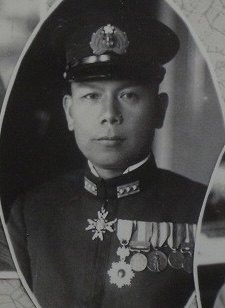
Kikumatsu Tanaka was born in Niigata Prefecture on 27 January 1895. He entered the Imperial Japanese Naval Academy with the 43rd class and graduated in December 1915, forty-second in a class of ninety-five. Commissioned ensign in December 1916, he trained as a gunnery specialist, including the advanced course at the Gunnery School.
His early sea duty followed that specialty. In December 1922 he was gunnery officer of the destroyer Urakaze. He later served as an instructor and adjutant at the Gunnery School, and in November 1929 he completed the Naval Staff College course. Further teaching duty took him to the gunnery, torpedo, and communications schools and, for a time, to the old armored cruiser Kasuga. As chief gunnery officer of the heavy cruiser Aoba he moved onto the senior track. Promoted commander in November 1933, he joined the staff of the Combined Fleet and the First Fleet.
In December 1936 he was appointed an aide attached to the imperial household and to Fleet Admiral Prince Fushimi Hiroyasu, with extra duty at the Naval General Staff. He became a captain in December 1937. From December 1938 to November 1939 he commanded the light cruiser Abukuma, then returned ashore as deputy commandant of the Gunnery School.
On 24 May 1941 he took command of the heavy cruiser Kumano, the fourth Mogami-class ship, already rearmed with 8-inch guns. That July she sailed with her sisters for Hainan and covered the move of Japanese forces into southern French Indochina before returning to Japan. On 20 November 1941 Kumano became flagship of Rear Admiral Takeo Kurita and the Seventh Cruiser Squadron. At the start of the Pacific War the squadron stood off the Malay Peninsula for the landings at Singora, Pattani, and Kota Bharu. On 9 December, floatplanes from Kumano were sent to shadow the British Force Z and were lost when their fuel ran out. Through the winter and into March 1942 she covered further landings in Borneo, Sumatra, and Java.
In April 1942 Kumano went into the Bay of Bengal with the commerce-raiding force, and the squadron sank Allied merchant ships there. At Midway in June she was still Kurita's flagship with the close support group. Early on 5 June a submarine report caused the squadron to turn together in the dark. Mogami and Mikuma collided. Kumano and Suzuya came through the turn intact and left the damaged pair astern. American carrier aircraft sank Mikuma the next day. Tanaka later said Kurita kept the two sound cruisers from rejoining the main body because a junction might have brought an order to go back for the crippled ships.
After a spell in home waters, Kumano joined the carrier force off Guadalcanal. In the Battle of the Eastern Solomons on 24 August 1942 she was in the van and came under attack by B-17s, with no damage to the ship and nothing to claim. She was at sea again for the Battle of the Santa Cruz Islands in October. Tanaka described the heavy cruisers' place ahead of the carriers as the work of a destroyer and a decoy: find the enemy and take the first blow.
He left Kumano in February 1943, and command passed to Toshizo Fujita. Tanaka went to the Kure Naval District as head of the personnel section and was promoted rear admiral on 1 May 1943. In November 1944 he was sent to Java as commander of the 21st Special Base Force. He was still at Surabaya at the surrender, by then also responsible for transportation there, and he was demobilized in May 1947. Kumano had a long ordeal after he left her. She was badly damaged in the Battle off Samar in October 1944, torpedoed by an American submarine while trying to get clear, and sunk by carrier aircraft in Santa Cruz harbor on Luzon on 25 November 1944. Soichiro Hitomi was her captain and was killed with the ship. Tanaka died in Japan on 7 October 1964.