Ships
- IJN Nagato Captain from 15 October 1940
Shinzo Onishi was born on 17 July 1892 in the village of Komatsugawa, Minami-Katsushika County, Tokyo Prefecture, in the area that is now Edogawa Ward. His name at birth was Tomekichi. He disliked it, and in March 1918, while a lieutenant junior grade, he took the ancestral name Shinzo. He finished second at Tokyo Prefectural Third Middle School. A place at the First Higher School was open to him without an examination, but the cost of that path turned him toward the Naval Academy, where tuition was free. His first application was returned for insufficient postage, so he sat the examination a year later. He entered in September 1911 at the head of 120 candidates and graduated on 19 December 1914, third in a class of 117, as a midshipman of the 42nd class.
His first ship was the cruiser Soya, on a training cruise through Southeast Asia, Australia, Rabaul, and the islands of Micronesia. In August 1915 he joined the battlecruiser Hiei, and he was commissioned ensign that December. Over the next several years he served in the cruisers Chitose, Tsugaru, and Tokiwa and in the destroyer Nara, with courses at the gunnery and torpedo schools. Promoted lieutenant in December 1920, he finished the advanced gunnery course and then served in the battleship Mutsu and the destroyer Momi. Gunnery became his specialty, and he also studied education at Tokyo Imperial University. He became a lieutenant commander in December 1925, served in the battleship Fuso, and in December 1926 entered the Naval Staff College A-course. His examination score had fallen short of the cut, and he was admitted when the class was enlarged to make room for aviation officers. After the ranking member of the 42nd class died in 1928, Onishi stood at the head of his classmates. From December of that year he taught at the Naval Academy. He was promoted commander in December 1930.
In April 1931 he went to Germany as a resident officer to study military affairs and training methods, and he came home in May 1933. The rise of the Nazi movement there left him uneasy. That June he became executive officer of the light cruiser Jintsu. In November he joined the staff of the Second Fleet, and a year later he was teaching at the Naval Staff College. He was promoted captain on 15 November 1935. In April 1937 he took command of the fleet oiler Erimo, and that December he became chief of the first section of the Personnel Bureau in the Navy Ministry, the office that handled the assignment of officers. On 15 November 1939 he received his first major combatant command, the heavy cruiser Tone.
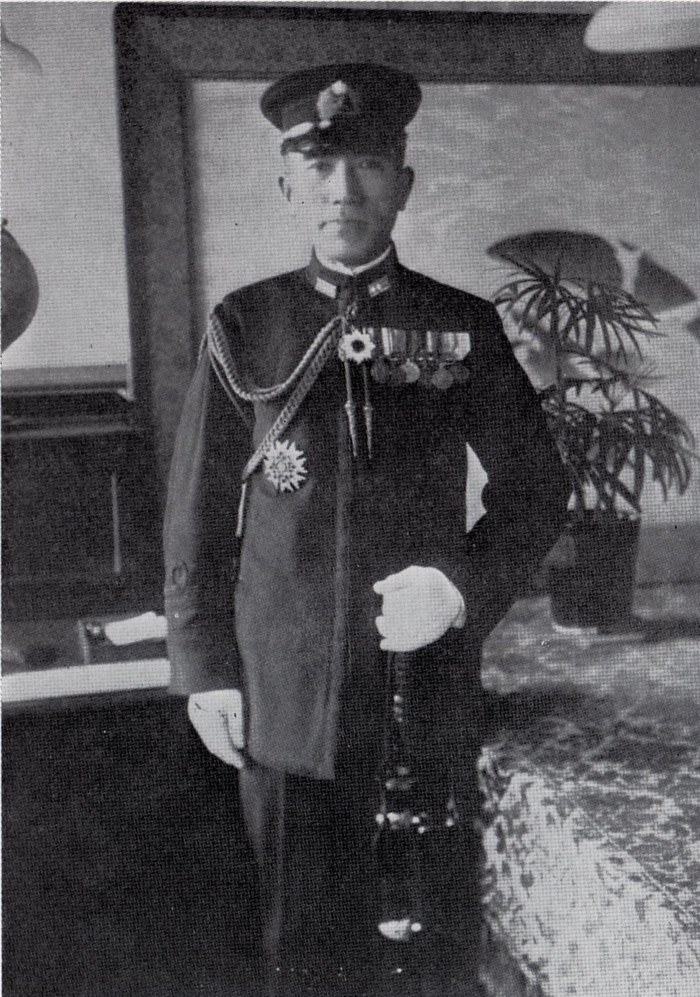
On 15 October 1940 Onishi became captain of the battleship Nagato. She was the flagship of the Combined Fleet, flying the flag of Isoroku Yamamoto, and Onishi came aboard four days after the imperial fleet review of 11 October. In November the navy ordered the first stage of mobilization preparations. Through the months that followed, Nagato remained the fleet's command ship as Japan moved toward war. Onishi left her on 11 August 1941 to take command of Submarine Squadron 7. The order that sent the carriers against Pearl Harbor went out from Nagato the following December, after his time in command had ended.
He was promoted rear admiral on 15 October 1941. At the opening of the war, Submarine Squadron 7 belonged to the Fourth Fleet. Its boats were short-range submarines of the Ro class, and Onishi directed them largely from Truk. They supported the first operations against Wake, the Gilbert Islands, and the Bismarck Archipelago.
On 14 July 1942 he became chief of staff of the newly formed Eighth Fleet at Rabaul, under Vice Admiral Gunichi Mikawa. In the night action off Savo Island on 9 August, the fleet's cruisers and destroyers sank several Allied cruisers in a short and one-sided fight, then turned away from the transports in the anchorage. The choice to break off drew criticism at the time and afterward. Onishi stayed with the fleet through the early months of the Guadalcanal campaign. He went to the Navy General Staff on 29 March 1943 and in June became chief of staff of the Kure Naval District.
On 10 September 1944 he was appointed director of the Education Bureau in the Navy Ministry, serving at the same time as vice commandant of the Naval Staff College. He was promoted vice admiral on 15 October 1944. By then he expected Japan to lose the war. In May 1945 he went to Etajima as vice director of the Naval Academy. On 6 August he saw the flash of the atomic bomb dropped on Hiroshima. He left active service on 15 October 1945.
Australian authorities later named him, together with Mikawa, over the killing of foreign civilians at Rabaul in March 1943, while he was still chief of staff of the Eighth Fleet. The case was dropped. In civilian life he qualified as a guide-interpreter in English and German and made that work his living. In 1979 he published a memoir of sixty-five years, drawn from his diaries. He died in Japan on 21 January 1988, at the age of ninety-five.