Ships
- USS Intrepid (CV-11) Captain from 16 August 1943 · Relieved on 28 March 1944
- USS Sangamon (CVE-26) Flag, not her captain, 25 October 1944
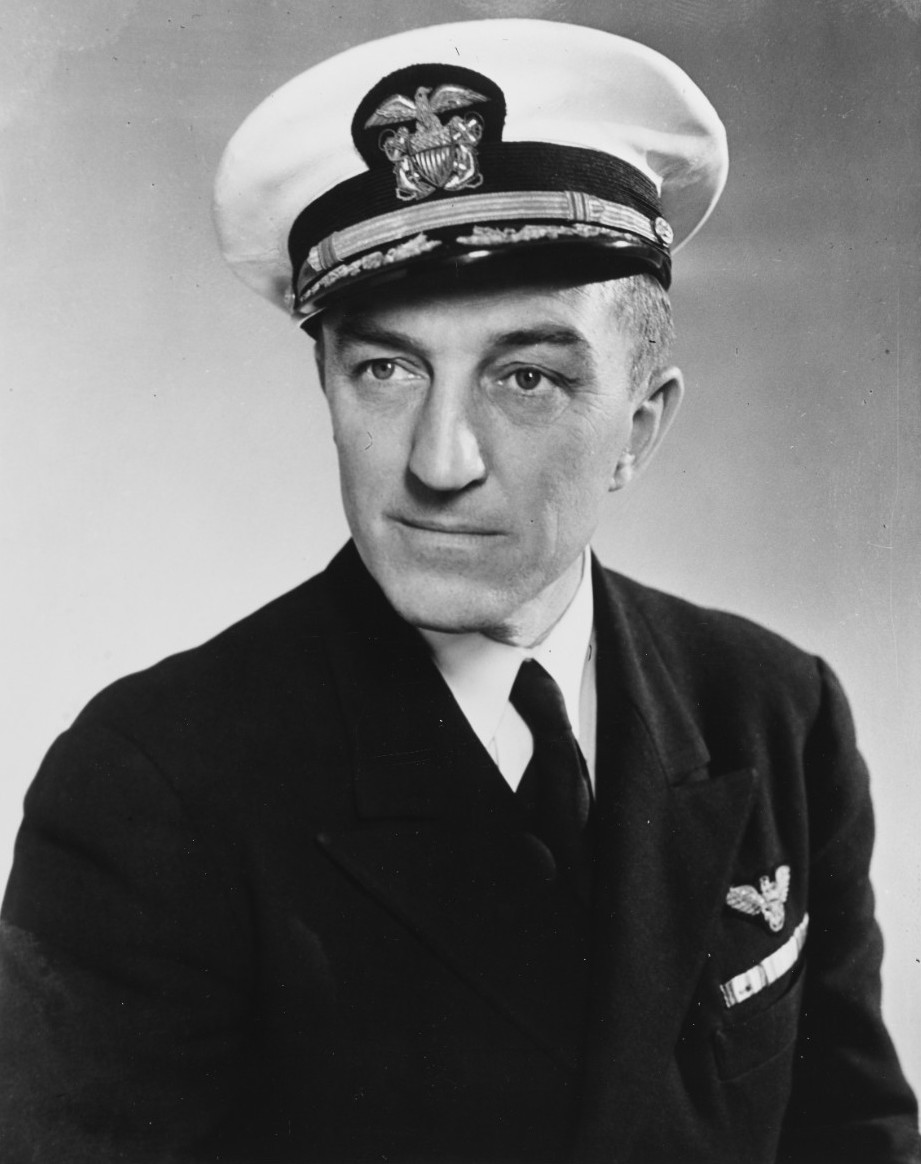
Thomas Lamison Sprague was born in Lima, Ohio, on 2 October 1894, the son of Grant Madison Sprague and Olivia Lamison Sprague. He graduated from the United States Naval Academy on 29 June 1917, in the class the war had advanced a year, and was commissioned an ensign. His first ship was the cruiser Cleveland. He then joined the destroyer Montgomery, served in her on convoy duty in the First World War, and in 1920 became her commanding officer.
In 1921 he completed flight training and became a naval aviator. The years between the wars were spent in naval aviation. He commanded Scouting Squadron 6, and from 1937 to 1940 he superintended naval air training at Pensacola. In June 1940 he reported as executive officer of the carrier Ranger and spent the next year with her on Neutrality Patrol in the Atlantic. He fitted out the seaplane tender Pocomoke in 1941 and commanded her into the first months of 1942, including antisubmarine patrols out of Argentia, Newfoundland.
On 3 March 1942 he placed the escort carrier Charger in commission and commanded her on pilot-training duty in the Chesapeake until December. He then served as chief of staff to the Atlantic Fleet air commander, first at Quonset Point, Rhode Island, and then at Norfolk. In March 1943 he acted for a time as that commander. His Atlantic service brought him the Bronze Star.
His best-known wartime sea command began at Newport News, where he fitted out the fleet carrier Intrepid. He was her captain from 16 August 1943, the day she went into commission, until he was relieved on 28 March 1944. In the opening months of 1944 she struck at the Marshall Islands and at Truk. During the night after the opening Truk raid, on 17 February, a Japanese aerial torpedo struck her quarter. The blast jammed the rudder, destroyed the steering engines, and flooded the after end of the ship. Sprague held the damage under control, had a sail rigged forward to help keep a course, and took Intrepid out of the battle area. She reached San Francisco under her own power, a passage of thousands of miles. The Legion of Merit followed for his handling of the ship at Truk on 16 and 17 February 1944.
Back in California he served briefly as commander of Fleet Air, Alameda. That summer he was a rear admiral, and in July 1944 he took command of Carrier Division 22. Those escort carriers covered the assault on Guam and, in September, the landing at Morotai.
At Leyte Gulf in October 1944 he directed the escort carriers of the Seventh Fleet as commander of Task Group 77.4, and he personally led the southern unit, Taffy 1, Task Unit 77.4.1. His flagship on 25 October was Sangamon (CVE-26). He was not her captain. Taffy 1 then lay off northern Mindanao, about 120 miles south of the gunfight in which Clifton Sprague's Taffy 3 was engaged, and he was not in Clifton Sprague's line. The shared surname was a coincidence. The two officers had been Academy classmates in 1917 and were not related. Aircraft rose from Sangamon and flew north. The ship was not sunk. Other ships of Taffy 1 came under attack that day, and planes from the escort-carrier group joined the attack that turned the Japanese force back. For his command on 25 October he received the Navy Cross.
In December 1944 he moved to Carrier Division 11 and a short tour with the Pacific training carriers. Early in 1945 he took the fast carriers of Carrier Division 3 and operated them off Okinawa into the early summer. From 1 July to 2 September 1945 he commanded Task Force 38.1 for the last strikes on Japan, service recognized with the Navy Distinguished Service Medal. After the war he was deputy chief of the Bureau of Naval Personnel and then, in 1947, its chief. He was promoted to vice admiral on 15 August 1949, commanded the Pacific Fleet air force, and from 1 February 1950 held additional duty as commander of the First Task Fleet. On 1 April 1952 he was retired and advanced to admiral on the strength of his combat record. The Navy recalled him in 1956 for a brief assignment connected with base agreements in the Philippines. Sprague died in Chula Vista, California, on 17 September 1972.