Ships
- IJN Hosho Captain from 11 November 1940 · Relieved on 5 September 1941
- IJN Zuikaku Captain from 21 June 1943 · Relieved on 18 December 1943
- IJN Taiho Captain from 7 March 1944 · In command when she was lost, 19 June 1944
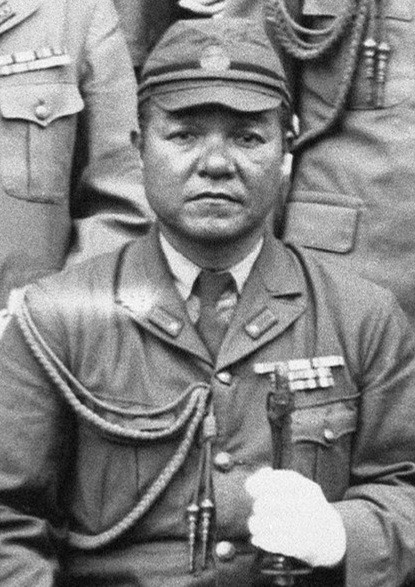
Tomozo Kikuchi was born in Fukushima Prefecture on 22 November 1896, the fourth son of Kikuzo Kikuchi. He attended Iwaki Middle School, entered the Imperial Naval Academy, and graduated with the 45th class in November 1917. He trained as a naval aviator at Yokosuka and Kasumigaura. While a lieutenant he flew a Type 13 carrier attack plane on a round trip between Yokosuka and Beijing, the first flight of its kind the navy completed, and he carried out an early successful parachute trial for aircrew.
His flying appointments took him to Hosho, Kaga, and Akagi as a division officer, and back to Hosho as flight officer, with further duty at the Omura Air Group. He also traveled to Europe and the United States to study aviation. During the war in China he served as senior staff officer of the 1st Combined Air Group under Michitaro Totsuka and took part in the long-range bombing of Nanjing. Promoted to captain in November 1939, he commanded the Takao Air Group. On 11 November 1940 he became captain of Hosho, which was then employed training carrier pilots in home waters. He was relieved on 5 September 1941.
He entered the Pacific War as commander of the Tateyama Air Group. In 1942 he served on the staff of the 11th Combined Air Group and with the Naval Aviation Department. In February 1943 he became chief of staff of the combined training air force, which was turning out new carrier aircrews after the battles of the first year.
On 21 June 1943 Kikuchi took command of the fleet carrier Zuikaku. The ship had come through the carrier battles of 1942, and under him she worked up a fresh air group from Truk, including sorties toward the Marshalls. He was relieved on 18 December 1943 and ordered to the new fleet carrier fitting out at Kobe.
Taiho was commissioned on 7 March 1944 with Kikuchi as her first captain. She was the first Japanese fleet carrier given an armored flight deck and a closed bow, built to take heavy bomb hits and stay in action. After trials in the Inland Sea she sailed south, joined Shokaku and Zuikaku in Carrier Division 1, and trained at Lingga Roads near Sumatra. In April, Vice Admiral Jisaburo Ozawa moved his flag aboard, and the new ship became flagship of the Mobile Fleet.
On the morning of 19 June 1944, in the Battle of the Philippine Sea, Taiho launched her aircraft and was then hit by a torpedo from the American submarine Albacore. The hit struck forward on the starboard side, jammed the forward elevator, and split open tanks of aviation gasoline. Kikuchi held the carrier in the formation at high speed and had the elevator well planked over so planes could still be handled on deck. Vapor from the leaking fuel collected below. Running the ventilation and opening compartments to clear the hangar spread that vapor through the hull. Shortly after half past two a violent explosion tore through the ship. Fires spread, the engines stopped, and Taiho lay dead in the water. Kikuchi ordered abandon ship. He and Ozawa transferred to the heavy cruiser Haguro. Taiho sank stern-first later that afternoon, and roughly 1,650 of the some 2,150 men aboard were lost. A junior officer remembered afterward that the captain had expected to remain with the ship.
In July 1944 he was appointed commander of the 25th Air Flotilla. Promoted to rear admiral that October, he became chief of staff of the 2nd Air Fleet, and in January 1945 chief of staff of the 1st Air Fleet, as shore-based naval air power was thrown into the Philippines and the defense of the home islands. In June 1945 he was vice chief of staff of the Combined Fleet. He went on the reserve list in October 1945. In later years he served on the city council of Tsuchiura in Ibaraki Prefecture. He died on 31 January 1988.