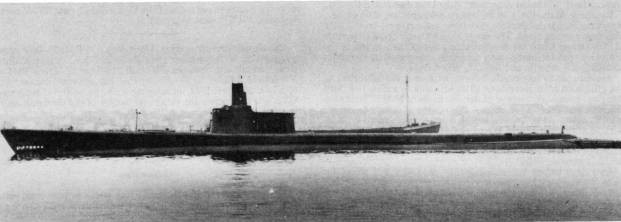
Albacore was a Gato-class fleet submarine, one of the boats the submarine force counted when the target was a warship. Electric Boat at Groton laid her down on 21 April 1941, launched her on 17 February 1942, and commissioned her on 1 June 1942. Lieutenant Commander Richard C. Lake had her. The sponsor was Marie Elise Cutts, wife of the New London submarine-base commander. A patrol craft of the First World War had carried the name, and a later experimental submarine, AGSS-569, carried it again. This is the wartime boat, SS-218.
She was an early Gato, about 312 feet, with ten 21-inch tubes and a 3-inch deck gun. A war patrol could run about 75 days. The designed crew was about 60. On the last patrol she had 85 men aboard. Lake took her through the first four patrols, into June 1943. Oscar E. Hagberg had the next three. James W. Blanchard had the eighth, ninth, and tenth, including the carrier. Hugh R. Rimmer had the eleventh and was lost with her.
The first patrol, late August to 20 October 1942, was off Truk. This was still the season of bad torpedoes. She damaged freighters and a tanker and came home with nothing confirmed. The Mark 14 was running deep, and the magnetic exploder could not be trusted.
The second patrol, November and December 1942 off New Britain, is the one that made her name. On 18 December she hit the light cruiser Tenryu off Madang, New Guinea. Tenryu was an old ship, launched in 1918, escorting a reinforcement convoy. Albacore's torpedoes broke her back. She was the first Japanese cruiser sunk by a U.S. submarine. Albacore also claimed a transport on that patrol.
The third patrol, January to March 1943 in the Bismarcks, produced the destroyer Oshio. On 20 February, near the New Guinea coast, she sank that Asashio-class destroyer. Wartime credit also included an escort in the same attack. Later Japanese records do not confirm the second ship.
The fourth and fifth patrols, in the spring and summer of 1943, were thin: no confirmed sinking, and one ship damaged. On the sixth, she sank the cargo ship Heijo Maru on 4 September near the Admiralties. On the seventh she sank Kenzan Maru on 25 November 1943.
Blanchard took command in late December 1943. On the eighth patrol he sank the passenger-cargo ship Choko Maru No. 2 on 12 January 1944, then the destroyer Sazanami two days later, east of the Admiralties. Sazanami was a Fubuki-class destroyer. A small auxiliary went down in the same work and was usually left off the official score.
The ninth patrol is why the boat is remembered. In June 1944 the Marianas were being invaded, and Vice Admiral Jisaburo Ozawa brought the Mobile Fleet out of Tawi-Tawi. His flagship was Taiho, Japan's newest carrier, commissioned that March, with an armored flight deck. Shokaku and Zuikaku sailed with her. Albacore was on station in the Philippine Sea. Before dawn on 19 June she was submerged. Around 0800 Blanchard raised the periscope inside the formation and fired all six bow tubes. Warrant Officer Sakio Komatsu had just launched from Taiho. He saw the wakes, turned his aircraft into one of them, and was killed. One torpedo still hit Taiho on the starboard bow, jammed the forward elevator, and split open gasoline tanks. The hit did not stop her. She stayed in formation. The destroyer Hatsuzuki was left to hunt Albacore, which went deep. Aboard Taiho the fumes were drawn through the ship instead of being shut in. A little after 1400 a vapor explosion tore her open. Ozawa's staff moved him to the heavy cruiser Haguro. Taiho sank stern-first that afternoon. Blanchard did not know what he had done. From the submarine it looked like a possible hit and a missed chance. The Navy learned the truth from later intelligence, and Blanchard received the Navy Cross. The same morning Cavalla (SS-244) put torpedoes into Shokaku, which also sank.
Albacore finished that patrol on lifeguard duty off Yap and Ulithi, sank a small maru by gunfire early in July, and reached Majuro on 16 July. The tenth patrol, in August and September 1944, was in Japanese home waters. She sank the cargo ship Shingetsu Maru on 5 September. She was back at Pearl Harbor on 25 September. Blanchard left, and Rimmer took command.
She left Pearl Harbor on 24 October 1944, topped off at Midway on 28 October, and sailed the same day for the coast northeast of Honshu and south of Hokkaido. Her orders were to stay outside the 100-fathom curve, because the approaches were mined, to leave the area at sunset on 5 December, and to reach Midway about the 12th. She was never heard from again. On 21 December the Navy presumed her lost. Her name was struck on 30 March 1945. Japanese records place the end on the morning of 7 November 1944, off Cape Esan, at the eastern entrance to the Tsugaru Strait. The patrol boat Fukuei Maru No. 7, on an anti-submarine sweep, saw an underwater explosion, and a keeper at the Esan Point lighthouse took a bearing on the same blast. The boat found oil, bubbles, cork, bedding, and provisions. In the debris was a jacket stenciled ALB-5 and a pair of shorts stenciled ASK, the initials of a man aboard. The field had been laid by the minelayer Bangkok Maru, in 1942, 1943, and again in July 1944. Albacore was submerged and inshore of the outer lines when she struck a mine. All 85 men were lost.
Wartime credit ran to 13 ships. The later joint assessment cut that, because Taiho had been scored at full-load displacement and some small or unconfirmed vessels were dropped. The warships are the ones the submarine force still names: the light cruiser Tenryu, the destroyers Oshio and Sazanami, and the carrier Taiho. She received the Presidential Unit Citation for the second, third, eighth, and ninth patrols, and nine battle stars.
On 25 May 2022 Dr. Tamaki Ura of the University of Tokyo, working from the Japanese explosion report, found a wreck about a mile from the reported position. Later passes showed the changes made to Albacore before the last patrol: the SJ radar and its mast, a row of vent holes along the top of the superstructure, and the absence of steel plates along the upper edge of the fairwater. Naval History and Heritage Command confirmed the identity in February 2023. The site is a war grave.